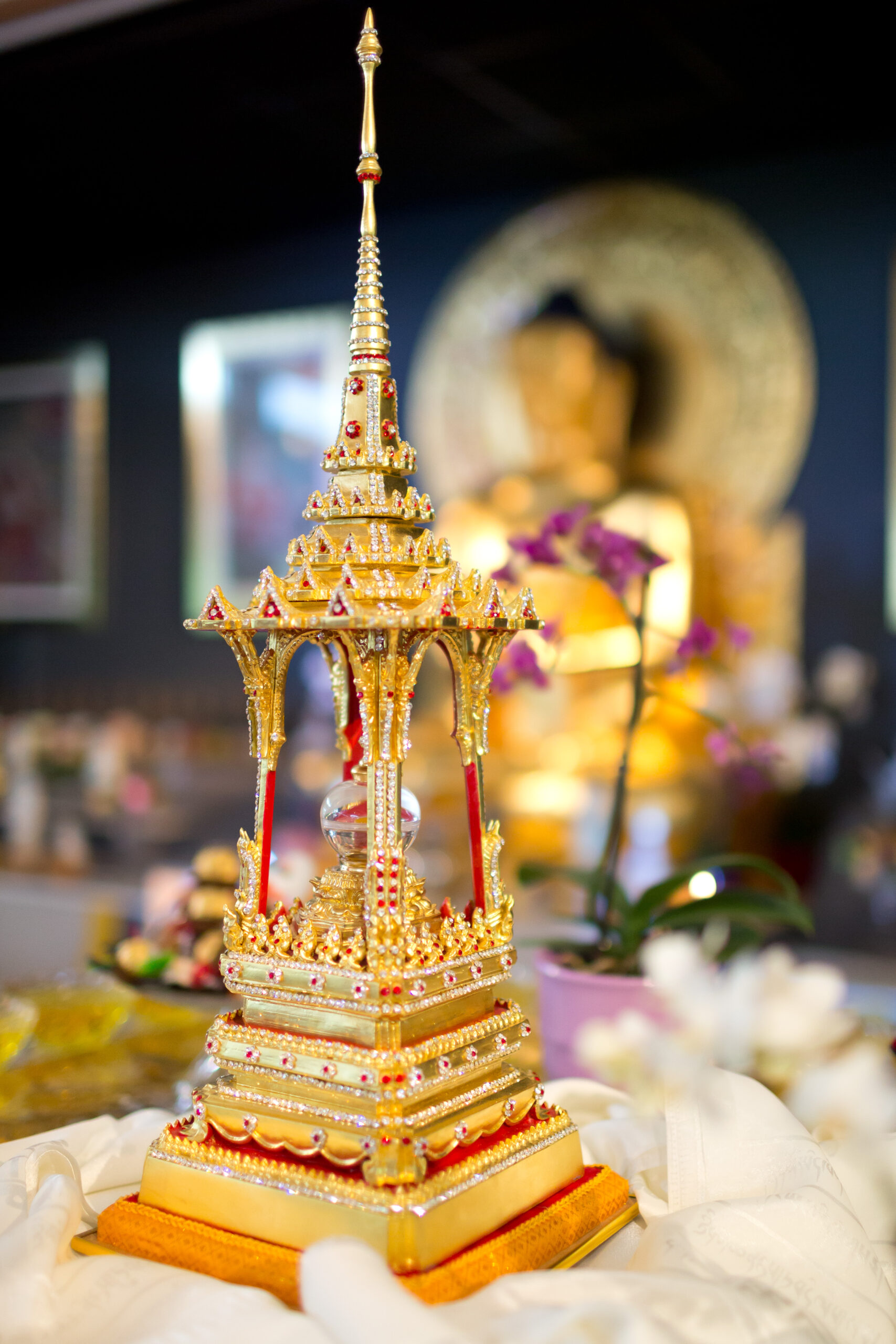
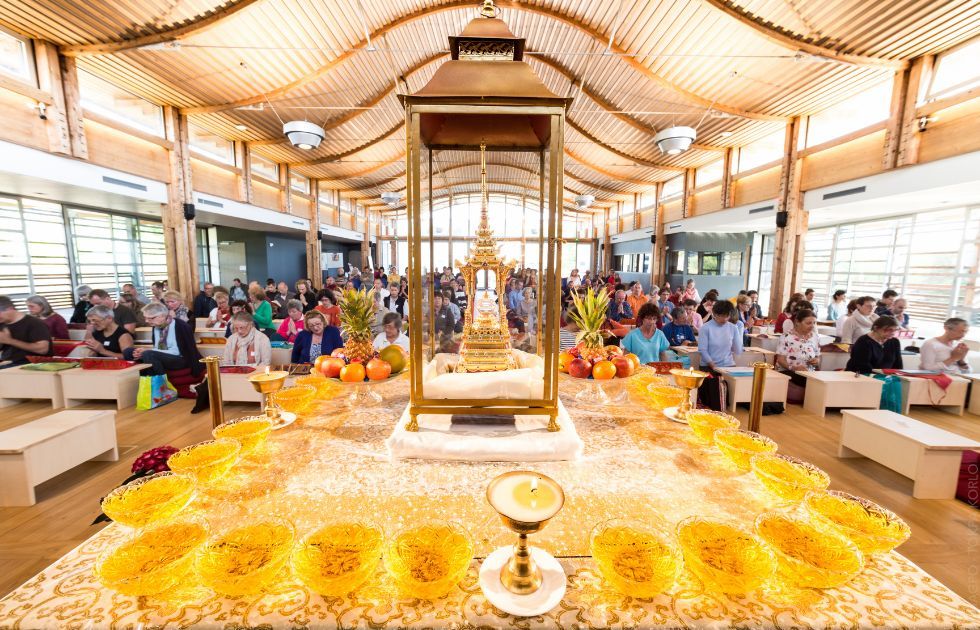
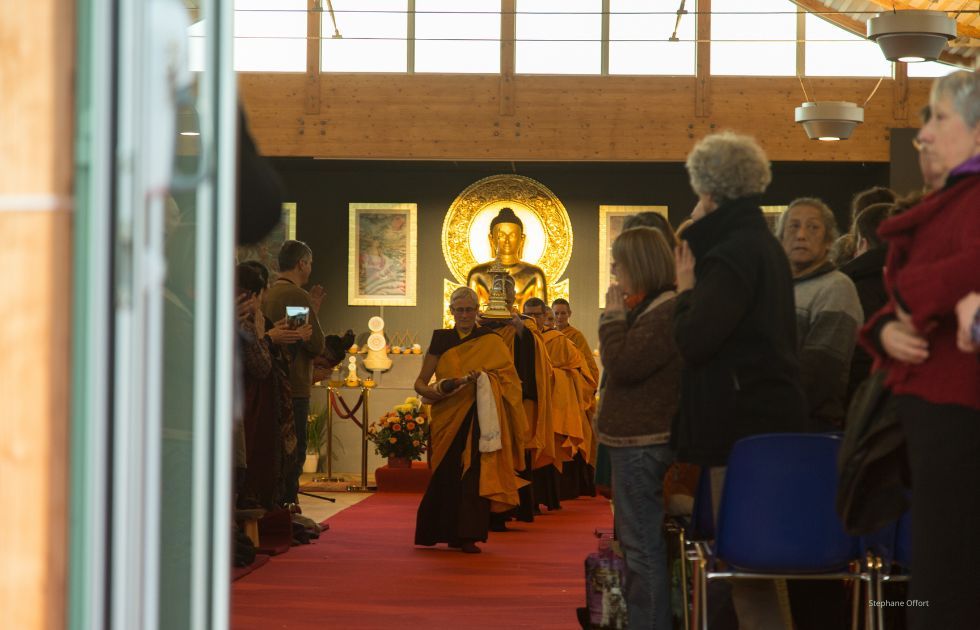
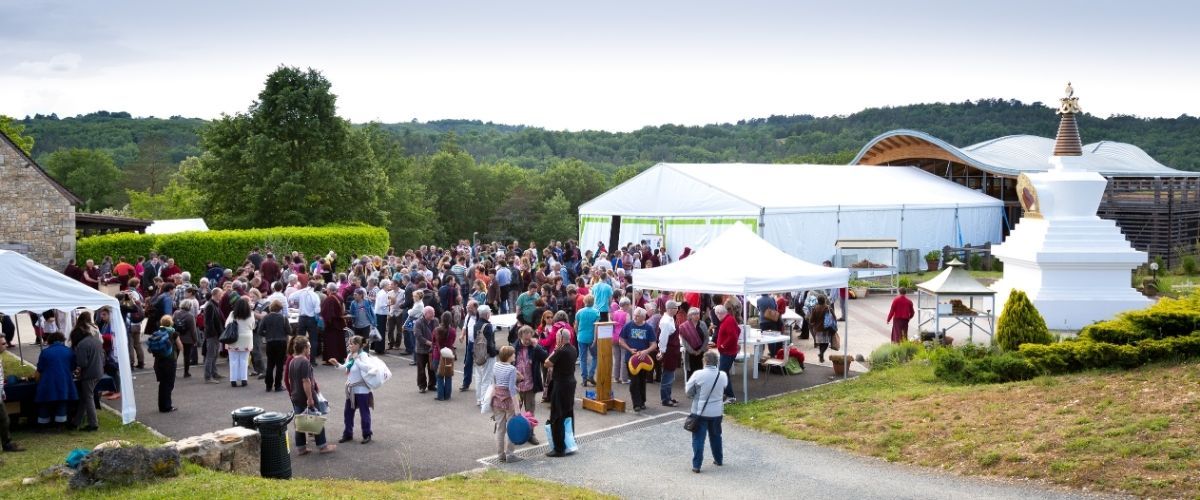
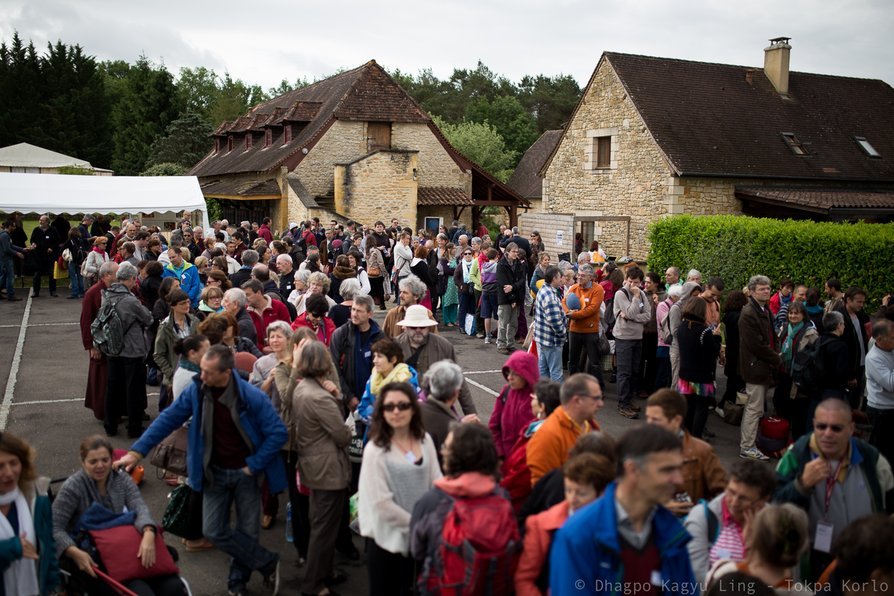
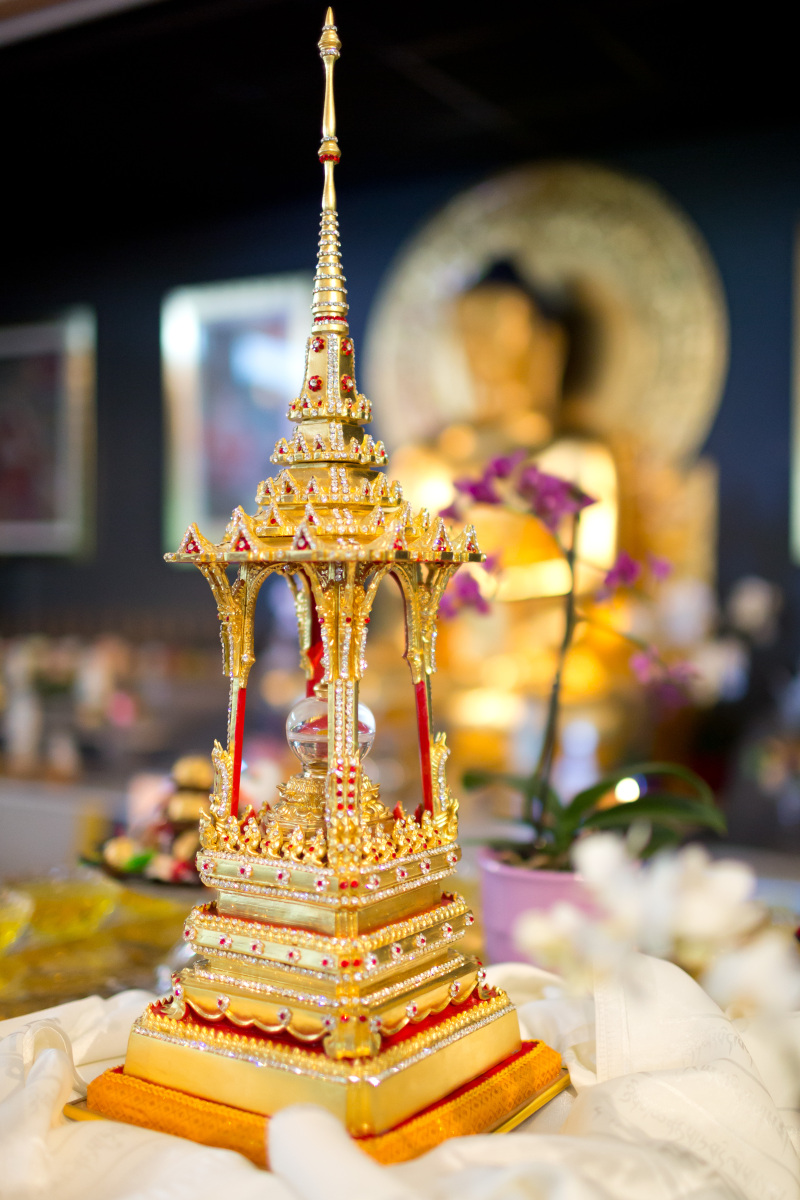
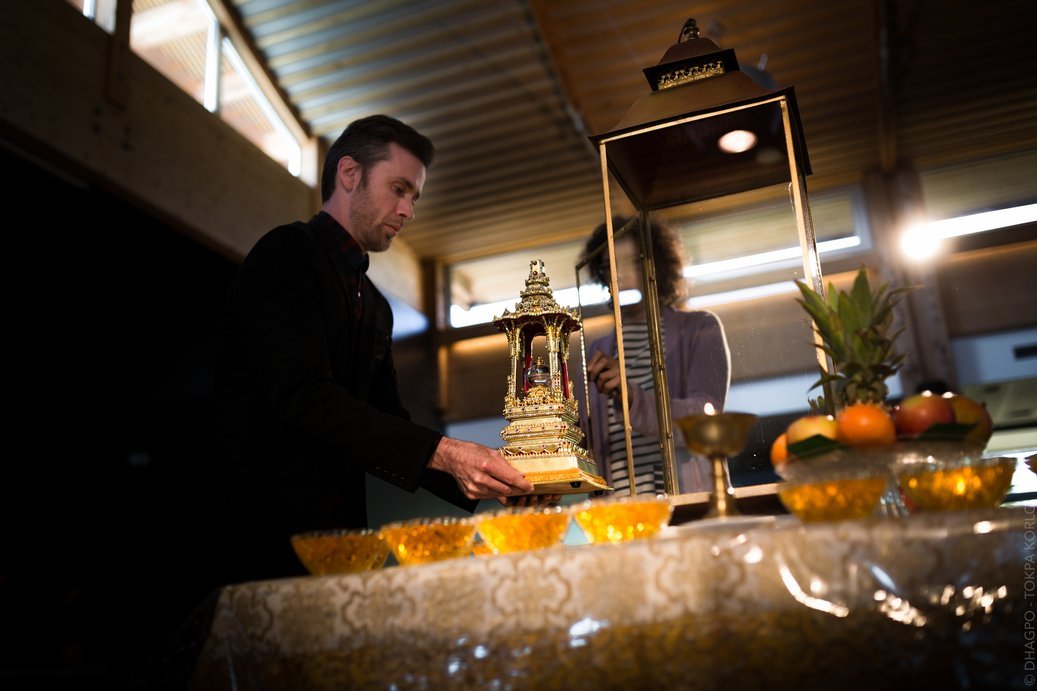
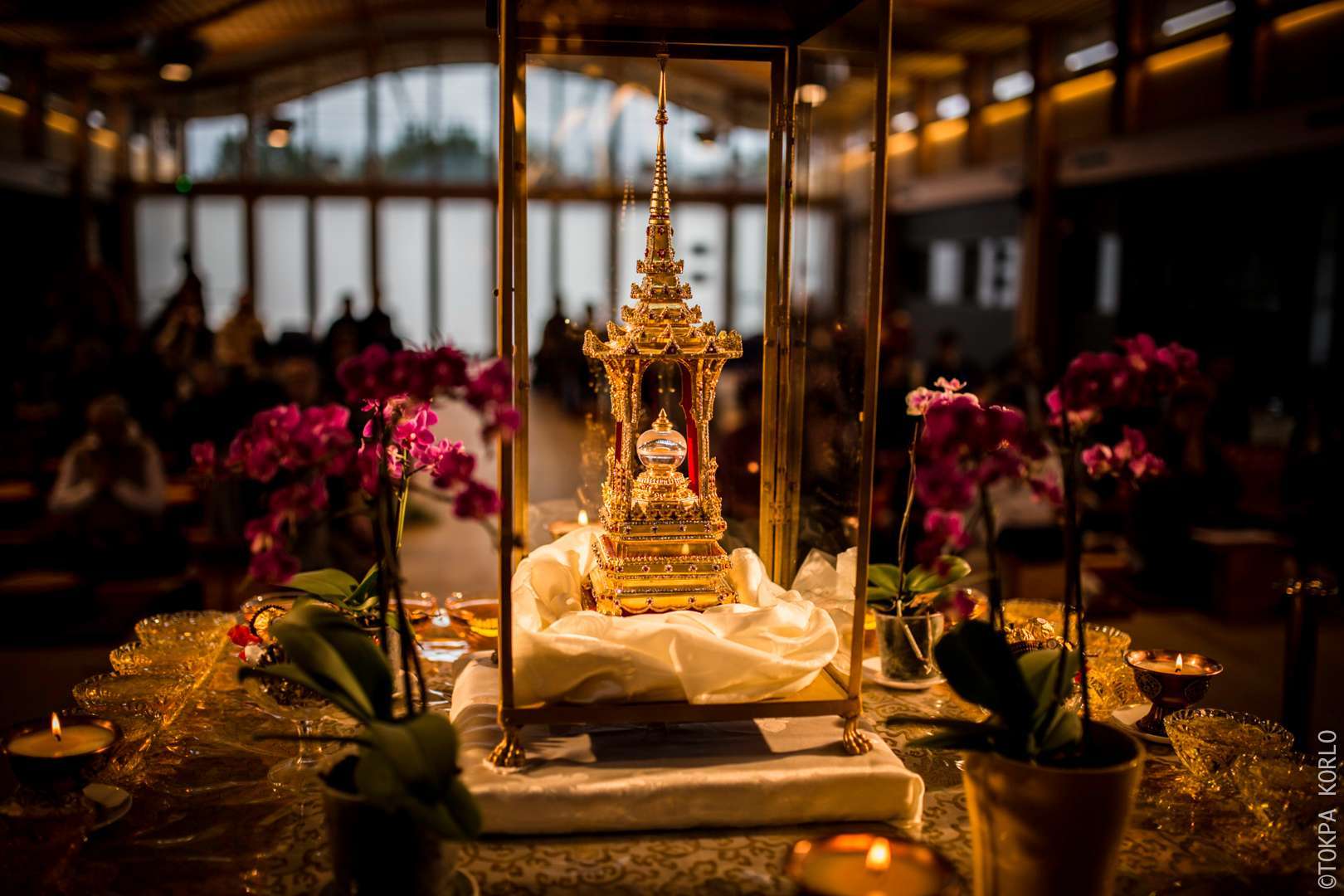
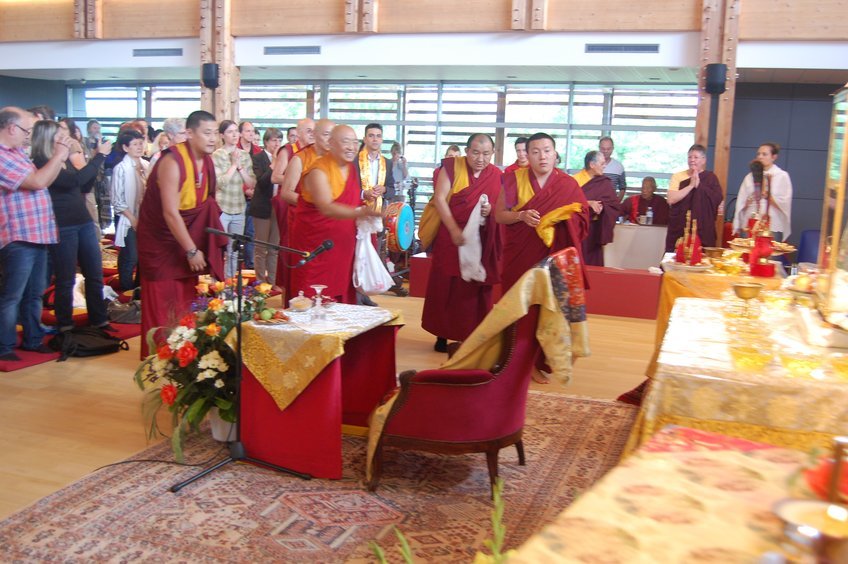
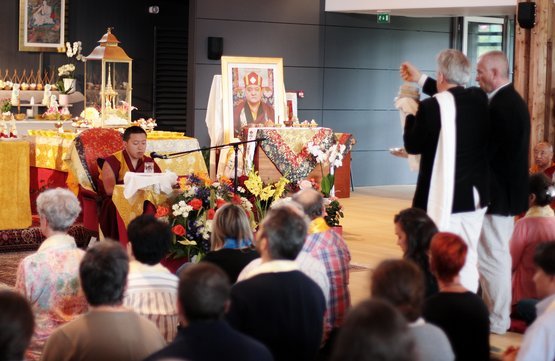
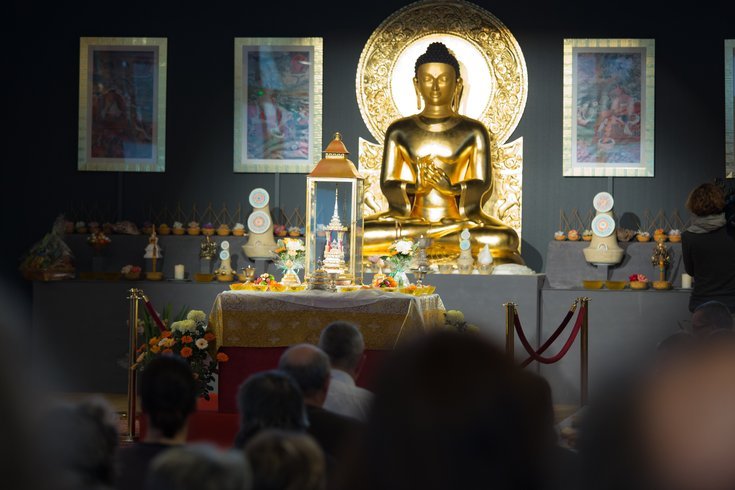
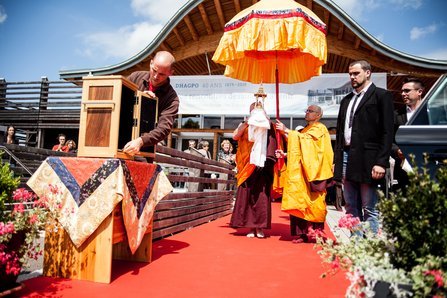
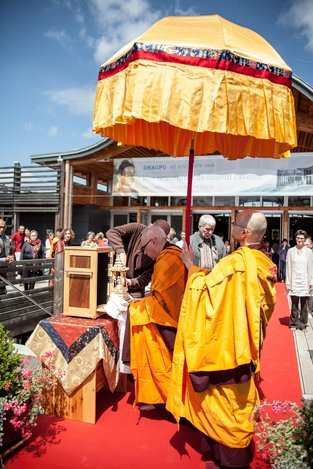
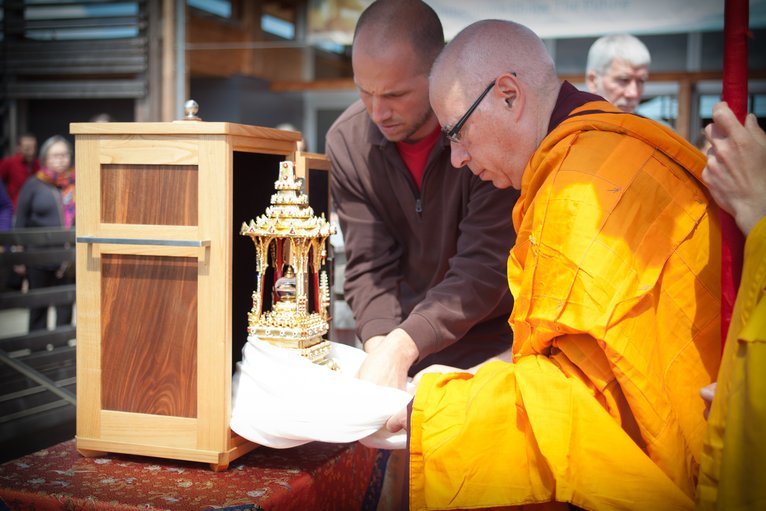
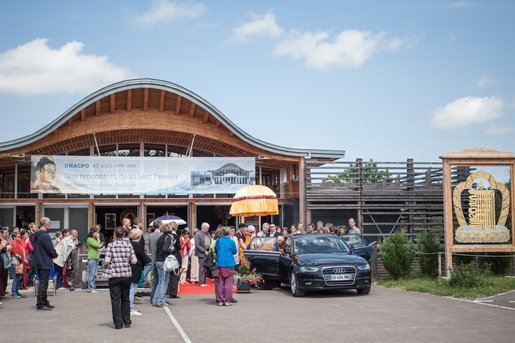
 “The arrival of the Buddha” reads the headline in the Sud Ouest regional newspaper, referring to the exceptional arrival of the Buddha’s relics at Dhagpo Kagyu Lig on November 24, 2013, an auspicious day of Lhabab Duchen (1). They were to remain there until May 30, 2015, due to work being carried out at the Great Pagoda of Vincennes, outside Paris, where they are usually kept.
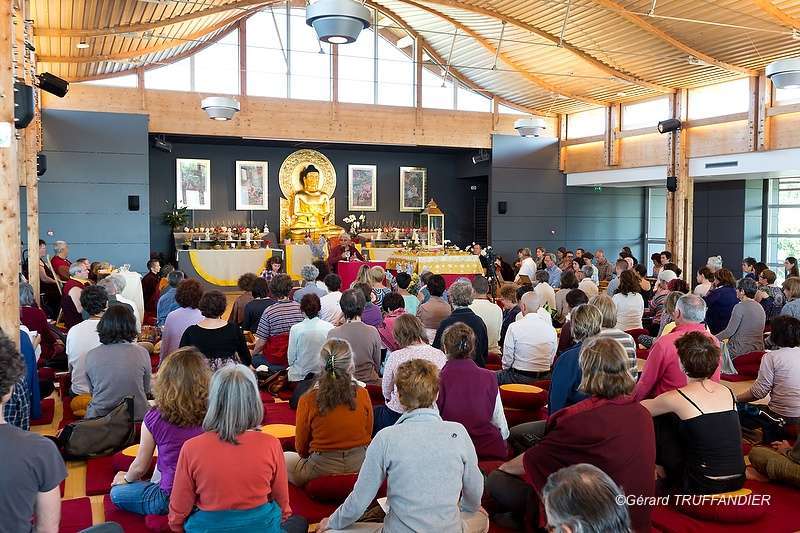
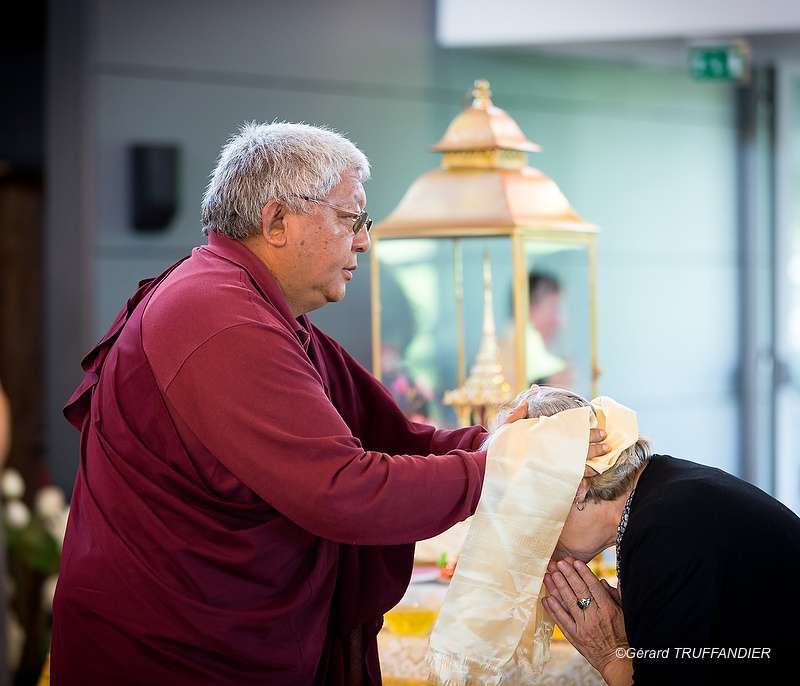
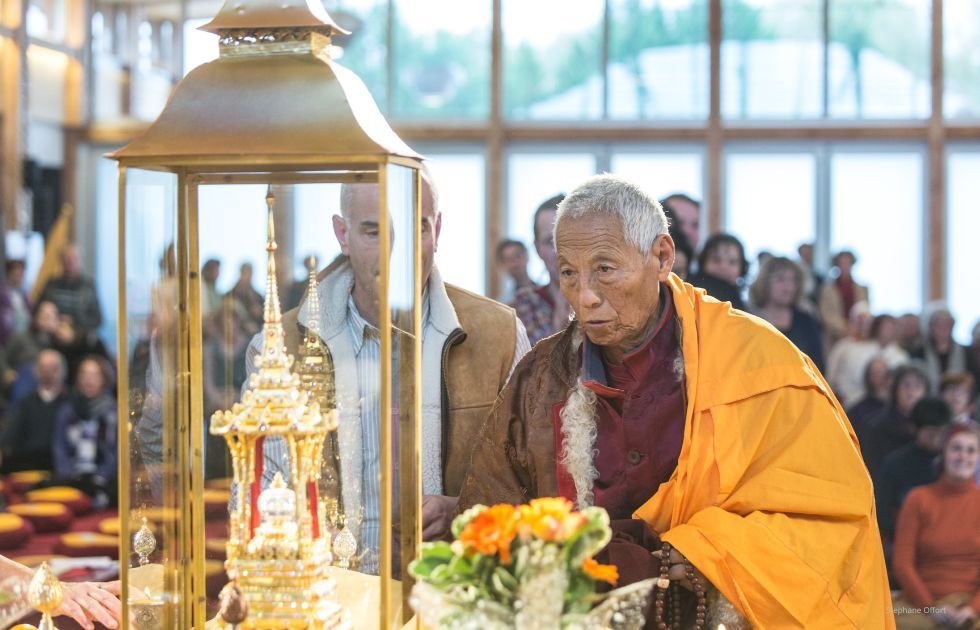
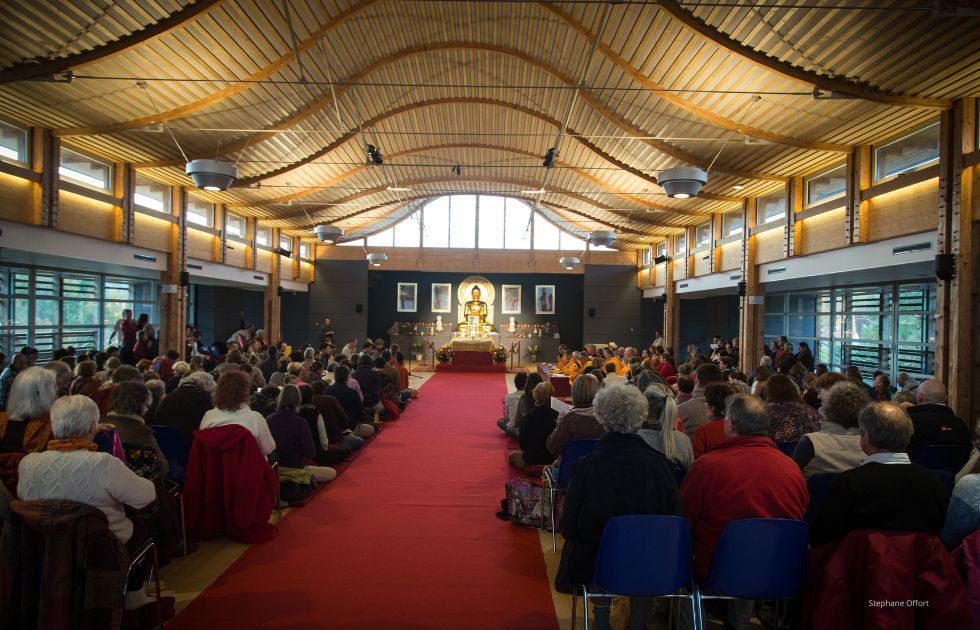
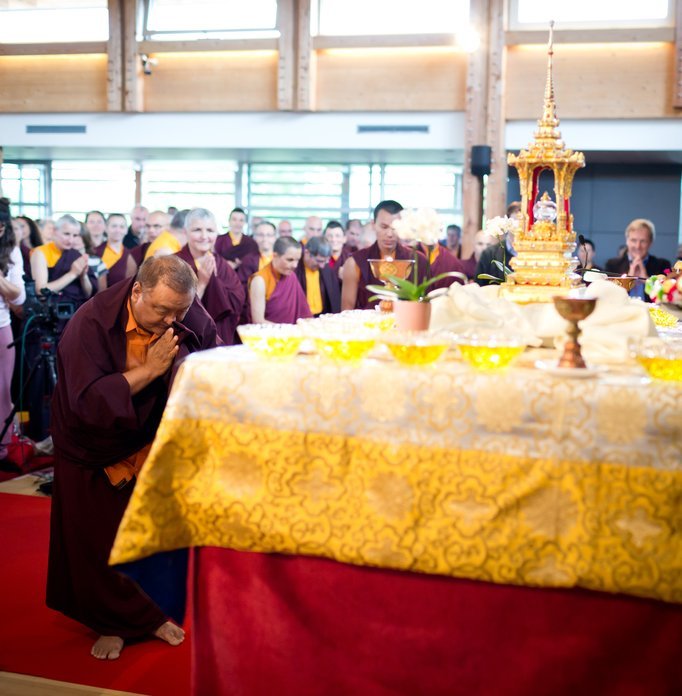
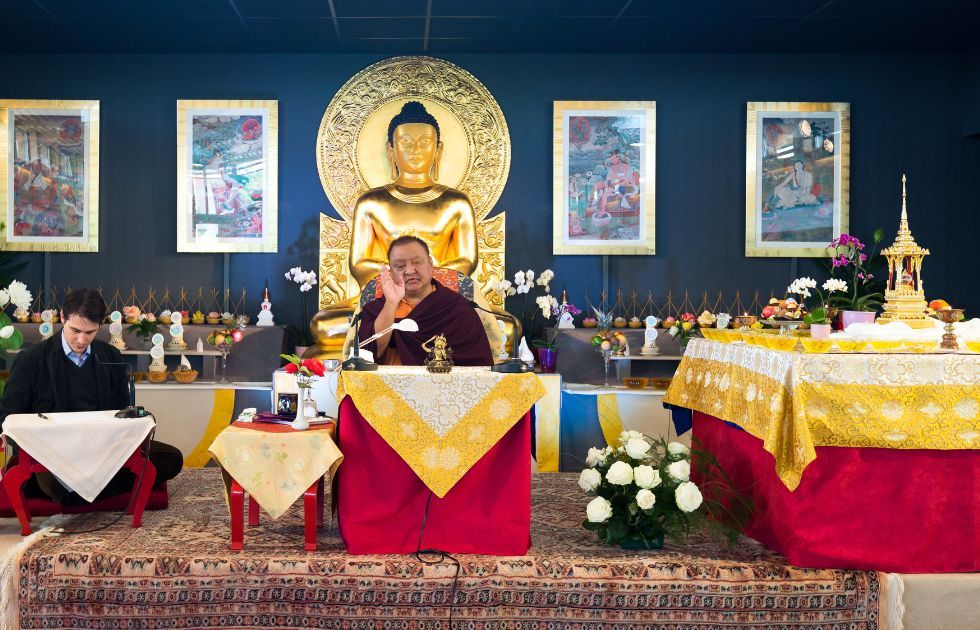
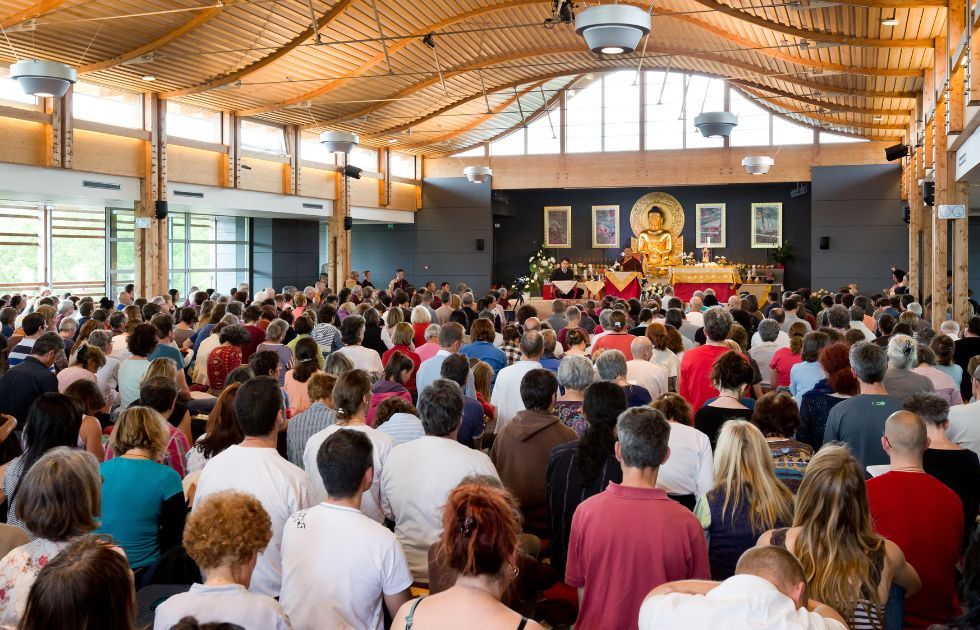
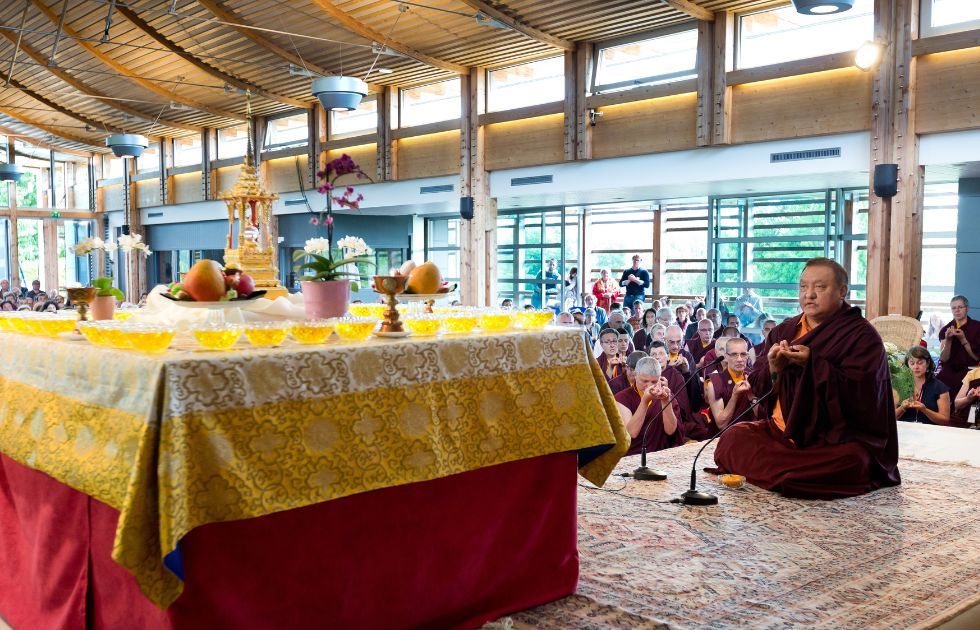
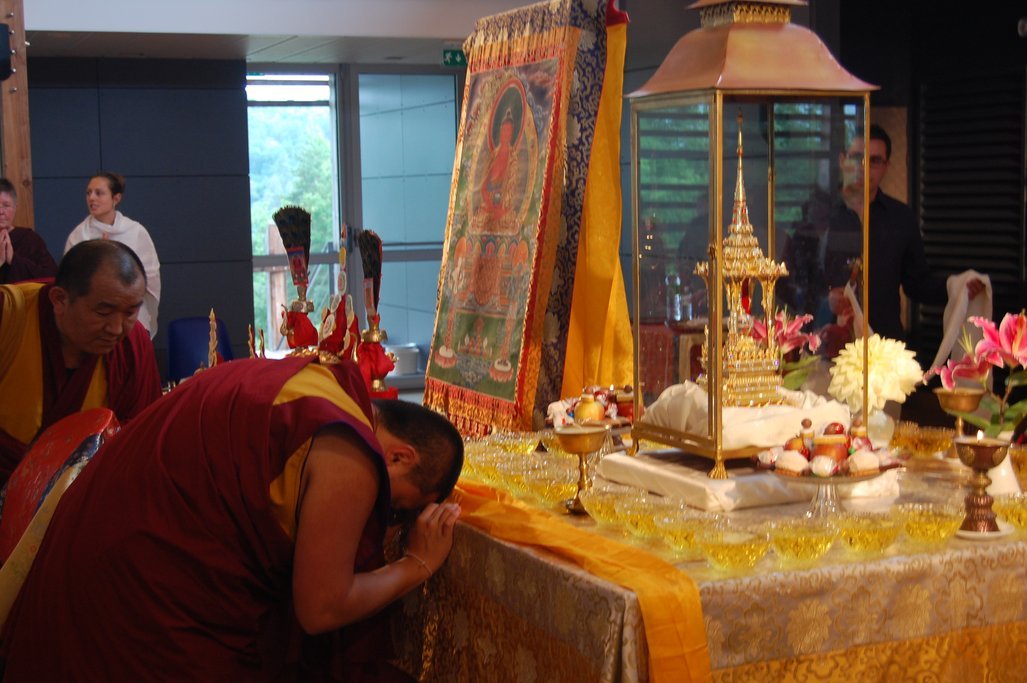
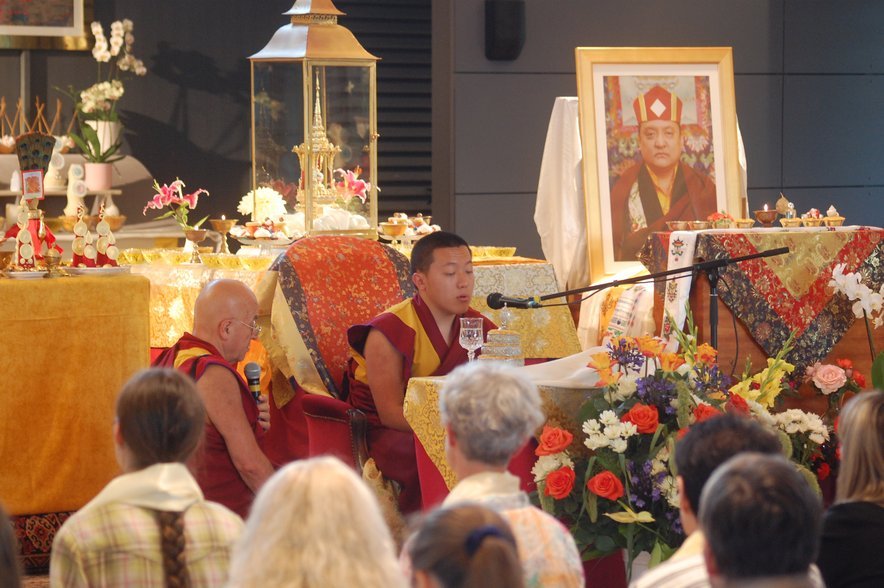
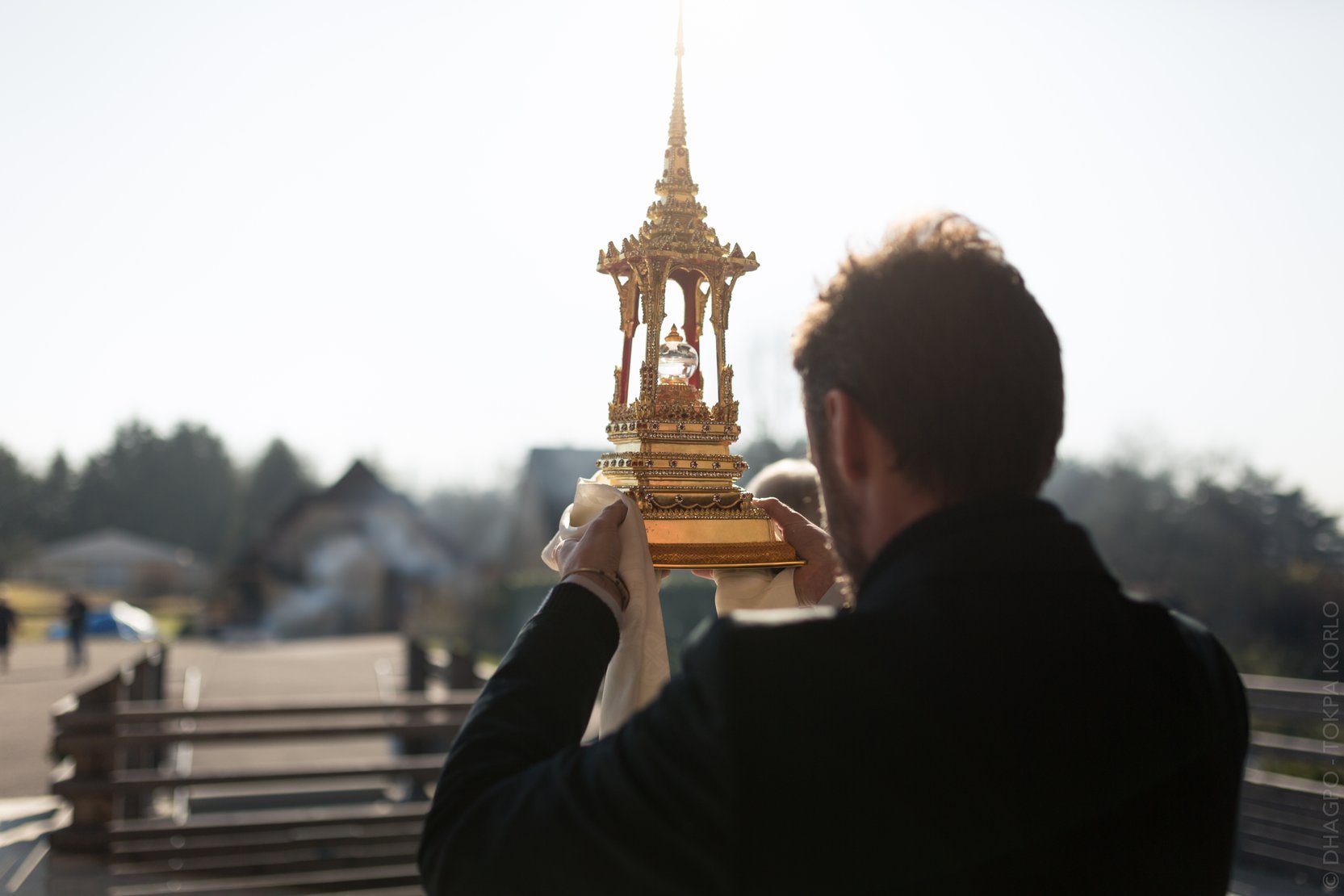
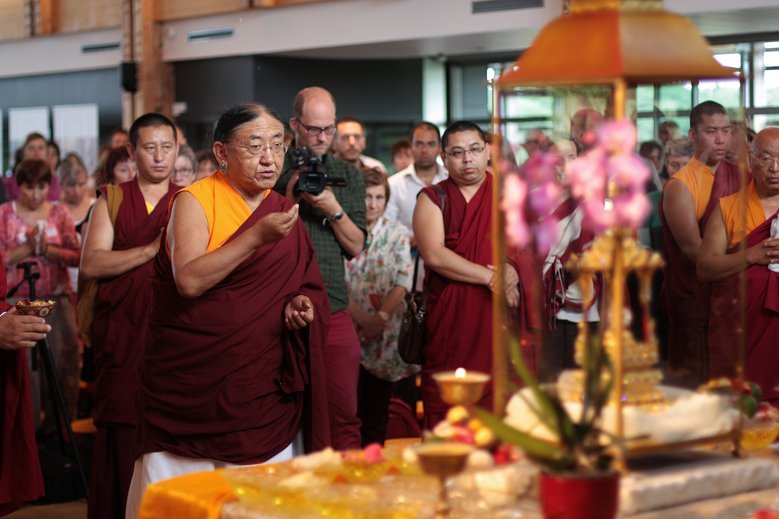
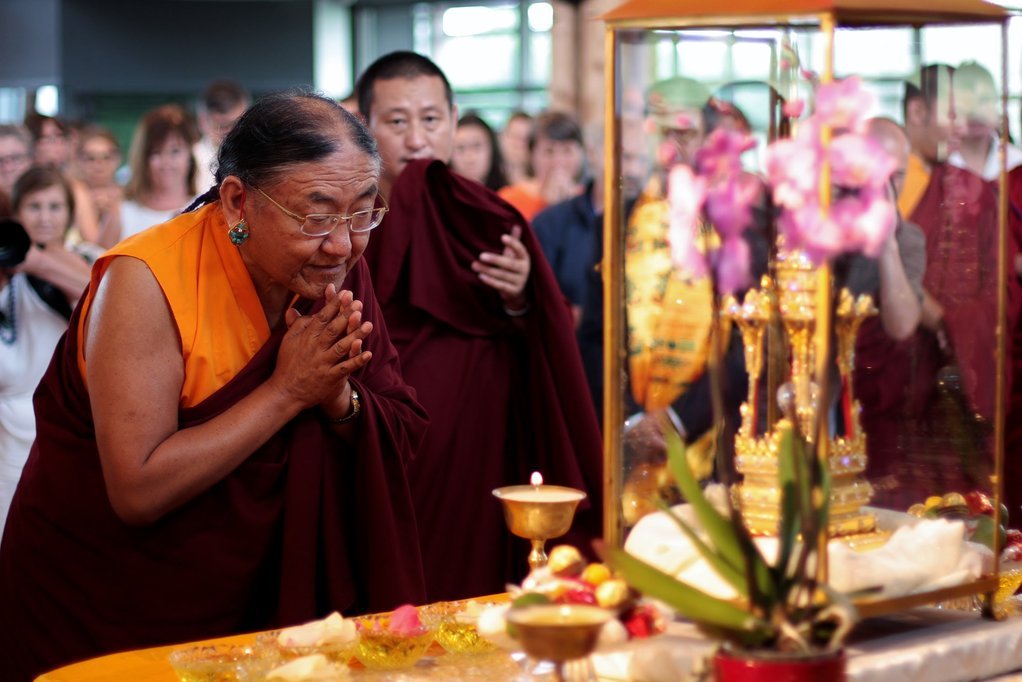
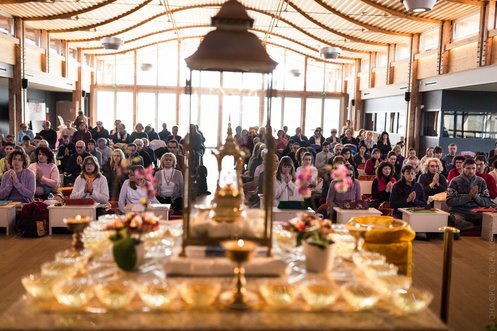
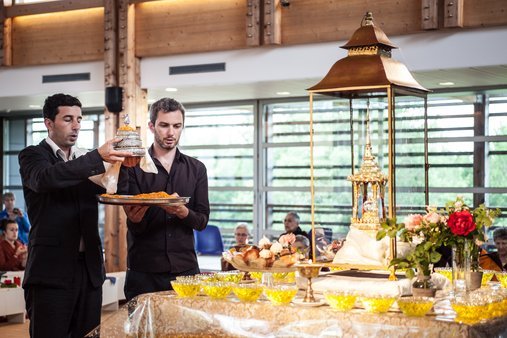
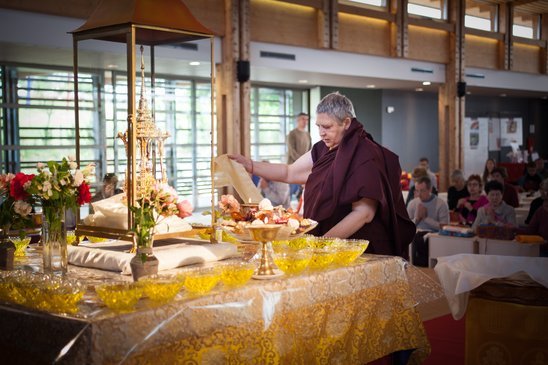
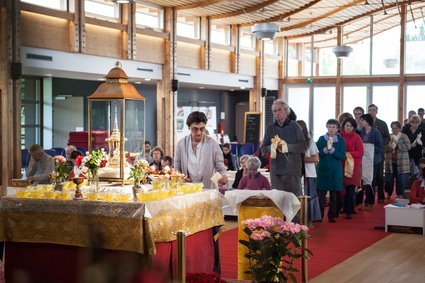
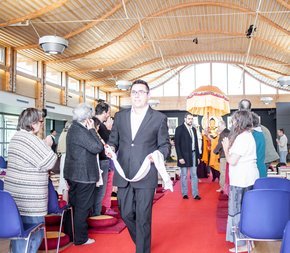
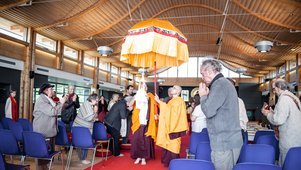
Some three hundred people gathered for the ceremony to welcome the relics, which had come from Dhagpo Kundreul Ling, where they had made their first stop for nearly a month. A procession to the sound of gyalings to the Institute–inaugurated a few months earlier, a symbolic offering of the universe, a recitation of the Sutra of Remembrance of the Three Jewels, and a katas offering before the relics marked this rare moment.
Expressing his gratitude to the Buddhist Union of France for its kindness and generosity, Thaye Dorje, the 17th Gyalwa Karmapa, shared the meaning of these relics in a message recorded for the occasion,
Impermanece was one of the main teachings and legacies of Buddha. These relics represent and reflect impermanence and the fragility of our physical world. Even when a person reaches Samyaksambuddha such as Buddha Shakyamuni who was previously known as the great prince Siddhartha, the physical body which was described by Buddha himself as being conditioned and impermanent is subject to change. In this way, I feel that the bone relics themselves represent this very teaching of impermanence.
So dear Dharma friends, please take this unique opportunity to receive blessing by generating aspirations in the same way as Buddha Shakyamuni. His aspirations are perfectly condensed and summarized within the Samantabhadra aspiration prayer, also known as the King of Aspiration Prayers. So whether you are close to these precious relics or far away, recite this text to accumulate merit and wisdom. By doing so you will establish a precious connection between the Buddha’s enlightened aspirations and your own. I believe that this connection is at the heart of the blessing where boundaries of time do not stop us from seeing what Buddha saw.
What Buddha saw was the truth, the noble truth that although life as we know it presents challenges or dukkha, we are able to extract the essenceless of ego and give rise to cessation of ego which is absolute peace. Therefore I encourage all of you to tap into this immeasurable pool of inner wealth.
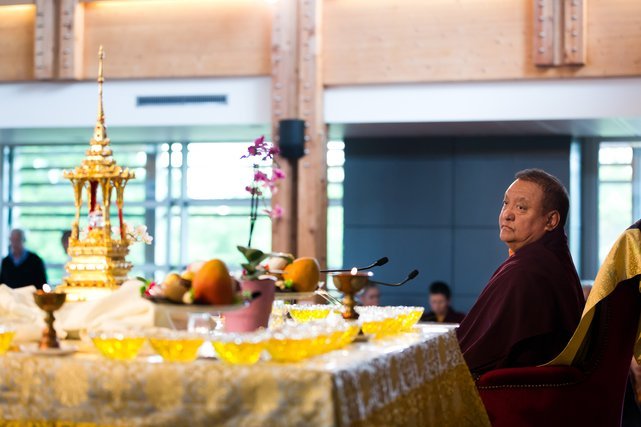
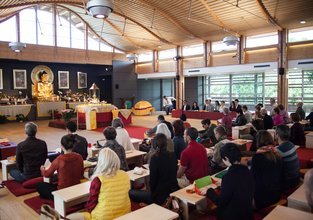
During their stay at Dhagpo Kagyu Ling, the relics were displayed in the Institute every weekend and during rituals performed on full moon days, as well as during the Losar festival, the Tibetan New Year, a propitious time to dispel obstacles and gather favorable circumstances for practice.
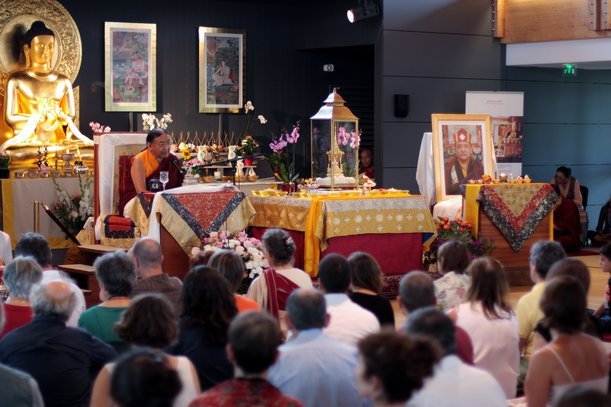
At the end of December 2013, Lama Jigme Rinpoche gave a lecture on the relics, bringing together practitioners from different schools of Tibetan Buddhism present on the Côte de Jor.
We have this opportunity to make wishes and practice in the presence of these relics of the Buddha, which come from his bones. Praying in front of important objects is very effective; it enables these wishes to come true, says Rinpoche.
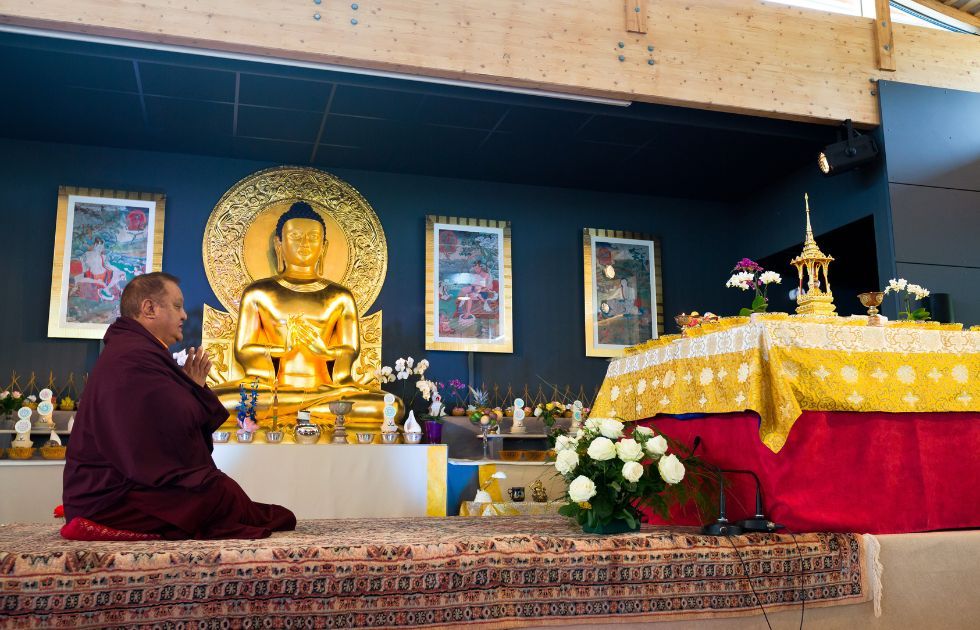
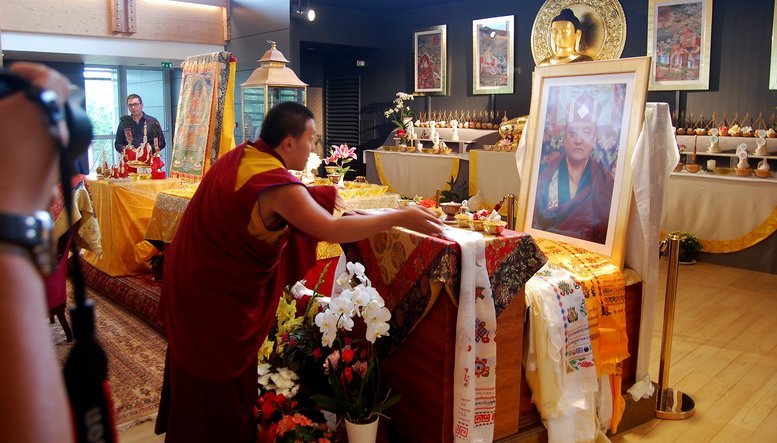
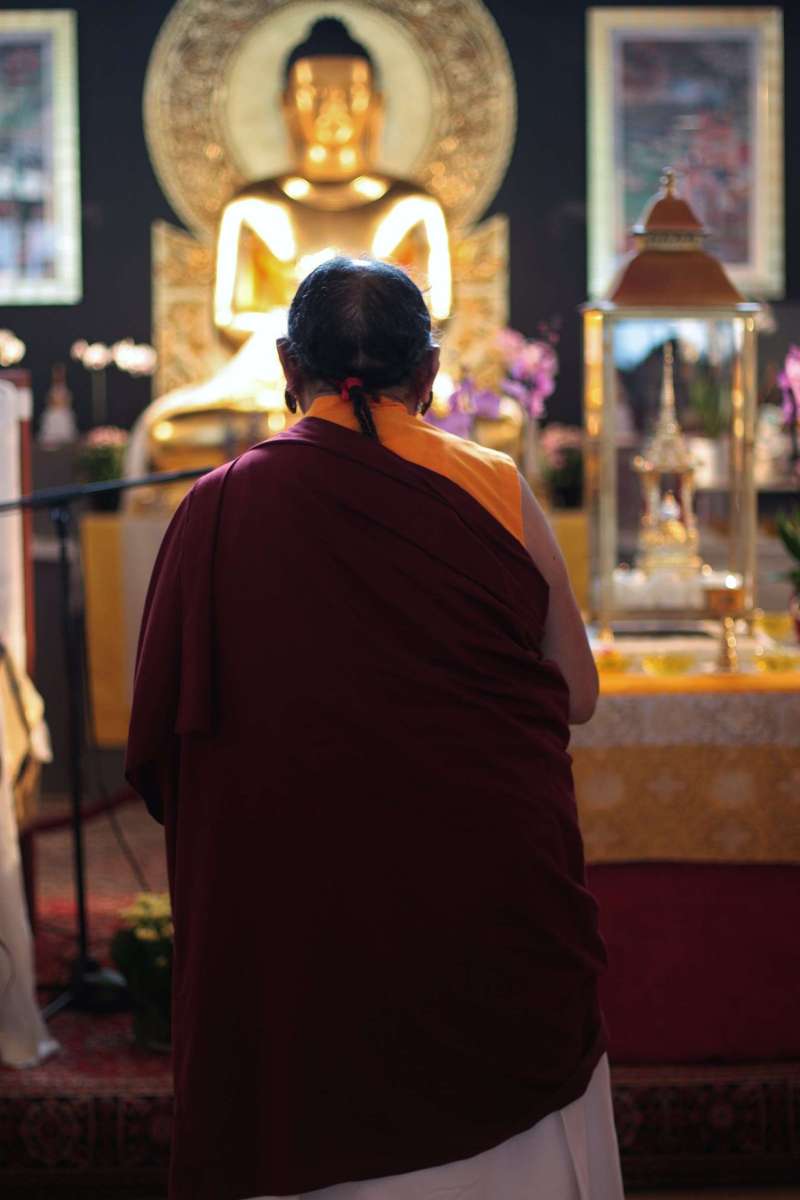
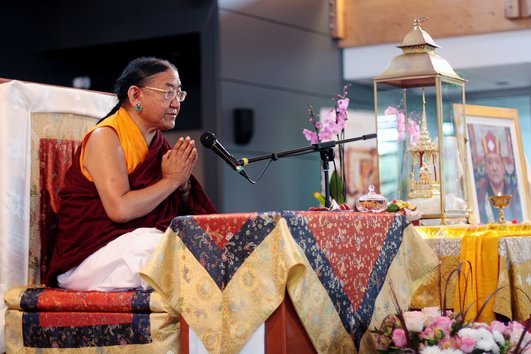
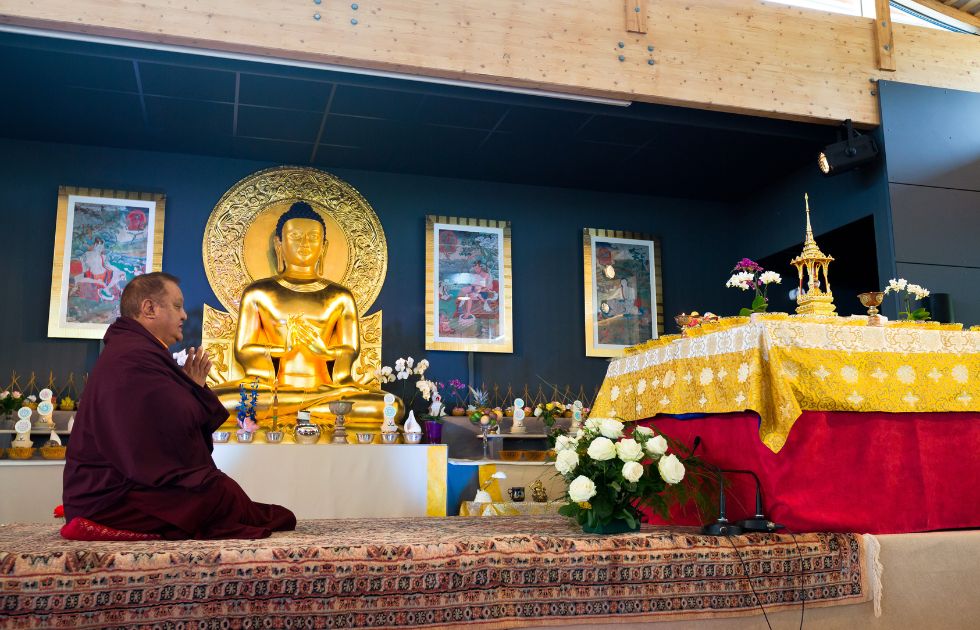 The presence of the relics at Dhagpo also coincided with Künzig Shamarpa’s last teaching in May 2014, three weeks before his sudden parinirvana on June 11. At the end of his teaching on the Placing Focus Remembrance on Four Objects, Künzig Shamarpa stood up, began to push his seat aside in order to sit on the floor on a cushion, in meditation posture, facing the relics of the Buddha, from where he gave a blessing to all the practitioners present, reciting the King of Aspiration Prayers of Samantabhadra.
Several masters came to pay homage to Künzig Shamarpa after his death in the presence of the Buddha’s relics. On July 13 , 2014, Yangsi Dilgo Khyentse Rinpoche said:
As we say in Buddhism, a teacher never stops coming to the world and teachers’ activity has no limitation. We all pray deeply for the swift rebirth of Shamar Rinpoche and may the activities of his previous life continue.
On July 25, 2014, His Holiness Sakya Trizin Rinpoche expressed his sadness, evoking his memory of Künzig Shamarpa who he had met for the first time at the monastery in Rumtek.
Whatever bodhisattvas do must have deep, profound meaning so therefore, all followers must emphasize their practice and fulfill their gurus’s wishes. If you continue your practice and keep the samayas, then it is sure he will soon physically appear among us and continue his great activities for the Dharma as well as for sentient beings. And I will also pray for his swift return.
The presence of relics at both Dhagpo sites, in Dordogne at the European seat of the Gyalwa Karmapa, and in Auvergne, where the Great Temple, monastery, and retreat centers are located, reflects the immense activity of the 16th Gyalwa Karmapa and his 17th incarnation, as well as Lama Gendun Rinpoche, Lama Jigme Rinpoche, and all the exceptional masters who stayed for long periods on the Côte de Jor, such as Dudjom Rinpoche, Dilgo Khyenste Rinpoche, and Pawo Rinpoche.
In August 2025, the relics were once again welcomed at Dhagpo Kundreul Ling and displayed in the Great Temple during the visit and teachings of Jamgon Kongtrul Rinpoche.
History of the Relics
Buddha Shakyamuni left his body in Kusinagar at the age of 80, around 500 BC. After his cremation, the remains of his body, consisting of small bleached bones, were divided into eight equal parts and distributed among the kingdoms where the Buddha had stayed and taught. At the end of the 19th century, some of these relics were found in northern India, inside a stupa. These relics were then entrusted to Thailand, the only neighboring Buddhist country spared from colonization.
In 1898, a religious dignitary predicted that relics would leave Thailand for the West 111 years later. Thus, in 2008, a delegation of Thai monks traveled to Europe to find a suitable location for the relics. And in 2009, 111 years later, the Thai Patriarchs, with the approval of the Asian Buddhist community, chose to offer these relics to France. The relics were then officially entrusted to the Buddhist Union of France and kept at the Great Pagoda of Vincennes.
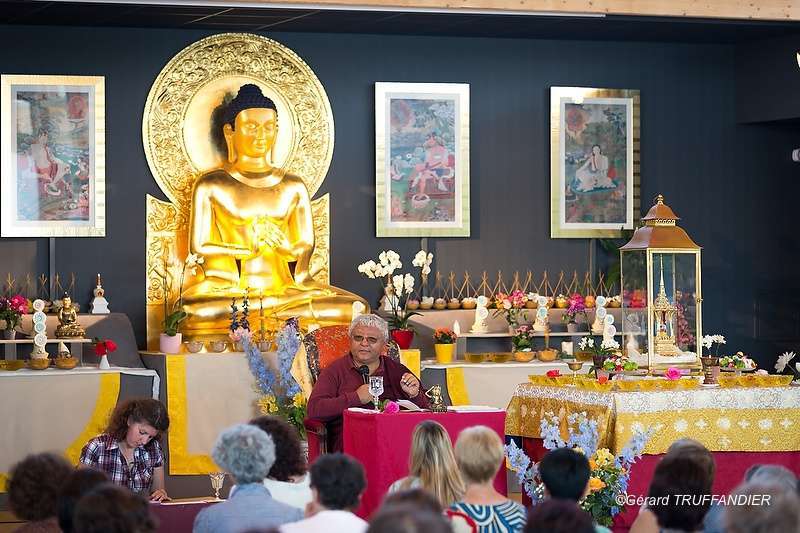




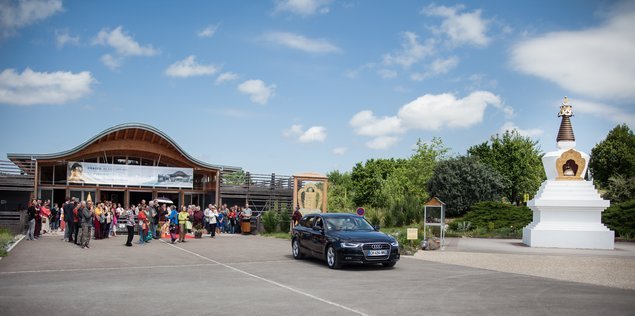
These photos come from our archives or were collected as part of the research for Dhagpo Kagyu Ling’s 50th anniversary. We have not been able to identify all the authors. The use of these photos is solely for informational purposes within the context of Dhagpo Kagyu Ling’s 50th anniversary celebration. Their use is limited to this event and our website and is not for commercial purposes.
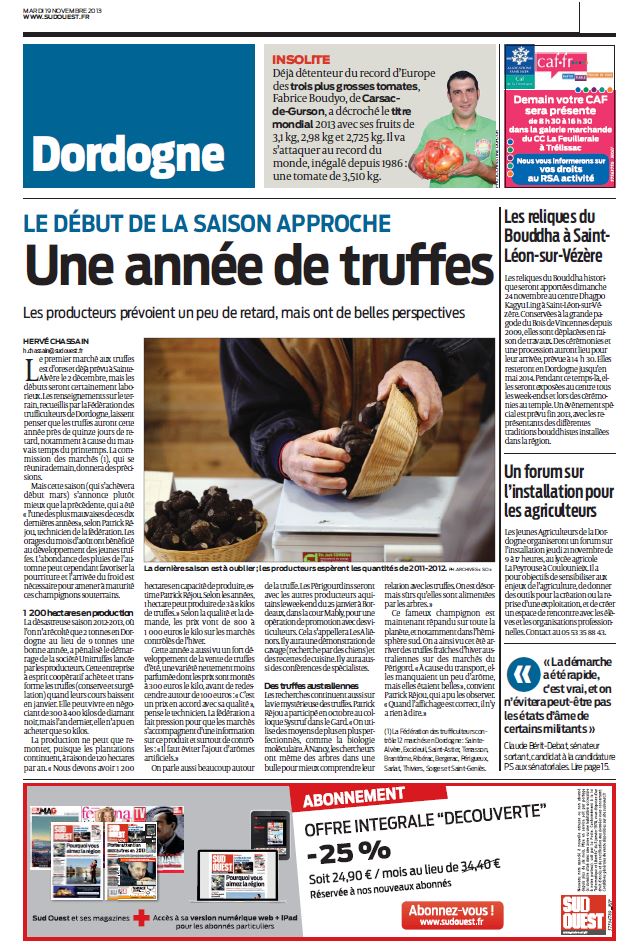
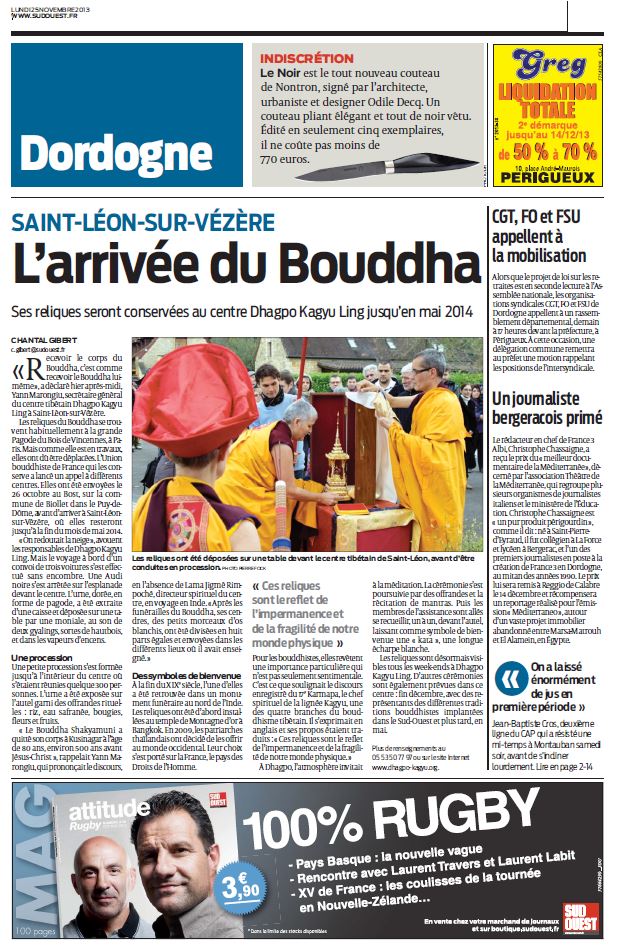
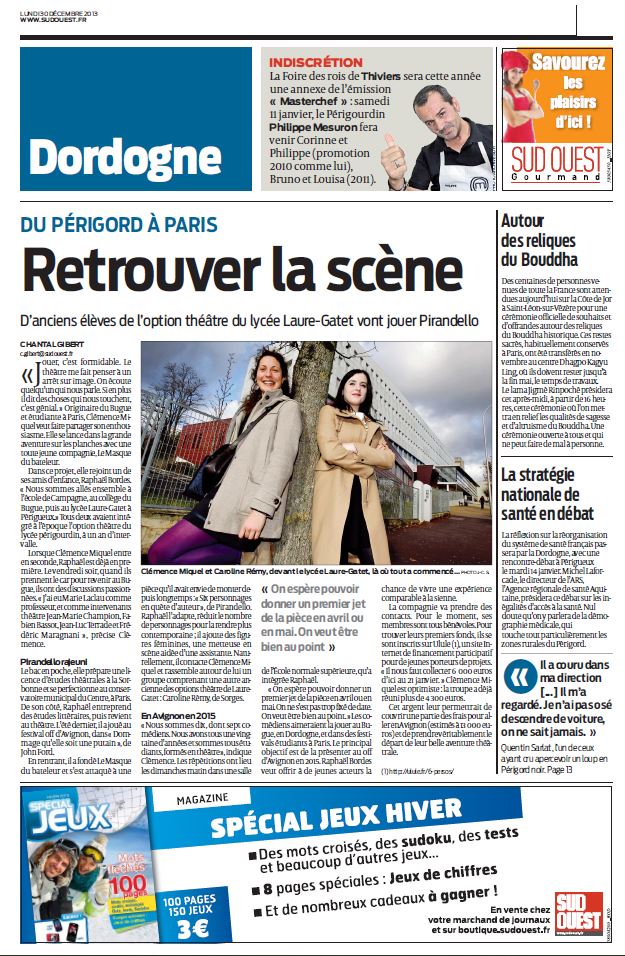
These photos come from our archives or were collected as part of the research for Dhagpo Kagyu Ling’s 50th anniversary. We have not been able to identify all the authors. The use of these photos is solely for informational purposes within the context of Dhagpo Kagyu Ling’s 50th anniversary celebration. Their use is limited to this event and our website and is not for commercial purposes.