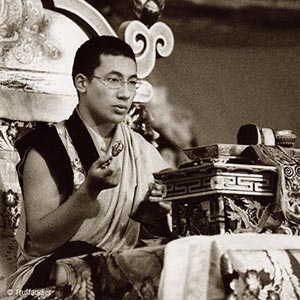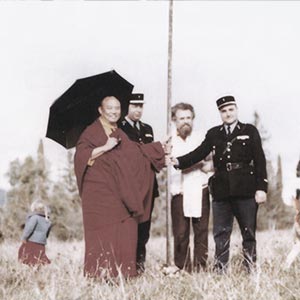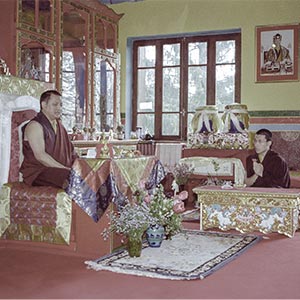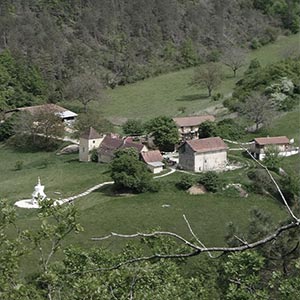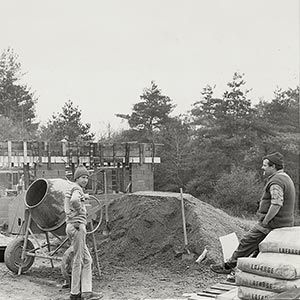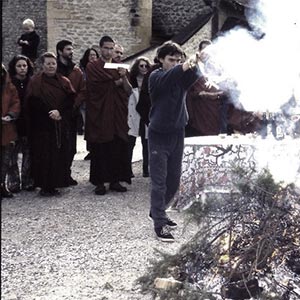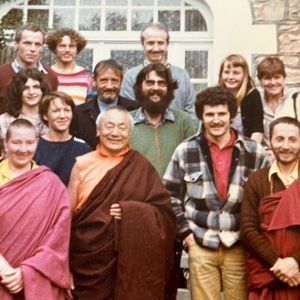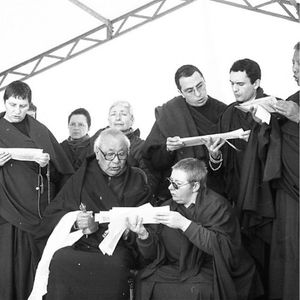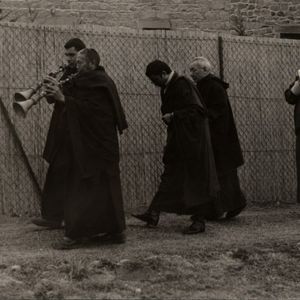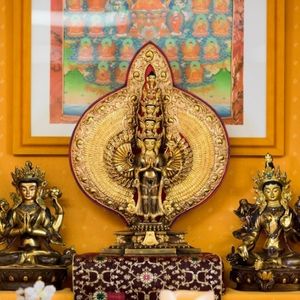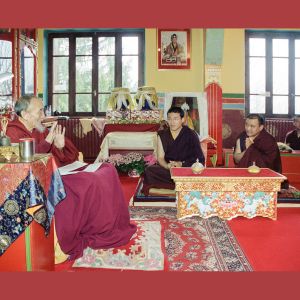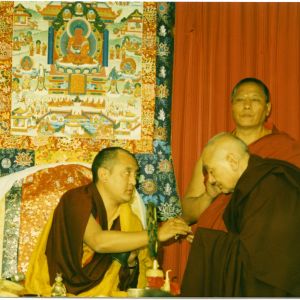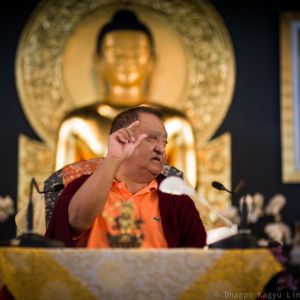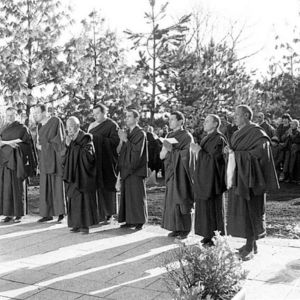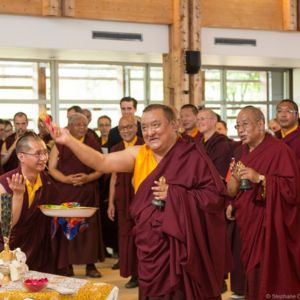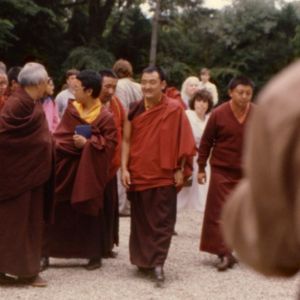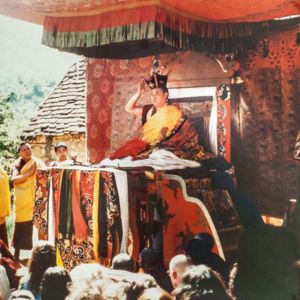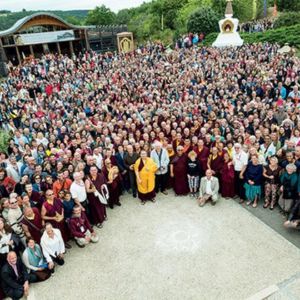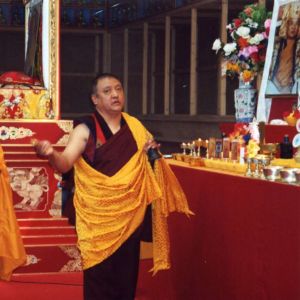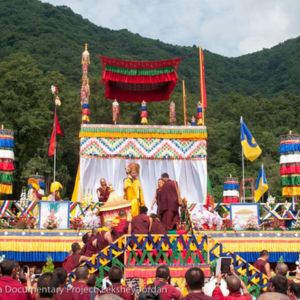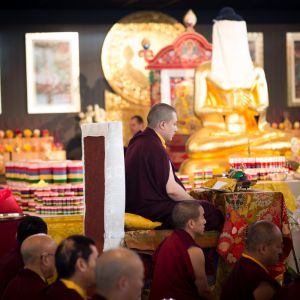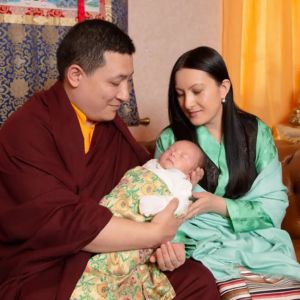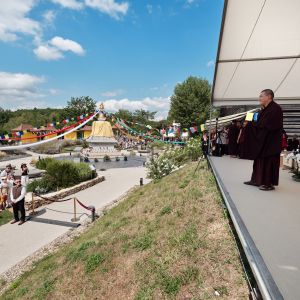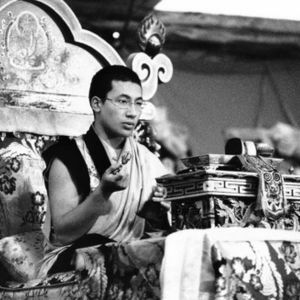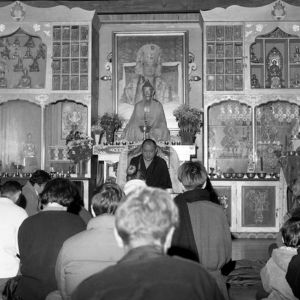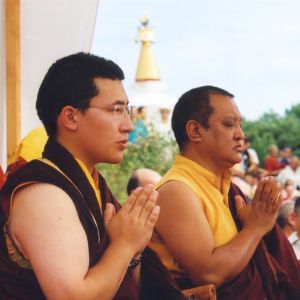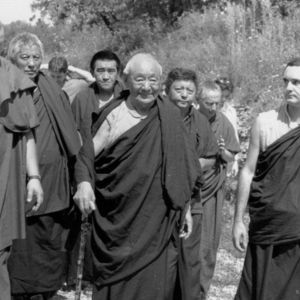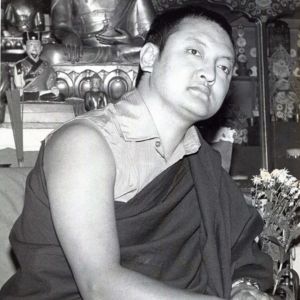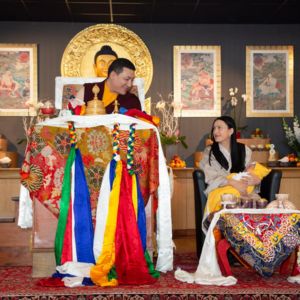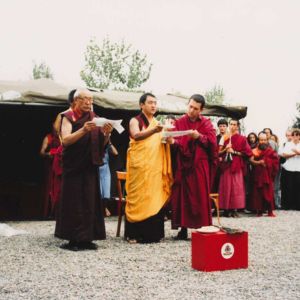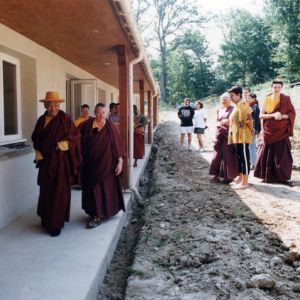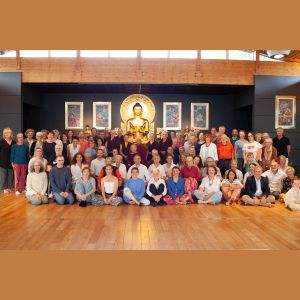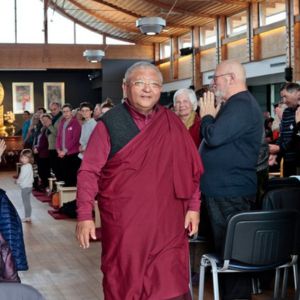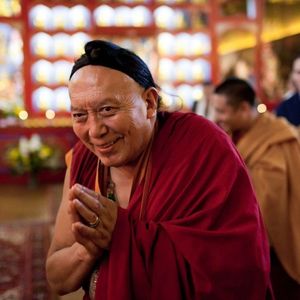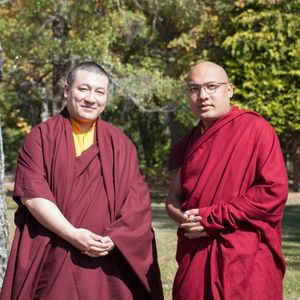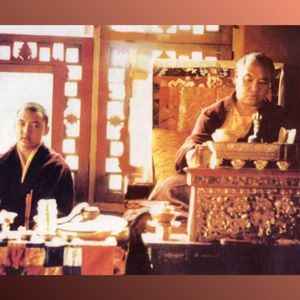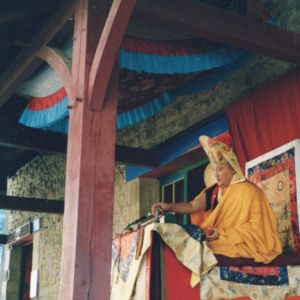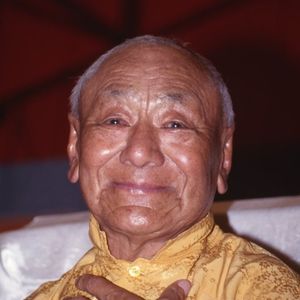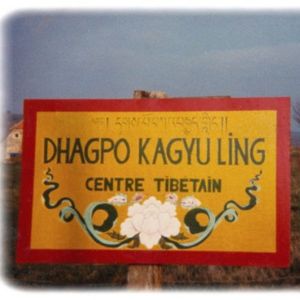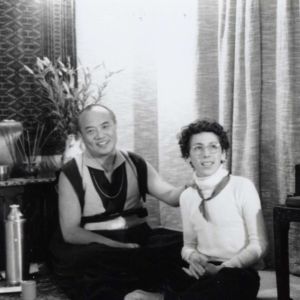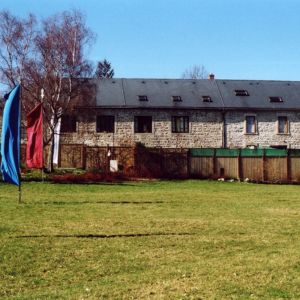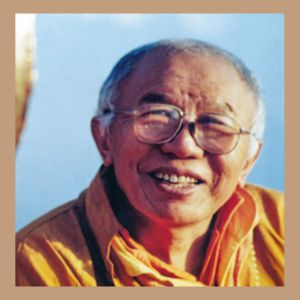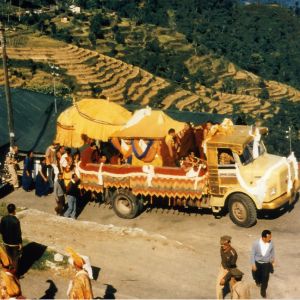
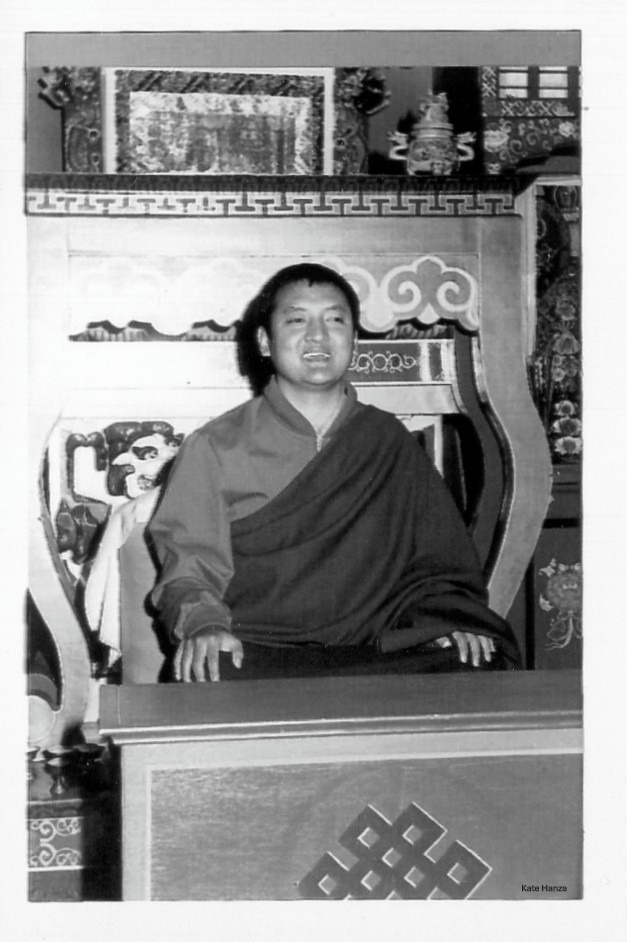
 In August 1981, Mipham Chökyi Lodrö, His Holiness the 14th Künzig Shamarpa, came to Dhagpo Kagyu Ling for the first time.
He stayed for several weeks to share some of the lineage’s essential teachings written by the 3rd and 9th Karmapas, The Treatise that Distinguishes Objected-Oriented Knowledge from Primordial Knowledge and Revealing the Dharmakaya, respectively. This was the first of many visits Shamarpa made to share the Dharma and confer the lineage’s blessing at Dhagpo.
Shamarpa Teaches the Text The Treatise that Distuinguishes Objected-Oriented Knowledge from Primordial Knowledge by Rangjung Dorje, the 3rd Karmapa
In 1978, Rangjung Rigpe Dorje, His Holiness the 16th Gyalwa Karmapa, explained the five conditions necessary for newly establishing the Dharma in a lasting way with his European disciples: welcome centers for—or access points to—the Buddha Dharma; Institutes for deepening one’s knowledge; libraries to support learning, retreat centers for deepening one’s meditation and living spaces to allow people to dedicate their lives to the conditions explained above.
In this context, he shared the importance for Karma Kagyü students of studying at least three treatises: The Ornament of Precious Liberation (Tib. དམ་ཆོས་ཡིད་བཞིན་གྱི་ནོར་བུ་ཐར་པ་རིན་པོ་ཆེའི་རྒྱན།) by Gampopa, The Inner and Profound Meaning (Tib. ཟབ་མོ་ནང་དོན།) by Rangjung Dorje, the 3rd Gyalwa Karmapa and The Supreme Continuum (tib. རྒྱུད་བླ་མ།) by Maitreya.
To approach these three essential treatises, it is necessary to begin by acquiring foundational knowledge. In the early 2000s, Künzig Shamarpa systematized a curriculum allowing Westerners to find their path amidst the wealth, vastness and depth of Buddha Shakyamuni’s teachings. He selected subjects to learn and practices to apply. Among the subjects are the aggregates, the ayatanas, dependent arising, the four truths of noble beings, actions—causes and effects, the essence of tathagatha or buddha nature, the functioning of object-oriented knowledge (Tib. རྣམ་ཤེས།) and primordial knowledge (Tib. ཡེ་ཤེས།) and more.
In 1983, for his first teaching at Dhagpo Kagyu Ling, Shamarpa specifically chose to explain the Namshe Yeshe (Tib. རྣམ་ཤེས་ཡེ་ཤེས་འབྱེད་པའི་བསྟན་བཅོས།), The Treatise that Distinguishes Object-Oriented Knowledge from Primordial Knowledge, written by Rangjung Dorje, the 3rd Gyalwa Karmapa.
On this occasion, he says,
The question of the origin of the cycle of suffering, happiness and indifference of mankind and the world gave rise to numerous answers that make up that many opinions and philosophical and religious systems. Firstly, there are those for whom the question does not even come up or who have no opinion on their existence. Among the many systems that have posited answers, we will particularly look at the Indian systems, out of which we will study, for example, the most significant ones that seem to be models that we find more or less everywhere.
[…] All Buddhist philosophical systems unanimously recognize the afflictive obscurations as the root of the cycle of existence, and practice and meditation as the means for pacifying these afflictive obscurations. On this shared basis, four philosophical systems developed that lead to different levels of realization; vaibashika, sautrantika, chittamatra and madhyamaka
.
Dhongtsang Shabdrung Rinpoche, an eminent teacher of the Sakya school of Tibetan Buddhism who—in response to a request from Shamarpa, has honored us with his teaching each year—explains the title of this treatise based primarily on the commentary of Lodrö Thaye, the 1st Jagmön Kongtrül, The Commentary for Clarifying the Understanding of the Meaning of the Words of the Treatise that Distinguishes Object-Oriented Knowledge from Primordial Knowledge, an Ornament of Rangjung’s Thought (Tib. རྣམ་པར་ཤེས་པ་དང་ཡེ་ཤེས་འབྱེད་པའི་བསྟན་བཅོས་ཀྱི་ཚིག་དོན་གོ་གསལ་དུ་འགྲེལ་པ་རང་བྱུང་དགོངས་པའི་རྒྱན་ཅེས་བྱ་བ་བཞུགས་སོ།):
This treatise allows for distinguishing object-oriented knowledge, sometimes translated as consciousness, and primordial knowledge.
Briefly, object-oriented knowledge is confused knowledge or knowledge associated with afflictive obscurations.
Confused knowledge consists in the coming together of the eight object-oriented types of knowledge. This coming together is the origin of the three realms and the cause of our wandering in samsara.
Primordial knowledge is knowledge free from confusion; it is the wisdom of the buddhas.
Lastly, because object-oriented knowledge, or confused knowledge, is the origin of the three realms of samsara, and primordial knowledge is the source of nirvana, by presenting these two types of knowledge, we present all phenomena of samsara and nirvana.
Then, again briefly, the expression “the treatise that distinguishes” in the title refers to the fact that these two, object-oriented knowledge and primordial knowledge, have a shared basis. Despite this, each has a completely distinct mode of knowing. Thus, their mode of knowing, or their manner of knowing phenomena, is what is to be distinguished.
Lastly, it’s a question of a “treatise” (Tib. བསྟན་བཅོ). A treatise has two qualities or characteristics: on one hand, it transforms the afflictive obscurations present in our continuum, and, on the other hand, it protects from the suffering of the three realms of samsara.
In his commentary on The Treatise that Distinguishes Object-Oriented Knowledge from Primordial Knowledge Lodrö Thaye, the 1st Jamgön Kongtrül, pays homage to Rangjung Dorje, the 3rd Gyalwa Karmapa, with these words,
Because he perceives the suchness of all phenomena devoid of obscurations, he masters the wisdom of a buddha.
Having manifested as the nirmanakaya of Lokeshvara, his enlightened activity that makes the teachings of the Muni shine like the sun is unrivaled in the three locations.
Dhongtsang Shabdrung Rinpoche explains:
 The wisdom or omniscience of a buddha is twofold: wisdom that knows phenomena as they are and wisdom that knows phenomena as they appear. When it is said that the Karmapa perceives the suchness of all phenomena, this means that he knows phenomena as they are.
The Karmapa manifested as the nirmanakaya of Lokeshvara (the Sanskrit term for Chenrezig). A buddha is endowed with the three kayas: the dharmakaya or body of truth, the samboghakaya or body of qualities, the nirmanakaya or body of manifestation. Chenrezig is a sambhogakaya. The nirmanakaya appears from the samboghakaya.
The 3rd Karmapa is a body of manifestation of Chenrezig. He manifested as a human for the benefit of all beings with the goal of explaining the Buddha’s teachings.
Among the different types of manifestation bodies, a particular type is called “supreme body of manifestation.” The Karmapa is a supreme body of manifestation.
He manifested in this way with the goal of making the Buddha’s teachings shine like the sun. His enlightened activity, which consists in clarifying the Buddha’s words, is limitless and unequaled in the three locations (beneath the earth, on the earth and in the air). It is comparable to the activity of all the buddhas.
This treatise composed by Rangjung Dorje, the Omniscient, Victorious One, in few words with profound meaning is divided into three parts.
Indeed, the body of the text is organized as such according to the concise plan from the 1st Jamgön Kongtrül’s commentary.
1. The Introduction, in Three Parts:
1.1. The Explanation of the Title of the Treatise
1.2. The Homage
1.3. The Promise of Composition
2. The Meaning of the Text, in Three Parts
2.1. The Explanation of Object-Oriented Knowledge Is in Four Parts:
2.1.1. The Explanation of the Fact That the Root of Confusion and the Absence of Confusion Is Mind Itself, in Three Parts:
2.1.2. The Establishment of Appearance as Being Mind, in Four Parts:
2.1.3. The Presentation of Unborn Mind, in Two Parts:
2.1.4. The Explanation That the Causes and Conditions of Confusion Are the Group of Eight Types of Object-Oriented Knowledge, in Two Parts.
2.2. The Meaning of the Text, Part 2: The Explanation of the Wisdom of the Change of State of the Group of Eight, Endowed with Enlightened Bodies, in Two Parts:
2.2.1. Introduction to the General Meaning
2.2.2. Explanation in and of Itself of the Meaning of the Text, in Six Parts:
2.2.2.1. Explanation of Mirror[-Like] Wisdom as Being the Dharmakaya, in Two Parts
2.2.2.2. Explanation of the Wisdom of Equality, Also in Two Parts
2.2.2.3. Explanation of Discrimination Wisdom, in Two Parts
2.2.2.4. Explanation of These Two as Being the Sambhogakaya
2.2.2.5. Explanation of All-Accomplishing Wisdom as Being the Nirmanakaya, in Two Parts
2.2.2.6. Explanation of the Wisdom of Dharmadhatu as Being the Svabhavikakaya, in Two Parts
2.3. The Summary of the Meaning of These
3. The Conclusion of the Root Text, in Three Parts
3.1 The Goal of the Explanation of This Text
3.2 The Aspiration of the Realization of This Very Same
3.3 Presentation of the Way the Text Was Composed
The Treatise that Distinguishes Object-Oriented Knowledge from Primordial Knowledge, composed in 1335 in Tsurphu, the historic seat of the Karmapas in Tibet, as well as the The Inner and Profound Meaning and the treatise entitled Revealing the Essence of Tathagatha (Tib. དེ་བཞིན་གཤེགས་པའི་སྙིང་པོ་བསྟན་པའི་བསྟན་བཅོས།), are the three major treatises of the Karma Kagyü lineage, composed by Rangjung Dorje, the 3rd Karmapa.
The 14th Shamarpa explained The Treatise that Distinguishes Object-Oriented Knowledge from Primordial Knowledge and the treatise entitled Revealing the Essence of Tathagatha, in August 1981 and 1988 respectively, at Dhagpo Kagyu Ling.
Today, the reference texts and foundational study subjects continue to be explained and studied within the Institute.
The seeds of the explanations continue to be planted, carried by the winds of blessing of the eminent teachers of the Karma Kagyü lineage. So many seeds simply waiting to ripen…
Shamarpa Teaches the text Revealing the Dharmakaya by Wangchuk Dorje, the 9th Karmapa
 Although Wangchuk Dorje, the 9th Gyalwa Karmapa (1556–1603) wrote various commentaries on Vinaya, Prajnaparamita, Madhyamaka and Vasubandhu’s Abhidharmakosha (which is notably studied at Dhagpo Kagyu Ling’s Institute), these three compositions on Mahamudra, often called The Trilogy on Mahamudra, are the most famous and are a cornerstone of the explanation of Mahamudra in the Karma Kagyü lineage today.
They are:
-
-
- The Ocean of Certain Meaning (Tib. ལྷན་ཅིག་སྐྱེས་སྦྱོར་གྱི་ཟབ་ཁྲིད་ངེས་དོན་རྒྱ་མཚོའི་སྙིང་པོ་ཕྲིན་ལས་འོད་འཕྲོ་བཞུགས་སོ།)
- Dissipating the Obscurity of Ignorance (Tib. ཕྱག་རྒྱ་ཆེན་པོ་མ་རིག་མུན་སེལ་ཞེས་བྱ་བཞུགས་སོ།)
- Revealing the Dharmakaya (Tib.ཕྱག་རྒྱ་ཆེན་པོ་ལྷན་ཅིག་སྐྱེས་སྦྱོར་གྱི་ཁྲིད་ཟིན་བྲིས་སྙིང་པོ་གསལ་བའི་སྒྲོན་མེ་བདུད་རྩིའི་ཉིང་ཁུ་ཆོས་སྐུ་མཛུབ་ཚུགས་སུ་ངོ་སྤྲོད་པ་བཞུགས་སོ། )
-
Karmapa Wangchuk Dorje did not give the composition dates for these three works, thus we do not know what order they were written in. They are similar in terms of content and structure. All three are divided into numbered sections, intended as progressive meditation sessions. The three texts also include remarks specifically meant for teachers.
The Indian origins of the Mahamudra lineage were initially made up of oral instructions. With time and the decline of the diligence of disciples engaging in this process of practice, the instructions were systematized and written down. In the Kagyü tradition, they were mainly transcribed during the time of the 9th Karmapa.
The Ocean of Certain Meaning is the longest and most detailed text of the trilogy. It presents the path in structured way, covering:
♦ the preliminary practices of Mahamudra
- the shared ones (the four contemplations on precious human existence, impermanence, karma and the flaws of samsara)
- and the unshared ones (refuge and enlightened mind, Vajrasattva meditation, mandala offering and guru yoga practice)
♦ the four conditions for the practice of Mahamudra (weariness with samsara—the causal condition; following an authentic friend of virtue—the predominant condition; certainty concerning the natural state of dharmata—the objective condition; becoming free from all hope and fear—the immediate condition)
♦ the meditation of calm abiding
♦ the meditation of higher vision
♦ introduction to buddha nature
This text is addressed to practitioners with solid foundations—both on a theoretical level as well as in Dharma practice—and who are engaged with a qualified meditation master. In the text’s colophon, Karmapa firmly indicates the conditions one must respect to receive and teach this text, conditions sealed by a requisite commitment to the Dharma protectors.
Traditionally, this text is taught in the context of a strict retreat. The qualified teacher explains a passage that is then put into practice by the meditator. Then the meditator recounts their experience to the teacher who evaluates their understanding and sees whether they can explain the following passage or whether the meditator needs to continue their meditation before continuing further in the text.
Dissipating the Obscurity of Ignorance is a shorter version that covers the same subjects while being less formally written as the previous text (the scriptural sources are not cited). Karmapa states it as such in the colophon:
Lama Rabjam Mawa Samten Künga insistently addressed this request to me, saying,
‘I beg you to teach [Mahamudra], principally focusing on oral instructions that point to practice,
without using scriptural citations or other.’
In reply, though I have no experiences, [I,] Mipham Chöwang, also known as Vajreshvara,
Have conscientiously written this during my practice sessions in the house of Zhoka Hor, in accordance with the words of my previous lama.
Revealing the Dharmakaya, the text taught by Shamarpa at Dhagpo Kagyu Ling in 1981, is the shortest text of the trilogy. It covers the same subjects as the two preceding works and is organized into three chapters:
- The first chapter explains the shared and unshared preliminary practices.
- The second chapter treats the practices of calm abiding and higher vision.
- The third chapter covers how to increase practice and dissipate doubts.
Though these texts have been translated and are available in many languages today , Kama Lodrö Chökyi Senge, the 3rd Jamgon Kongtrul Rinpoche, warned us in a teaching he gave on this text in France in 1990,
The transmission of Mahamudra does not occur through intellectual understanding of Buddhist literature.
Mahamudra is an oral transmission of meditation instructions transmission from master to disciples within the lineage and relies on the realisation of these instructions.
A transmission presupposes that the lama has themself realized these teachings in order to be able to transmit the lineage’s blessings without any error.
This is why the lineage of Mahamudra is extremely pure and beneficial—the transmission relied on realization.
All the meditation instructions are profound; they are not simple collections of information.
Thus, simply reading these works in the hope of obtaining the fruits of the Mahamudra path is not only insufficient, it may generate mistaken understanding. The instructions rely on guidance from a qualified teacher who accompanies the meditator’s progress step by step, in a process of discussion and questions. This qualified teacher is a custodian of the lineage’s blessing, an essential factor for actualizing this practice.




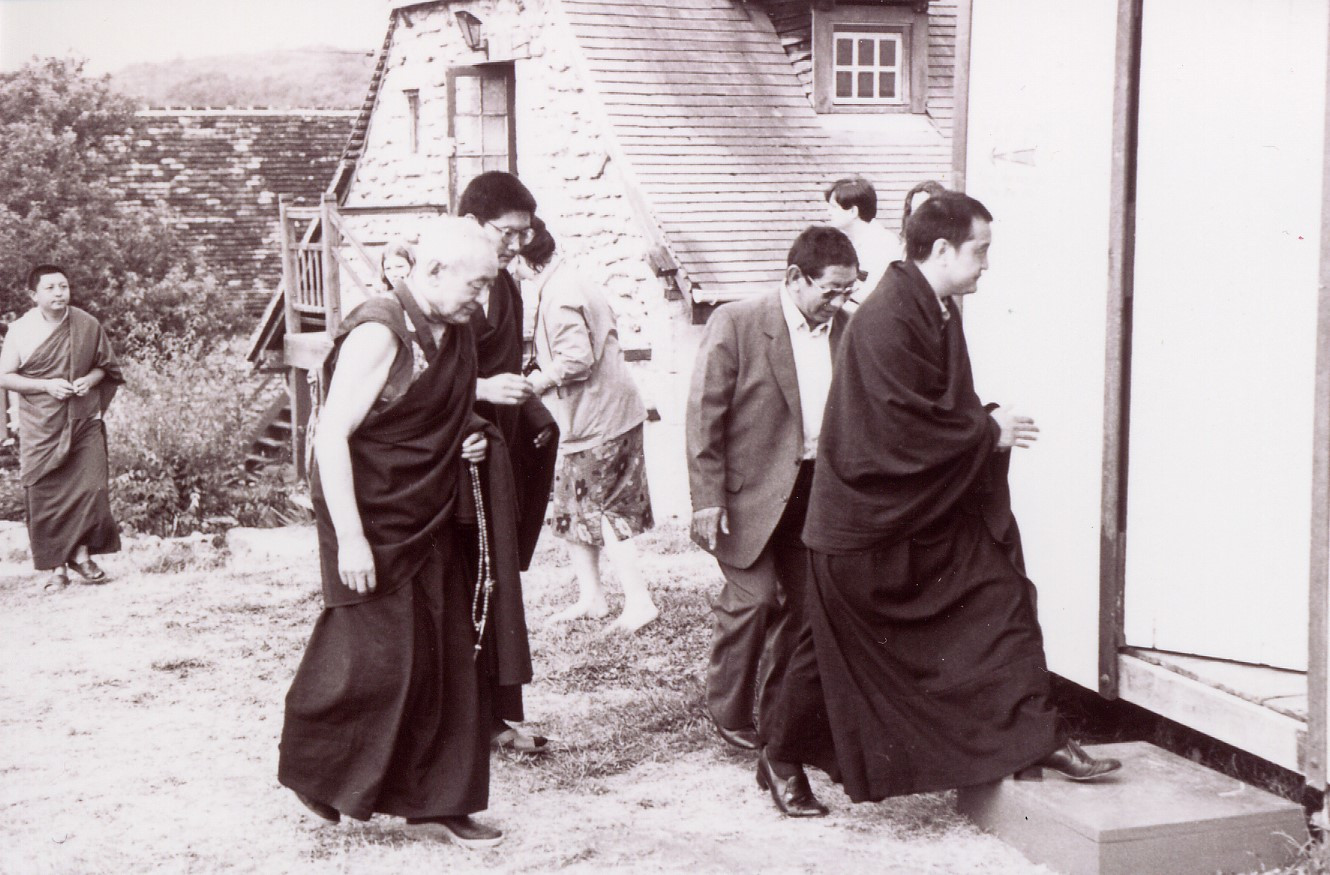
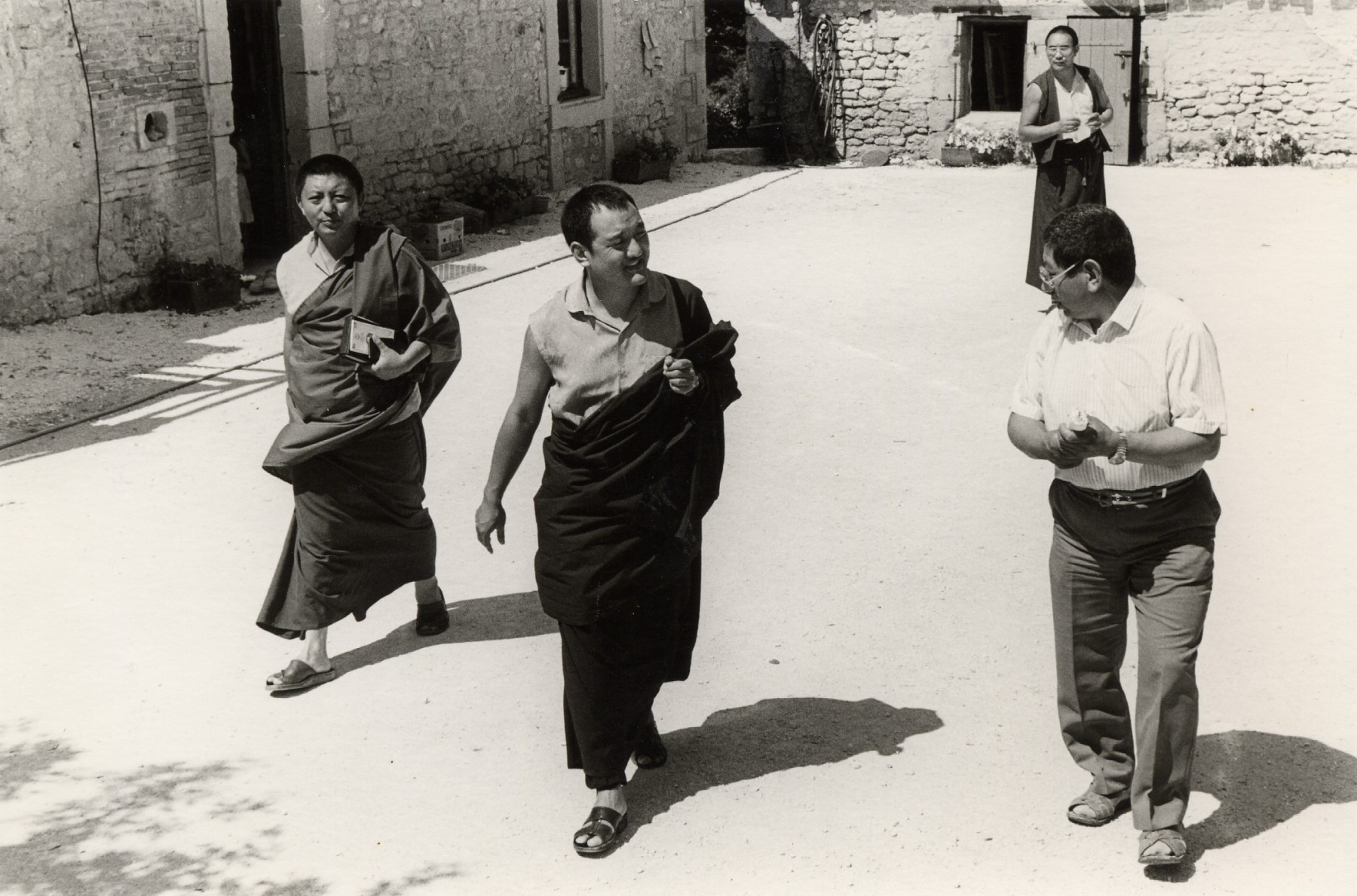
These photos come from our archives or were collected as part of the research for Dhagpo Kagyu Ling’s 50th anniversary. We have not been able to identify all the authors. The use of these photos is solely for informational purposes within the context of Dhagpo Kagyu Ling’s 50th anniversary celebration. Their use is limited to this event and our website and is not for commercial purposes.
Event
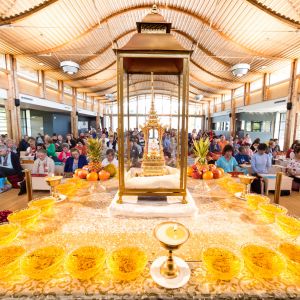
To commemorate this event, we will broadcast teachings given by Künzig Shamar Rinpoché at the Bodhi Path Center in Virginia (USA).


These photos come from our archives or were collected as part of the research for Dhagpo Kagyu Ling’s 50th anniversary. We have not been able to identify all the authors. The use of these photos is solely for informational purposes within the context of Dhagpo Kagyu Ling’s 50th anniversary celebration. Their use is limited to this event and our website and is not for commercial purposes.