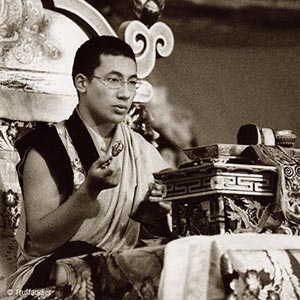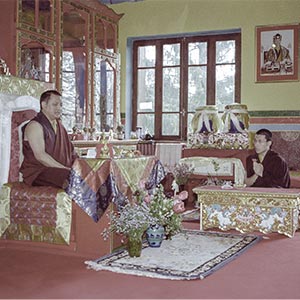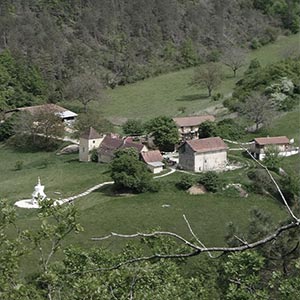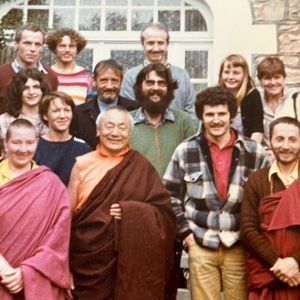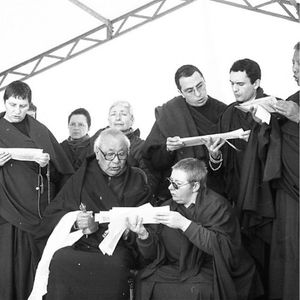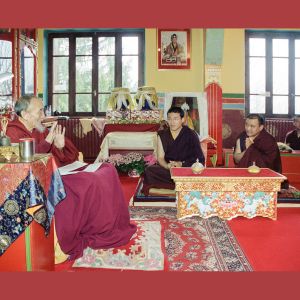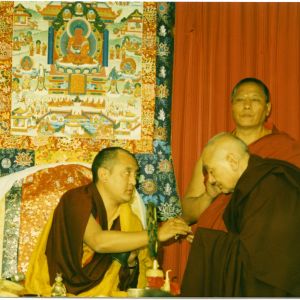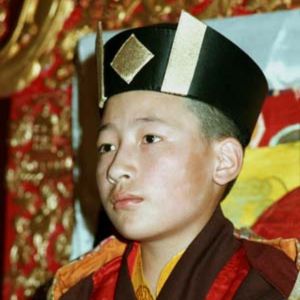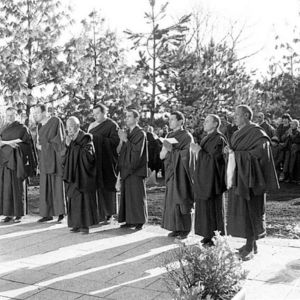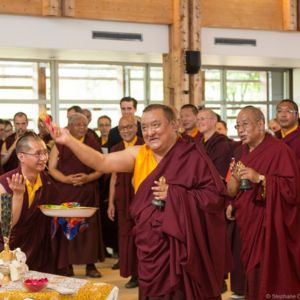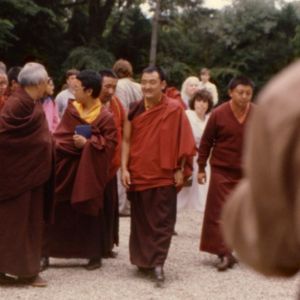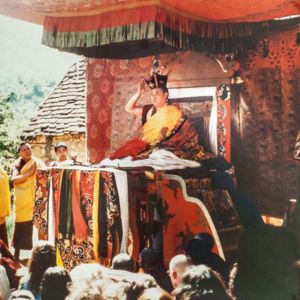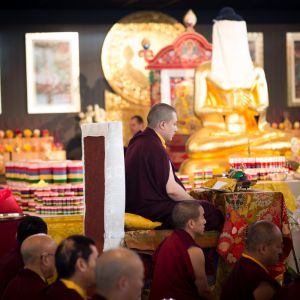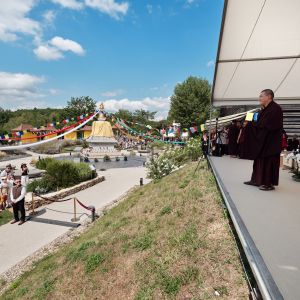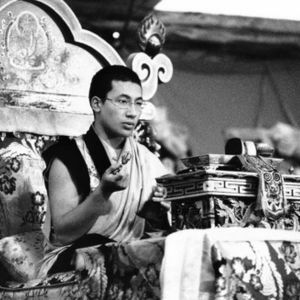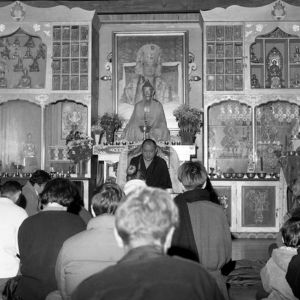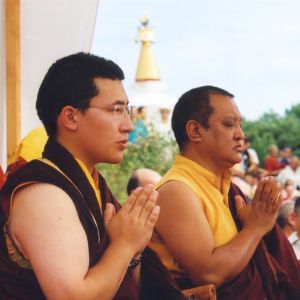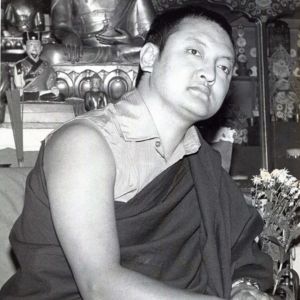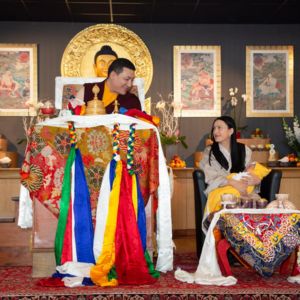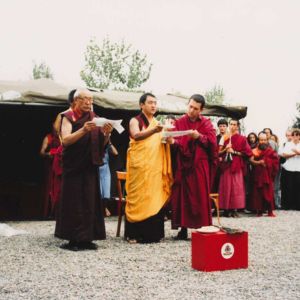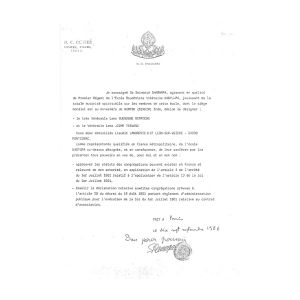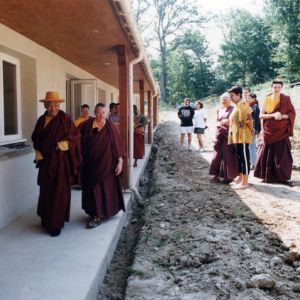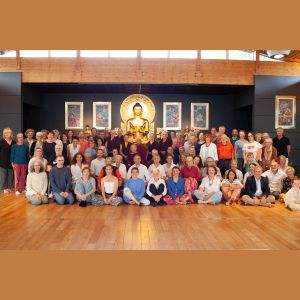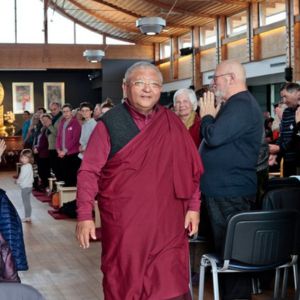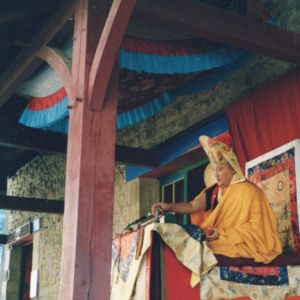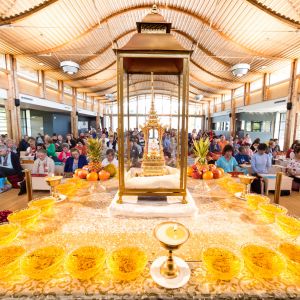
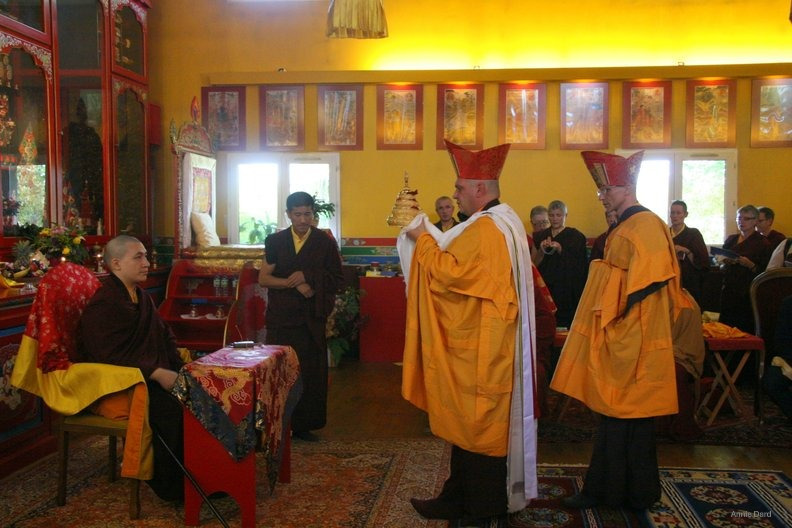
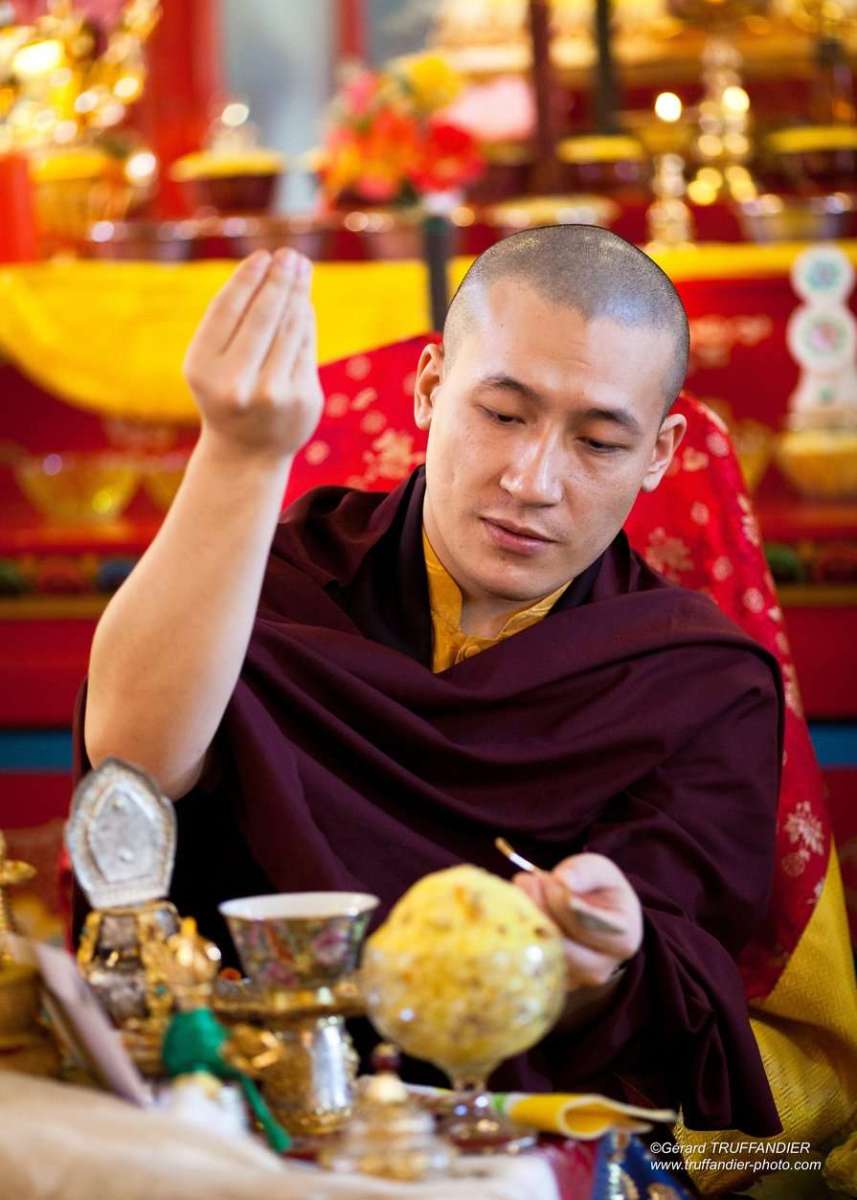
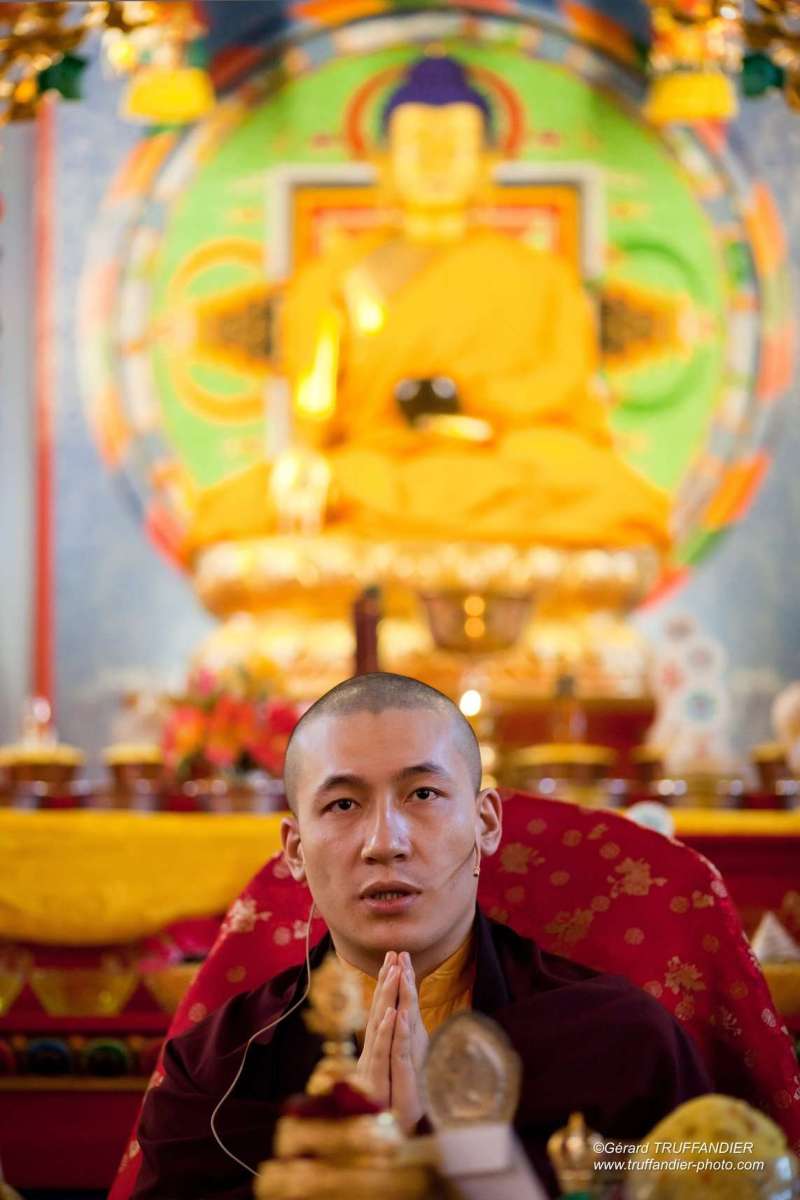
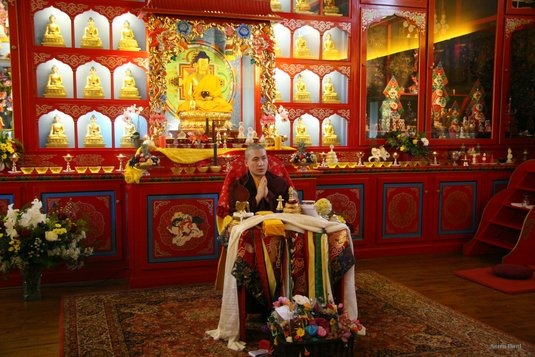
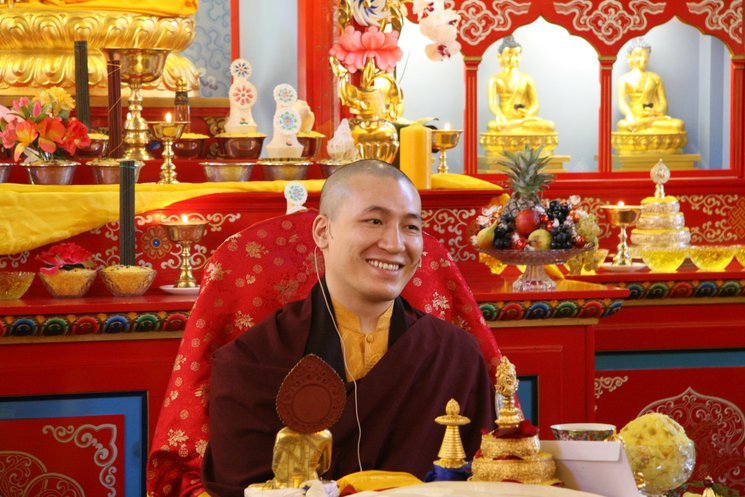
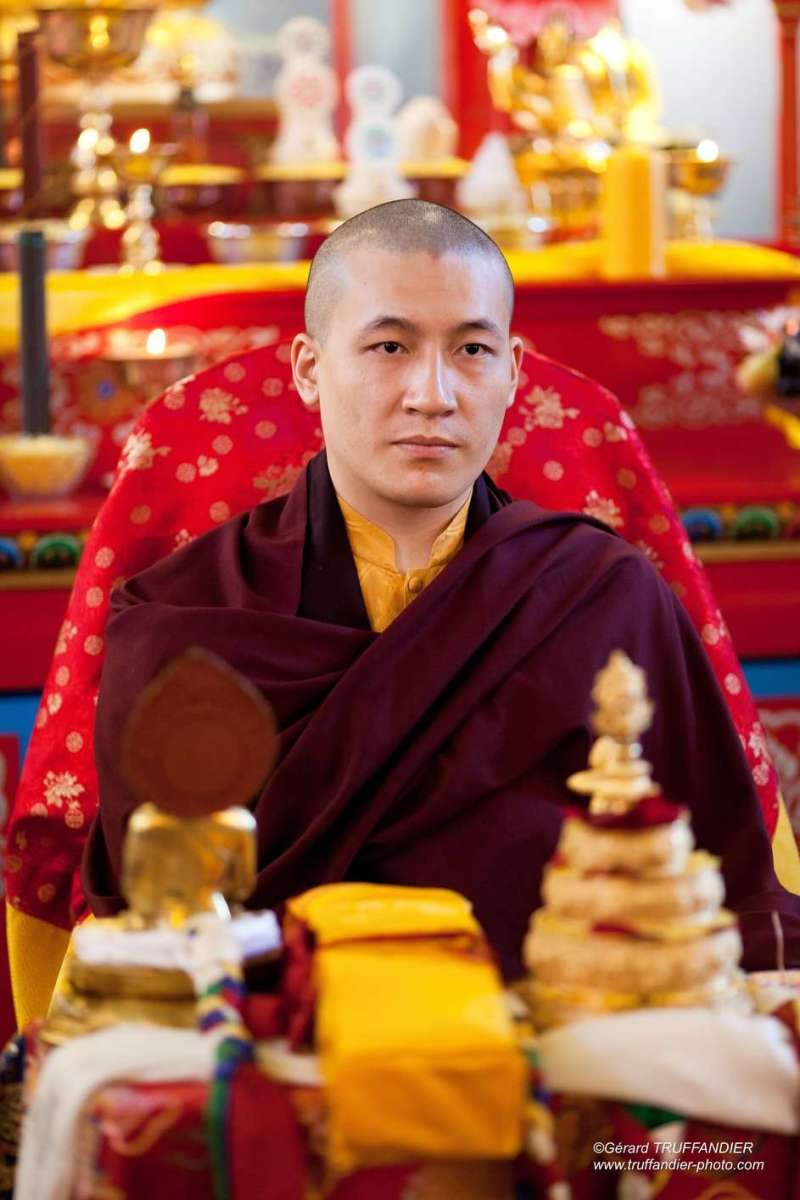
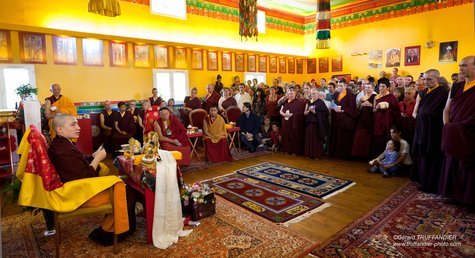
Beginning in early October 2010 and over the course of the next two months, His Holiness the 17th Gyalwa Karmapa pursued his education as lineage holder. At Dhagpo Kundreul Ling, he received the collection compiled by Jamgon Kongtrul Lodrö Thaye, the Treasure of Precious Instructions , or Damngak Dzö (see the presentation of this collection below).
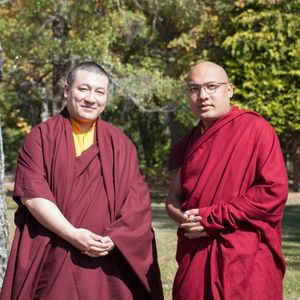
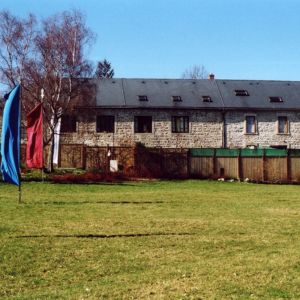
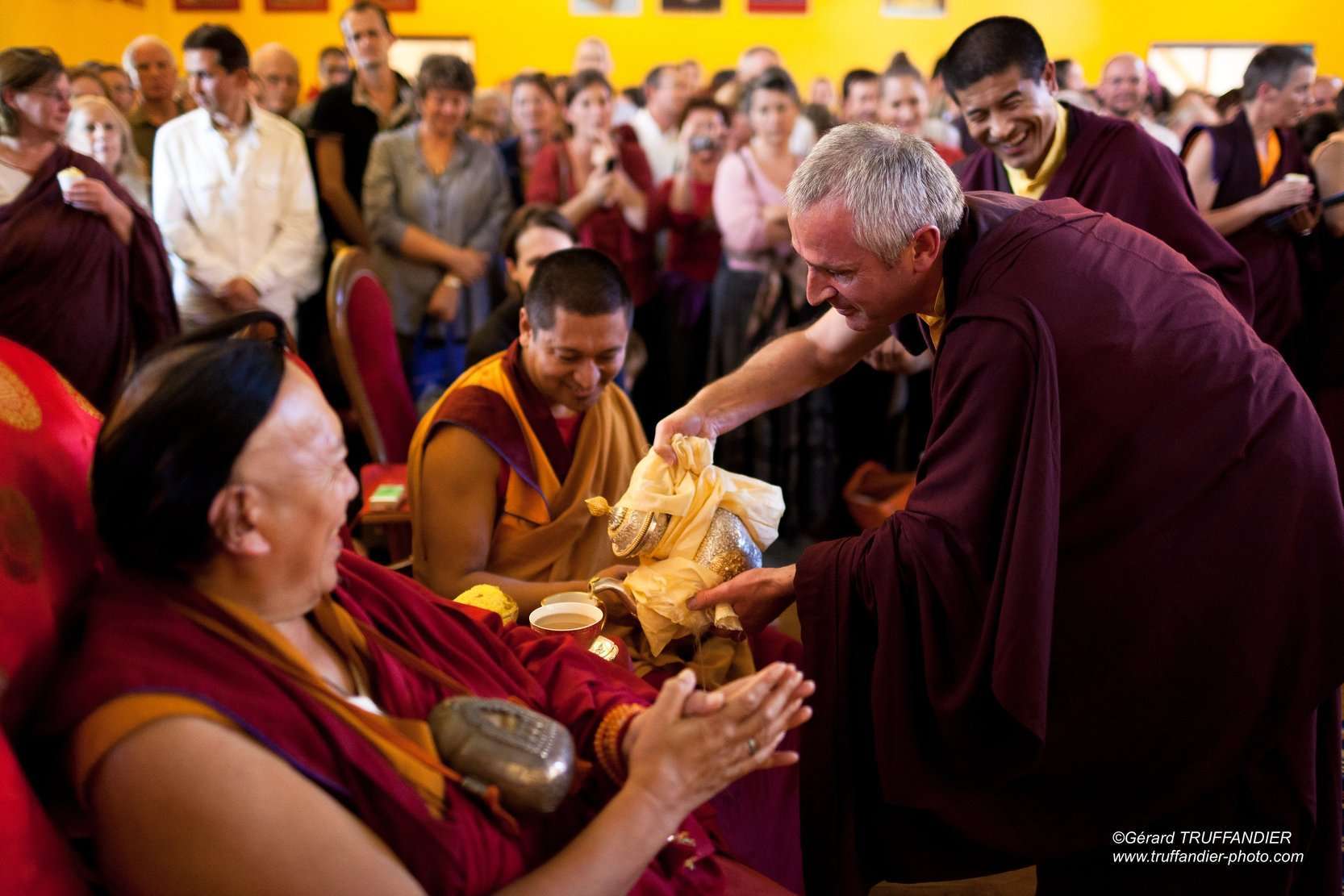
As on several occasions during the 2000s, Dhagpo Kundreul Ling was the privileged witness to Karmapa’s education, providing an ideal environment for this confidential transmission. Karmapa was the main recipient, accompanied by Kathog Rigzin Chenpo Rinpoche (holder of the Kathog lineage of the Nyingma tradition) and Trinlay Rinpoche, joined by Lama Jigme Rinpoche.
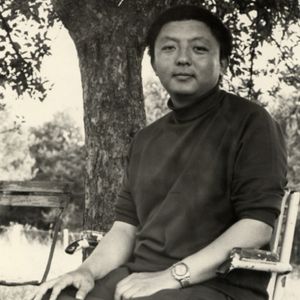
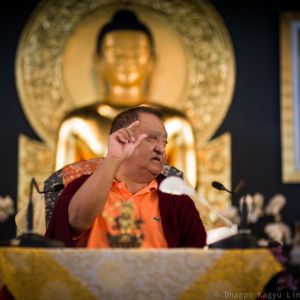
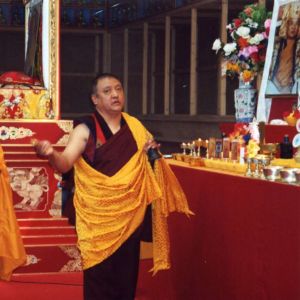
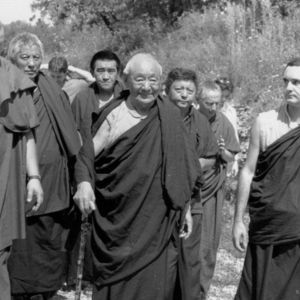
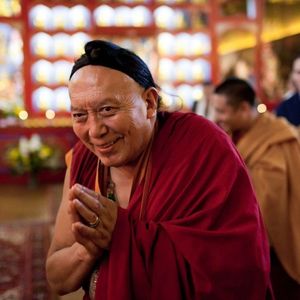
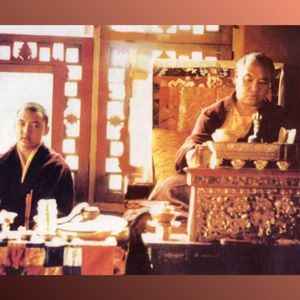
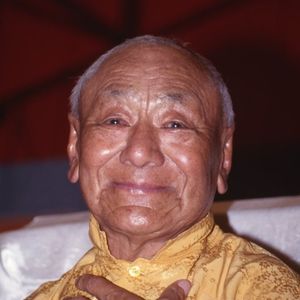
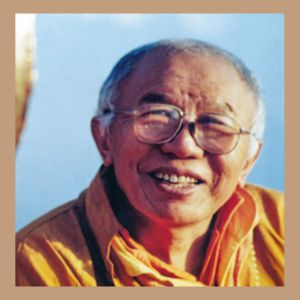
Mipham Chökyi Lodrö, the 14th Künzig Shamarpa, requested of the eminent master Pewar Rinpoche (1933-2022) that he transmit this collection to Karmapa. Jamyang Sönam Wangpo Pewar Choktrul Rinpoche, to give his full name, was a great master and holder of the Sakya and Nyingma traditions of Tibetan Buddhism. He was the abbot of Pewar Monastery in Tibet. His radiant and timeless presence was reminiscent of that of his great friend Dilgo Khyentse Rinpoche (1910–1991).
Pewar Rinpoche was a disciple of Jamyang Khyentse Chökyi Lodrö (1893–1959). In addition to his spiritual accomplishments, Pewar Rinpoche also made a remarkable contribution to the revival of Buddhism in Tibet. He was deeply committed to preserving Tibetan Buddhist art and texts, notably risking his life to ensure that the Derge printing press survived the Chinese Communist invasion.
In the letter he addressed to his students upon Pewar Rinpoche’s parinirvana, Karmapa explained:
Due to changes in the country, Pewar Rinpoche settled in an underground cave in a secluded location not far from Gönchen Monastery in the Derge region. He spent twenty years there in meditation.
From time to time, practitioners would seek his instructions, and during these meetings, Pewar Rinpoche would ask trusted disciples to retrieve sacred objects, such as statues and paintings, from monasteries in the region. He then protected these objects in his cave and returned them to their original institutions once circumstances had stabilized. In total, the late Pewar Rinpoche saved more than a thousand sacred representations.
From 1980 until his death, Pewar Rinpoche tirelessly taught the Buddha Dharma, gave transmissions and empowerments in different regions of Tibet and abroad. Unfortunately, due to the lack of beneficial karma of sentient beings, it is possible that there will never be another master like him in this world.
Pewar Rinpoche was the direct holder of the transmission lineage of this collection; there were only two masters between him and the author of the collection, Jamgon Kongtrul Lodrö Thaye.
By initiating this transmission, Shamarpa once again demonstrated the ecumenical dimension of Dharma transmissions. It is not so much a matter of schools or institutions as it is of authentic practitioners who are holders of intact and unbroken lineages of transmission, which they pass on beyond all religious or political divisions.
See other articles on the transmissions received by Karmapa at Dhagpo Kundreul Ling:
- From Mipham Chökyi Lodrö, the 14th Künzig Shamarpa, and also
- From Khenchen Trinley Peljor Rinpoche
- From Chogye Trichen Rinpoche
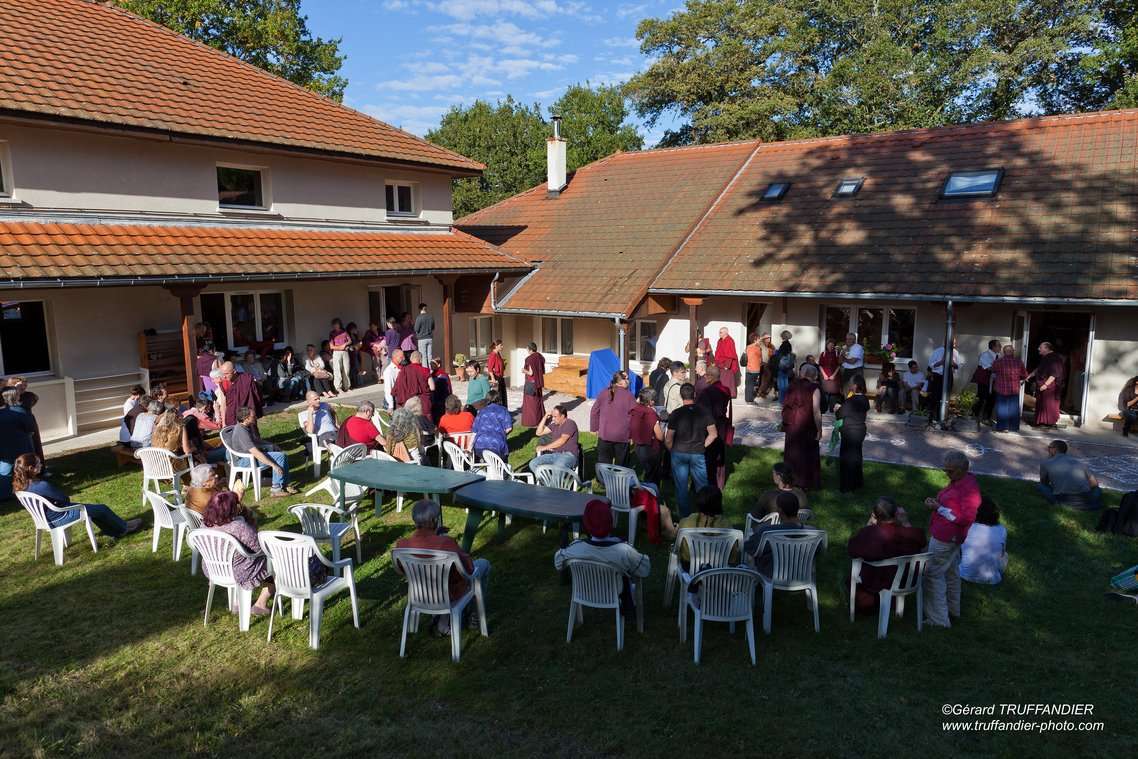
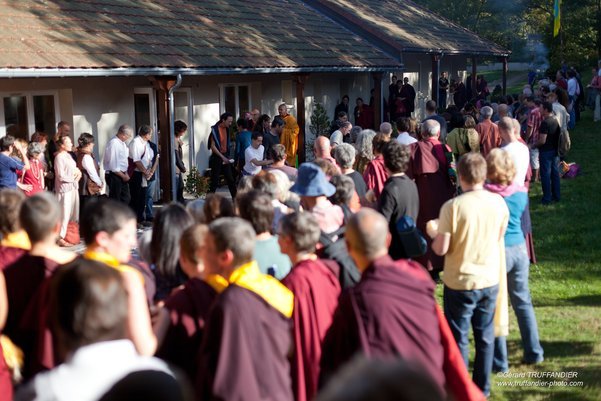
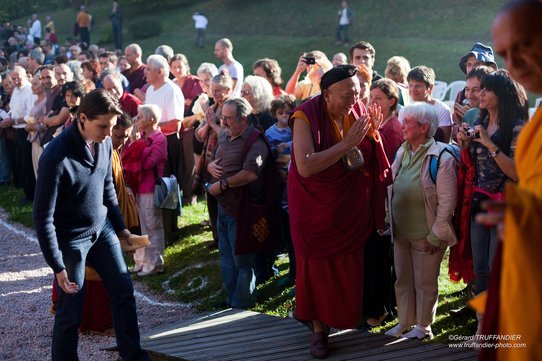
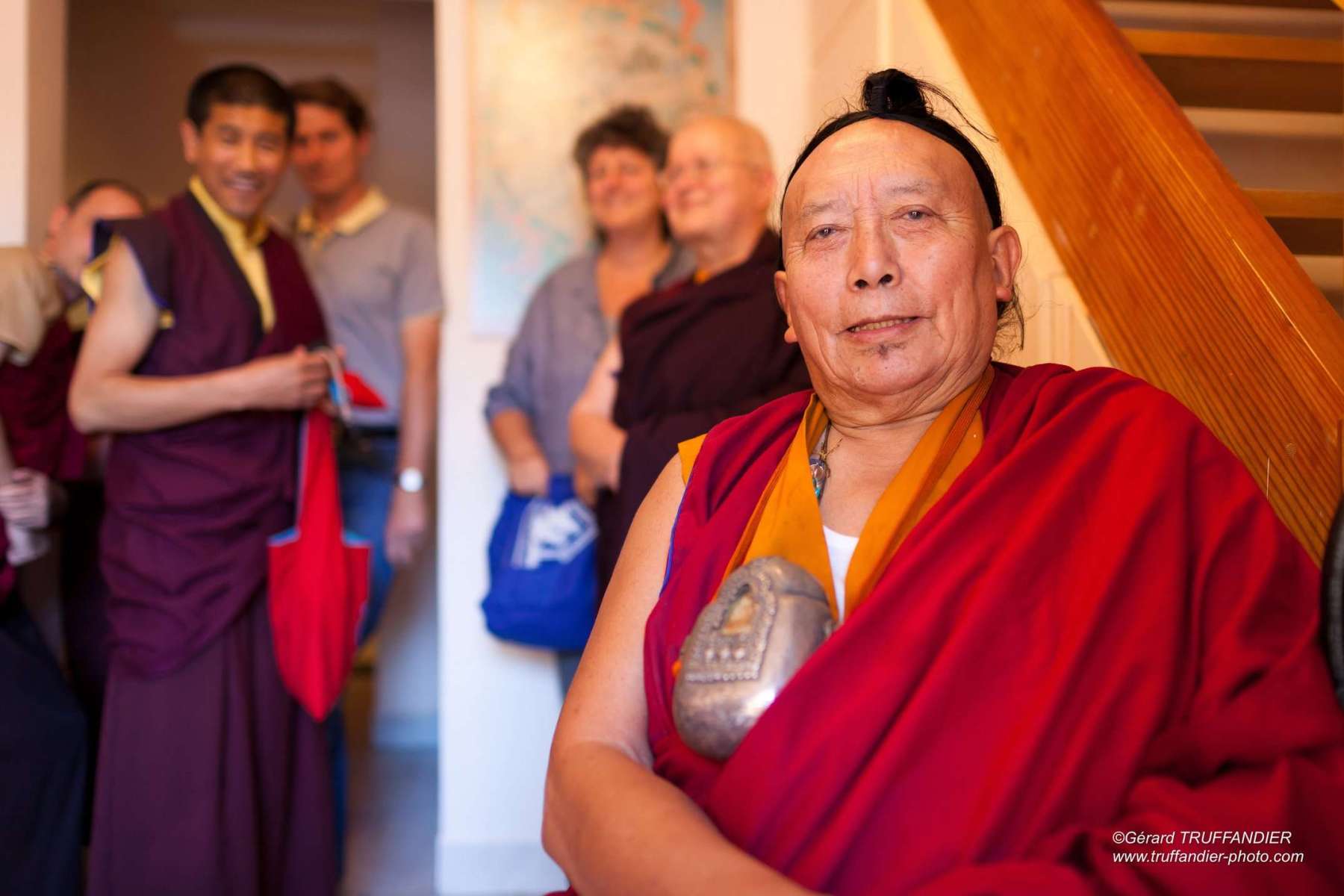


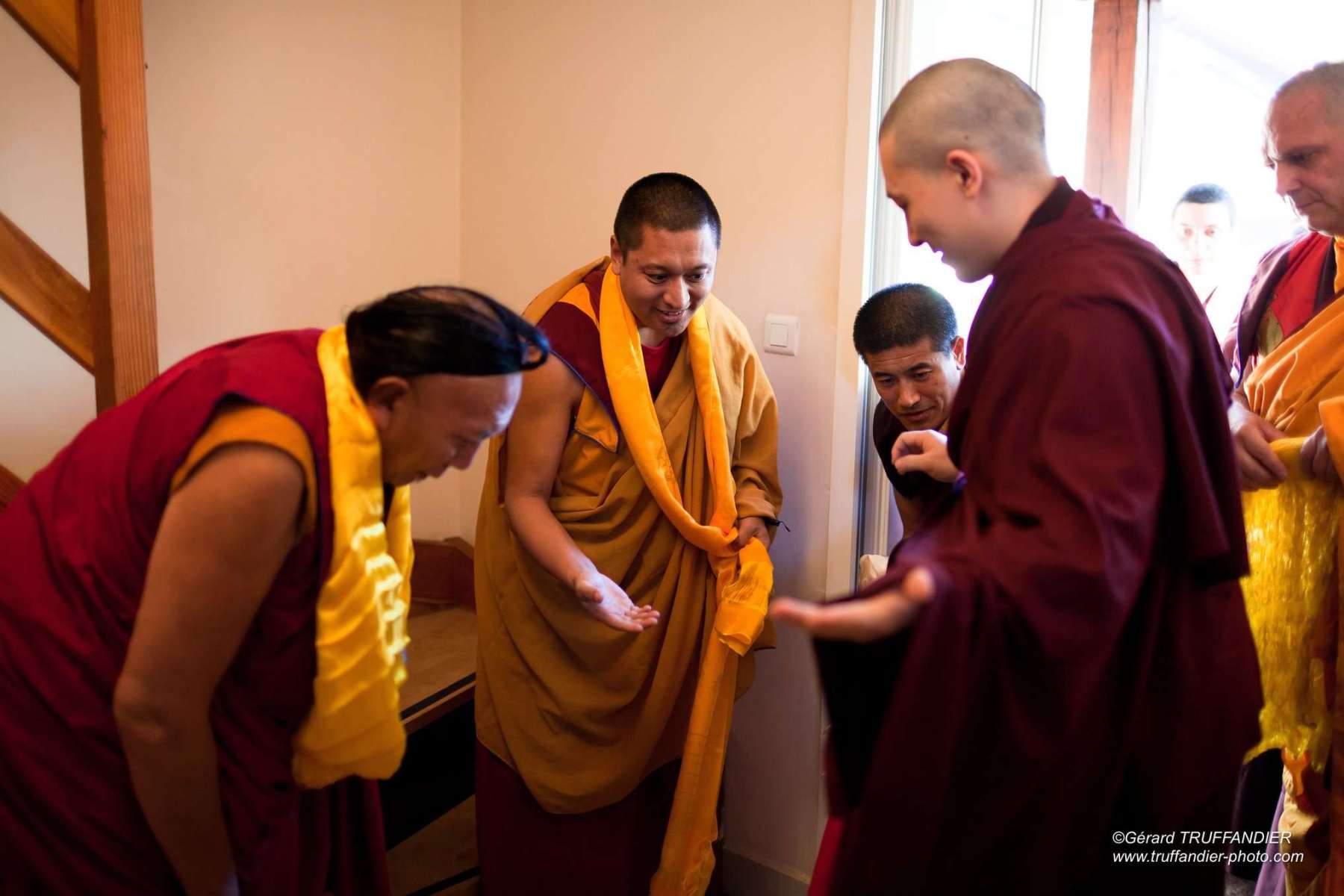
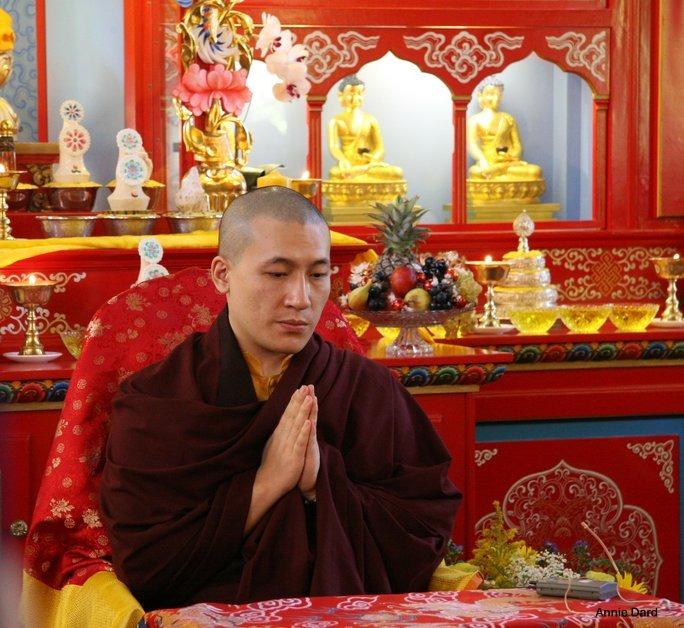








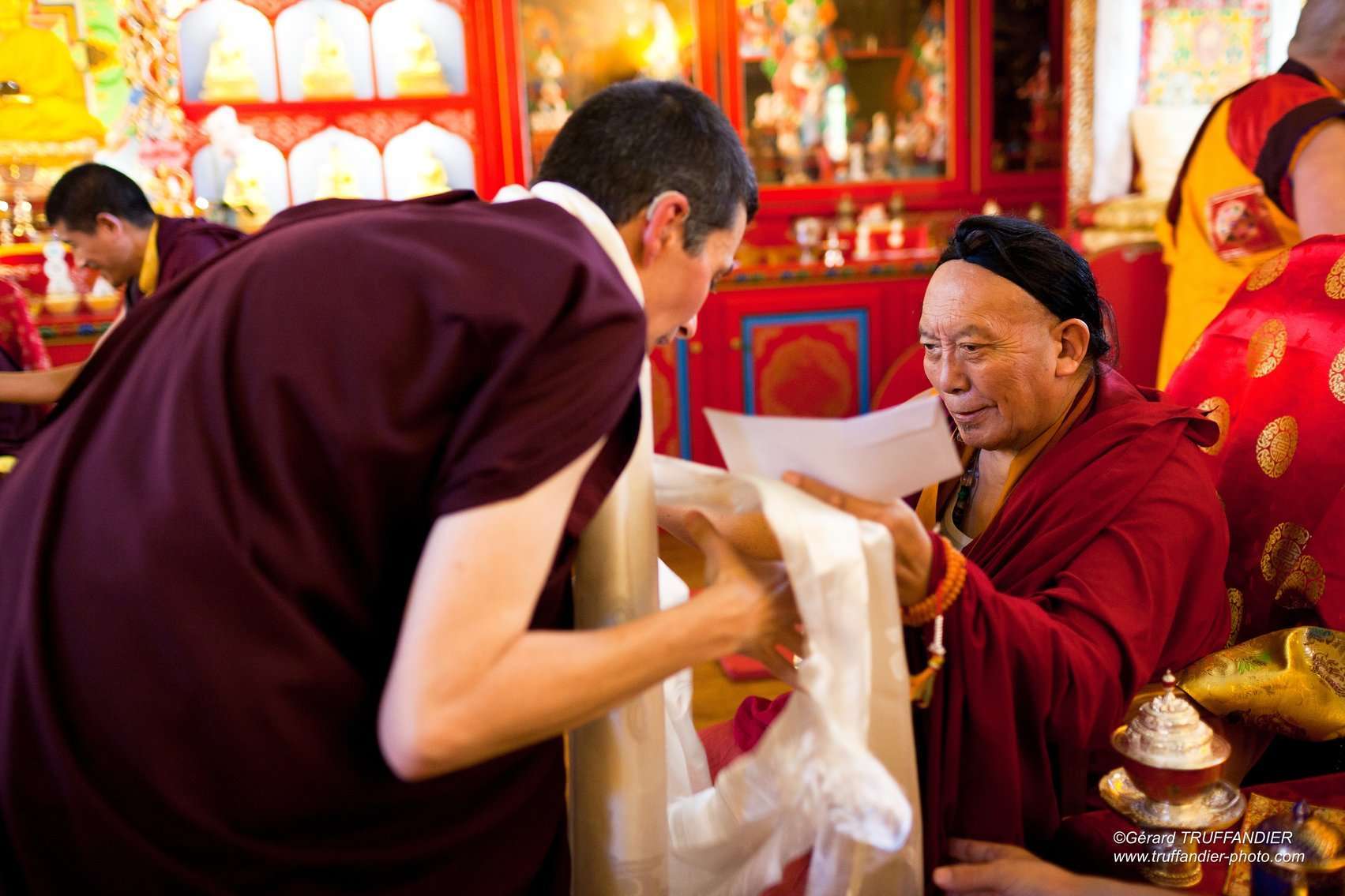
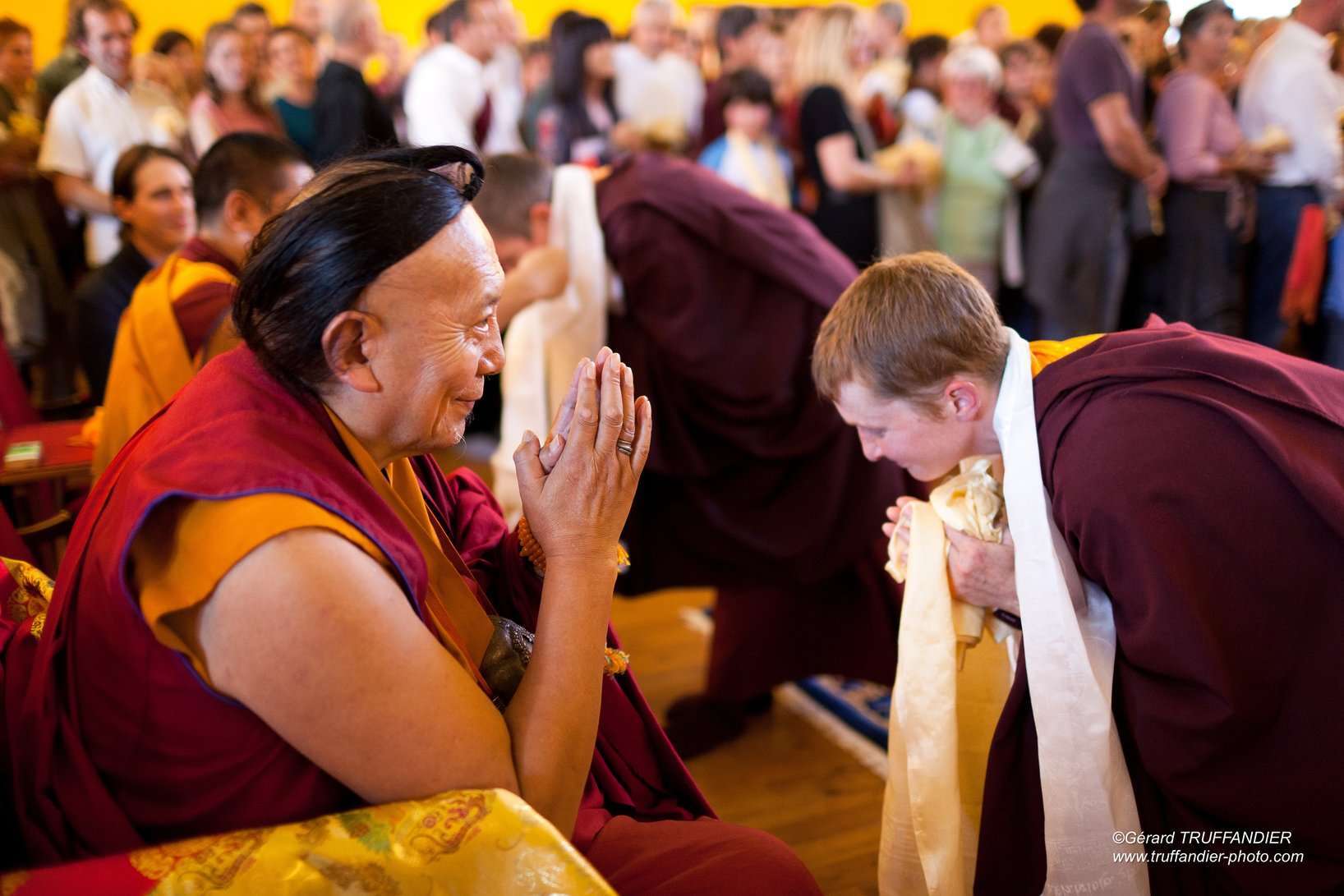

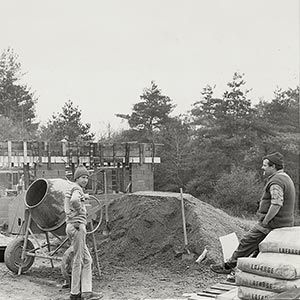
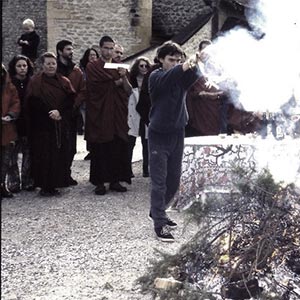
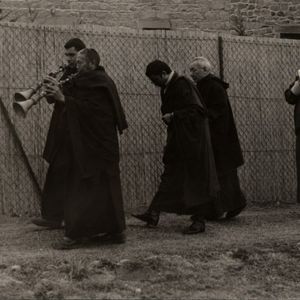
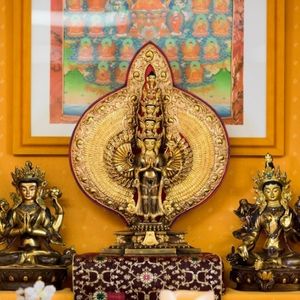
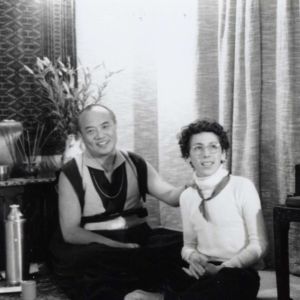
These photos come from our archives or were collected as part of the research for Dhagpo Kagyu Ling’s 50th anniversary. We have not been able to identify all the authors. The use of these photos is solely for informational purposes within the context of Dhagpo Kagyu Ling’s 50th anniversary celebration. Their use is limited to this event and our website and is not for commercial purposes.
Event
To commemorate this event, on Monday October 6, a practice will take place at Dhagpo Kundreul Ling and on Saturday October 18 at 8 p.m., Trinlay Rinpoche will spend the evening with us for a discussion on the significance of receiving oral transmissions in a lineage.
These photos come from our archives or were collected as part of the research for Dhagpo Kagyu Ling’s 50th anniversary. We have not been able to identify all the authors. The use of these photos is solely for informational purposes within the context of Dhagpo Kagyu Ling’s 50th anniversary celebration. Their use is limited to this event and our website and is not for commercial purposes.
Le The Treasury of Instructions by Jamgon Kongtrul Lodrö Thaye
The “Five Treasures” (mDzod lnga) compiled by Jamgon Kongtrul Lodrö Thaye (1813–1900) are five major encyclopedias that unite the major teachings of Tibetan Buddhism, covering all of the lineages and essential practices.
- The Treasury of Mantras of the Kagyu School (bKa’ brgyud sngags mdzod) brings together the empowerments, practice texts, and key instructions of the great yidams of the Marpa Kagyu lineage, such as Hevajra, Cakrasamvara, Catuṣpīṭha, Mahāmāyā, etc. It was first compiled by Jamgön Kongtrul between 1853 and 1855. The initial collection comprises six volumes in Tibetan. The 17th Gyalwa Karmapa received the transmission from Künzig Shamar Rinpoche at KIBI in India in December 2003.
- The Treasury of Knowledge (Shes bya kun khyab mdzod) is a vast Buddhist encyclopedia covering the sciences, philosophies, and doctrines of Buddhism, from Hinayana to Vajrayana. The collection comprises three books in Tibetan and has been translated into ten volumes in English. It is currently being translated into French.
- The Treasury of Precious Instructions (gDams ngag rin po che’i mdzod) is an 18-volume collection of essential instructions from the eight major lineages of Tibetan Buddhist practice that originated in India, currently being translated into English. This is the one we are interested in in this article. The 17th Gyalwa Karmapa received it from Pewar Rinpoche in October 2010.
- The Great Treasury of Rediscovered Precious Teachings (Rin chen gter mdzod chen mo) brings together the main rediscovered teachings (terma) of the Nyingma tradition, transmitted by the great treasure discoverers. This collection covers more than seventy volumes in Tibetan (and up to 111 depending on the edition). Jamgon Kongtrul began compiling it in the 1850s and continued throughout his life, receiving the various termas available at the time and composing commentaries or histories when necessary.
The Treasury of Extensive Teachings (rGya chen bka’ mdzod) is made up of Jamgon Kongtrul’s personal works, such as commentaries on various treatises, initiations not included in the other four collections, and his own rediscovered treasures. It is in this collection that we find his commentaries on the Gyü Lama, the Namshé Yeshé, and the Nyingpo Tenpa, among many others. These twelve volumes were transmitted by Sherab Gyaltsen Rinpoche (who entered parinirvana on September 4, 2025), one of the most important masters of our Karma Kagyu lineage, at Sharminub in the fall of 2024.
The Treasury of Precious Instructions, or Damngak Dzö, is the last of the compilations undertaken by Jamgon Kongtrul Lodrö Thaye in the 1870s. It is difficult to say that it is the “most ambitious,” as each of the five Treasuries seems a prodigious achievement in itself. However, the knowledge and mastery required to compile such a work seems beyond comprehension.
The eighteen volumes it contains bring together the empowerment, practice, and essential instruction texts associated with the “eight great chariots of practice,” that is, the eight lineages directly descended from India and brought to the Land of Snows over the centuries by Tibetan lotsawas and practitioners, arranged in chronological order:
- The first two volumes contain the primary transmission from the Lineage of the Elders (Nyingma), divided according to three levels, or three yogas (Mahayoga, Anuyoga, and Atiyoga). This last category (Dzogchen), contains the instructions associated with the Category of Mind (semde), the Category of Range (longde), and the Category of the Key Instructions (man-ngak de).
- Volumes Three and Four unite the teachings of the Kadampa lineage, which arrived in Tibet with Atīśa (980–1054), and of which Gampopa is one of the recipients. They contain reference texts, short works by Atīśa; instructions (damngak) centered on the Mind Training (Lojong) system; and the key instructions (man-ngag), which include the Vajrayāna teachings and practices. This section is likewise where Kongtril compiled the texts associated with the two primary transmission lineages of bodhisattva vows.
- The following two volumes (Five and Six), treat the teachings of the Sakya lineage, primarily those of Lamdre (The Path and Its Fruit), which were institutionalized by Sachen Kunga Nyingpo (1092–1158) and associated with the Hevajra cycles, while also containing the instructions associated with Himaya, Mahayana and Vajrayana.
- Volumes Seven through Ten contain the empowerments and instructions associated with the Marpa Kagyü lineage, the primary lineage that Jamgom Kongtrul was affiliated with, and is mainly divided into teachings on skillful means (primarily the Six Dharmas of Naropa) and the liberation instructions (Mahamudra). In this section, we find the common teachings on Mahamudra transmitted by Saraha, Shavaripa, Tilopa, Naropa, Maitripa, Marpa, Milarepa, and Gampopa and the uncommon teachings that stem from the four primary lineages of Gampopa’s disciples and the eight secondary lineages that come from his disciple Pamo Drupa. We also find numerous empowerments associated with the Nyengü lineage that stems from Rechungpa.
- The following two volumes (Eleven and Twelve) are dedicated to the Shangpa Kagyü lineage, brought back from India by Kyungpo Naljor (990–1139). Similarly to the Marpa Kagyü lineages, this tradition contains numerous teachings associated with the Six Dharmas (of Niguma) and Mahamudra, as well as other transmissions, primarily tantric ones.
- Volumes Thirteen and Fourteen contain instructions of the Zhije (Pacification of Suffering) Tradition, introduced to Tibet by Padampa Sangye (d. 1117) and those of Chöd (Cutting Off), developed by the realized practitioner Machik Labdrön (1055–1149), and which are a branch of Zhije. These traditions, founded on the Prajñāpāramitā teachings, contain numerous tantric practices.
- The seventh chariot, contained in Volume Fifteen, is that of Vajra Yoga, or the Six Branches of Union (Jordruk), associated with the perfection phase (Dzokrim) of the Kalachakra Tantra, and are primarily transmitted in the Jonang lineage.
- The second part of Volume Fifteen includes the teachings associated with the master Orgyenpa Rinchen Pal (1230–1309), who figures among the golden rosary of the Karma Kagyü lineage and who originated the Orgyen Nyendrup tradition Stages for the Approach and Accomplishment of the Three Vajras, which is close to the Vajra Yoga of Kalachakra but was received from Vajravarahi.
The final three volumes bring together a diverse array of instructions and practice texts, such as those from the eighty-four Indian mahasiddhas and various Tibetan masters who originated lineages not among the eight previous ones. We also find transmission of long life divinities Tara, Amitayus, and Ushnishavijaya in this section. The final volume contains the Hundred Instructions of Jonang, in other words, the practice instructions associated with the perfection phases of the various tantras compiled by Jetsun Kunga Drolchol (1507–1566), and the catalogue for the full collection.
The depth, diversity, and complexity of the transmission very briefly described here give a good idea of the wealth of Tibetan Buddhism, the profound scholarship of Jamgon Kongtrul Lodrö Thaye, and the surprising diversity of practice methods proposed in Vajrayana.