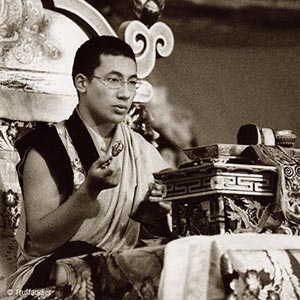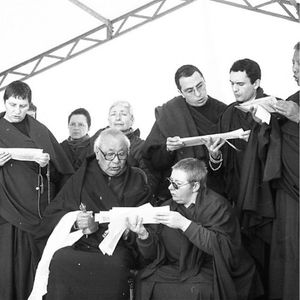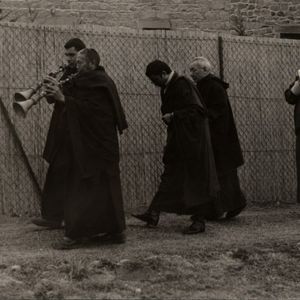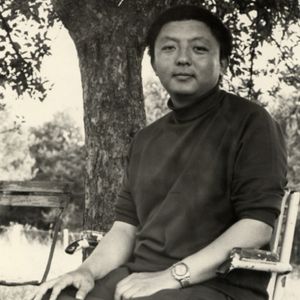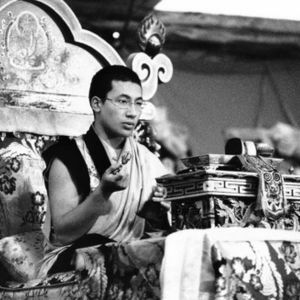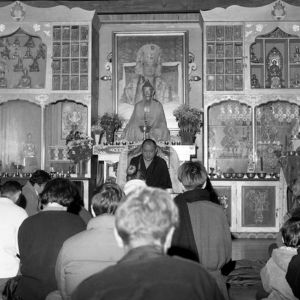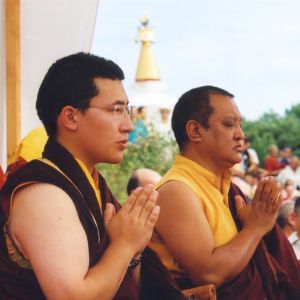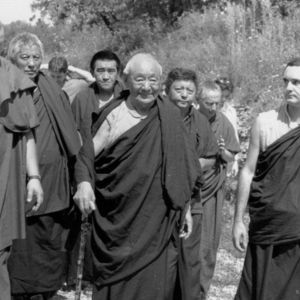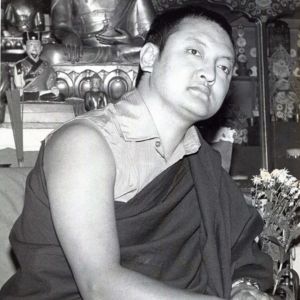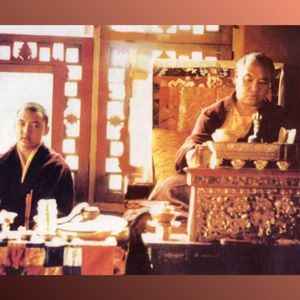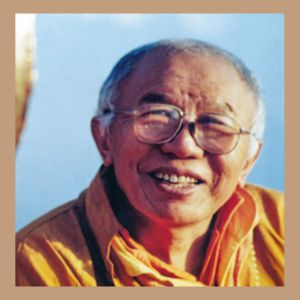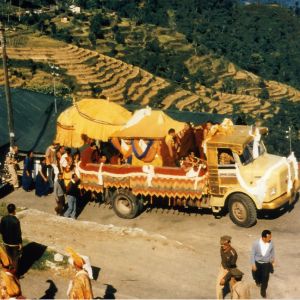
In his work The Message of the Tibetans, published in 1966, Arnaud Desjardins described his first meeting, the prior year, with the 16th Gyalwa Karmapa Rangjung Rigpe Dorje, in the old Rumtek monastery in Sikkim,
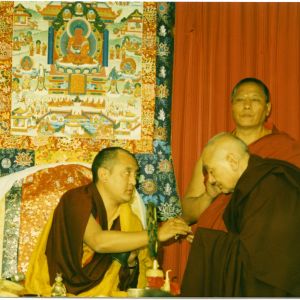
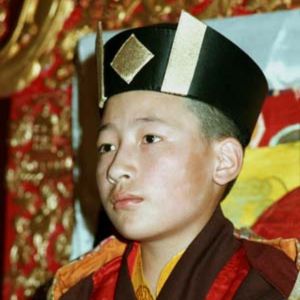
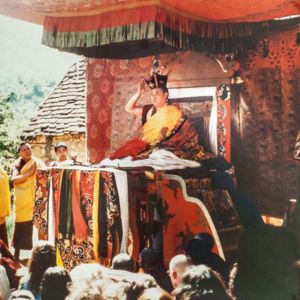
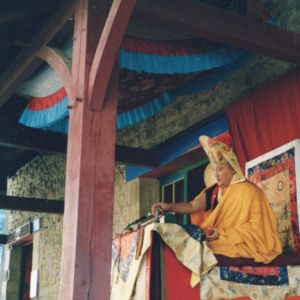
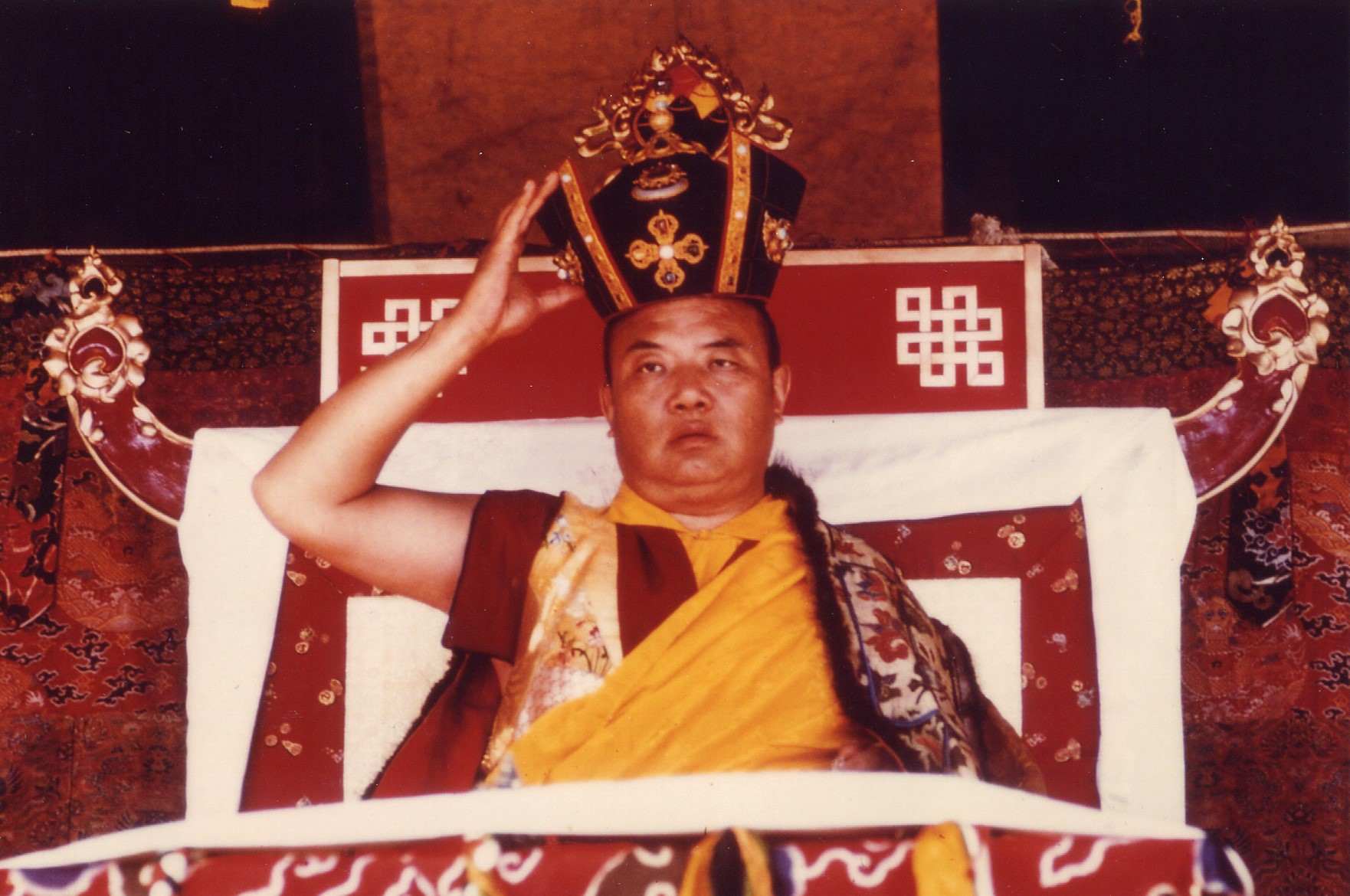
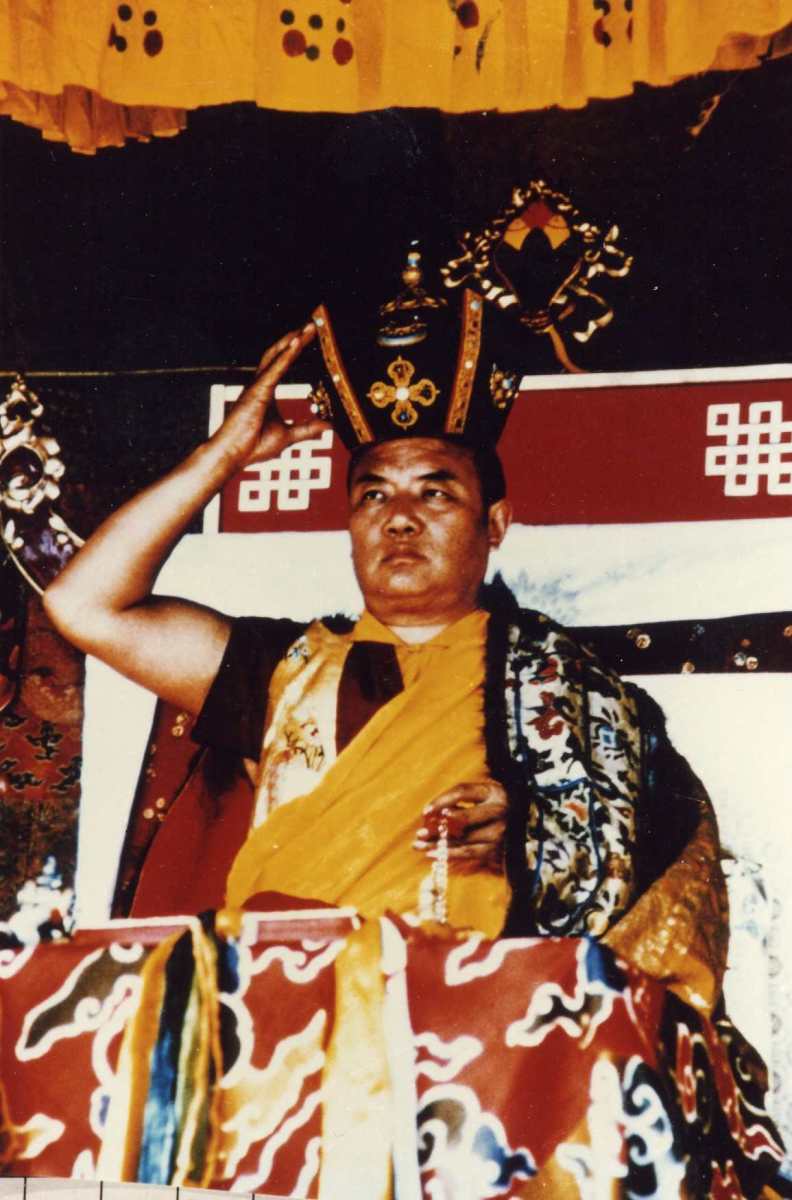
Gyalwa Karmapa has a strong build with a majestic face and pronounced Mongolian features, which often take on a hieratic, immobile expression that reveals all his mastery and inner power. The day before, I had taken part in an unforgettable ceremony unique to the Karmapa sect, during which the guru dons the Black Crown. […] The music that accompanies it is the most significant of all that I have heard in Tibetan monasteries. Never before have I so clearly felt the possibilities of consciously desired action in music that responds to the laws of a prodigious science of sounds and their influence on the inner dynamics of the human organism.” When he dons the Black Crown, “Then Karmapa’s expression transforms, and he makes the plane of consciousness on which he is permanently situated dazzling and dazzling to all. His gaze, fixed and directed toward infinity, takes on the depth of a call. It seems that Karmapa’s consciousness, transcending all limits, extends far beyond what we perceive as his physical form, penetrating everything and everyone around him and revealing to those who are ready to recognize it the Unity that is veiled by the unlimited variety of appearances.[1]
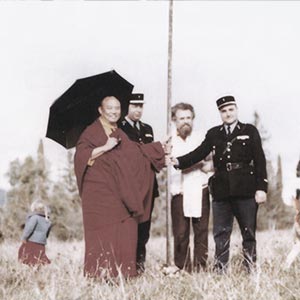
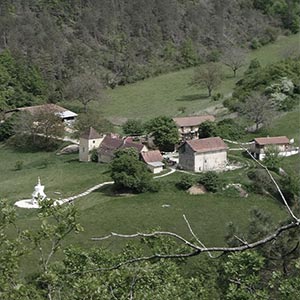
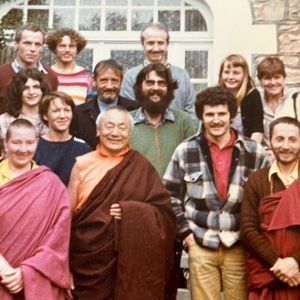
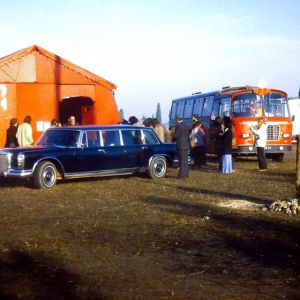
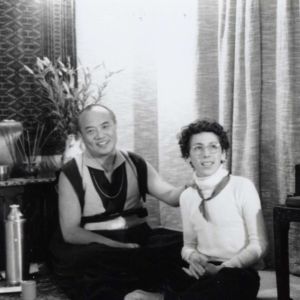
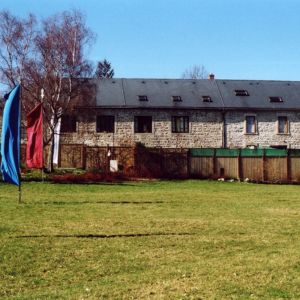
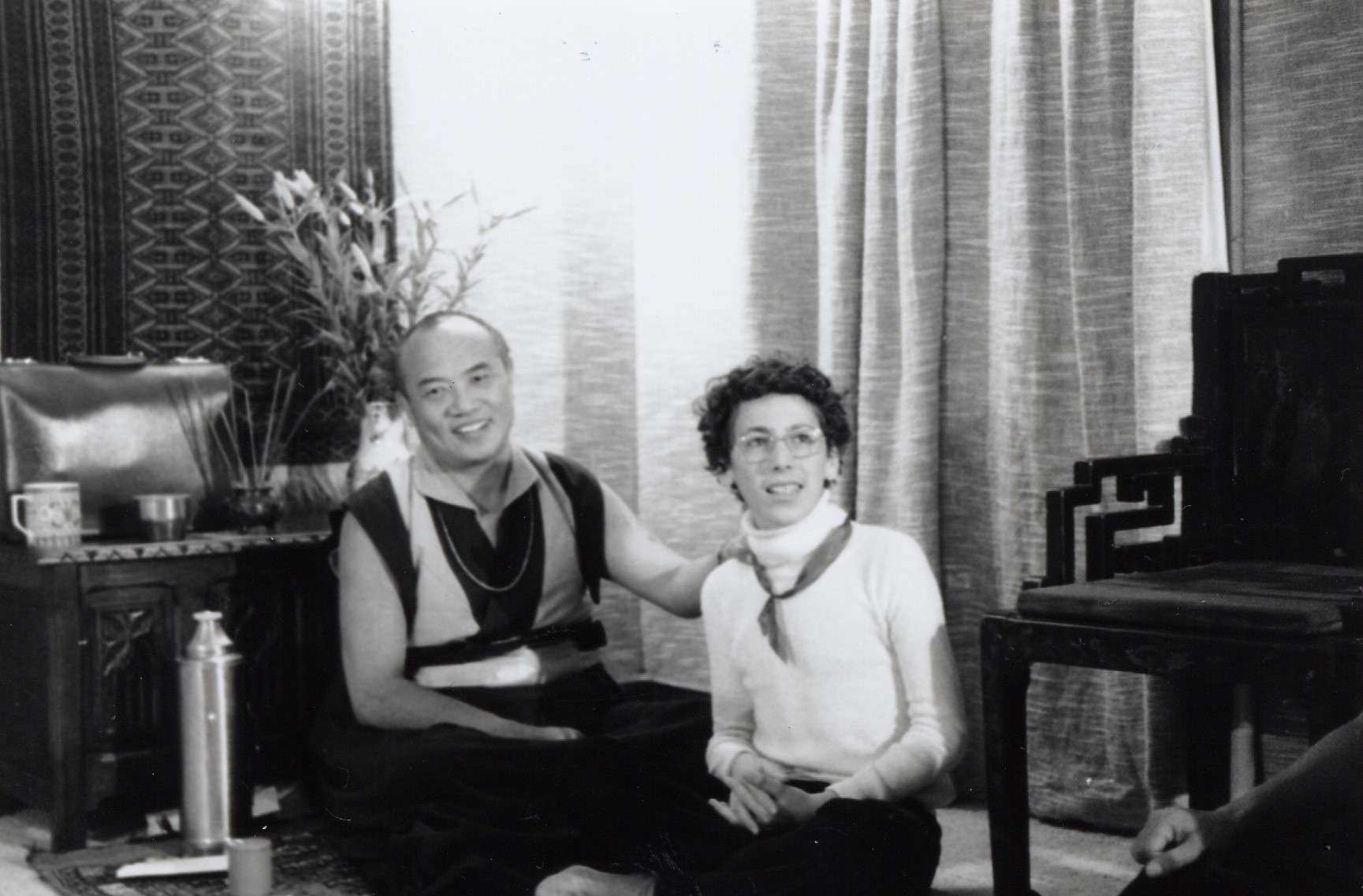
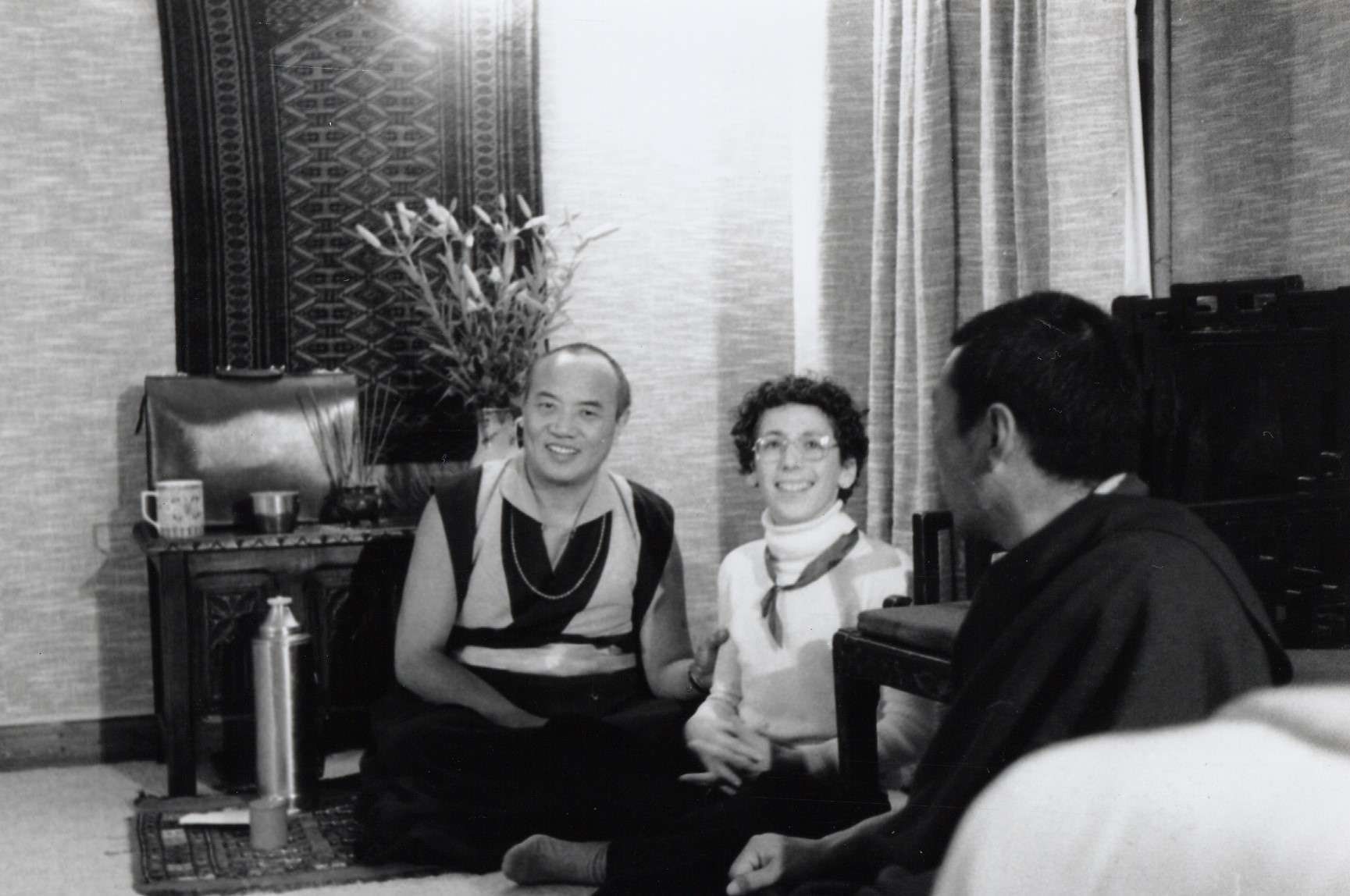
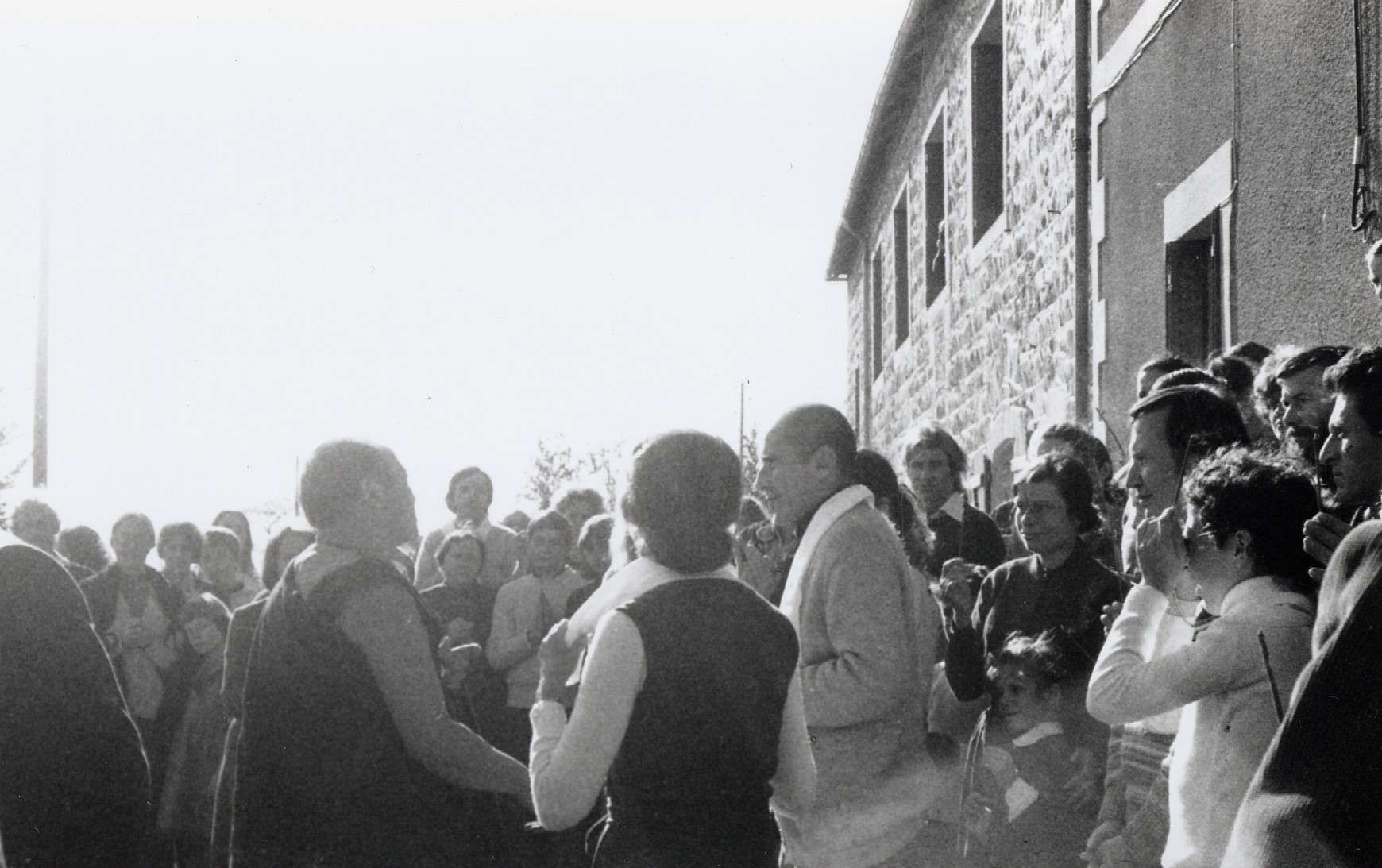
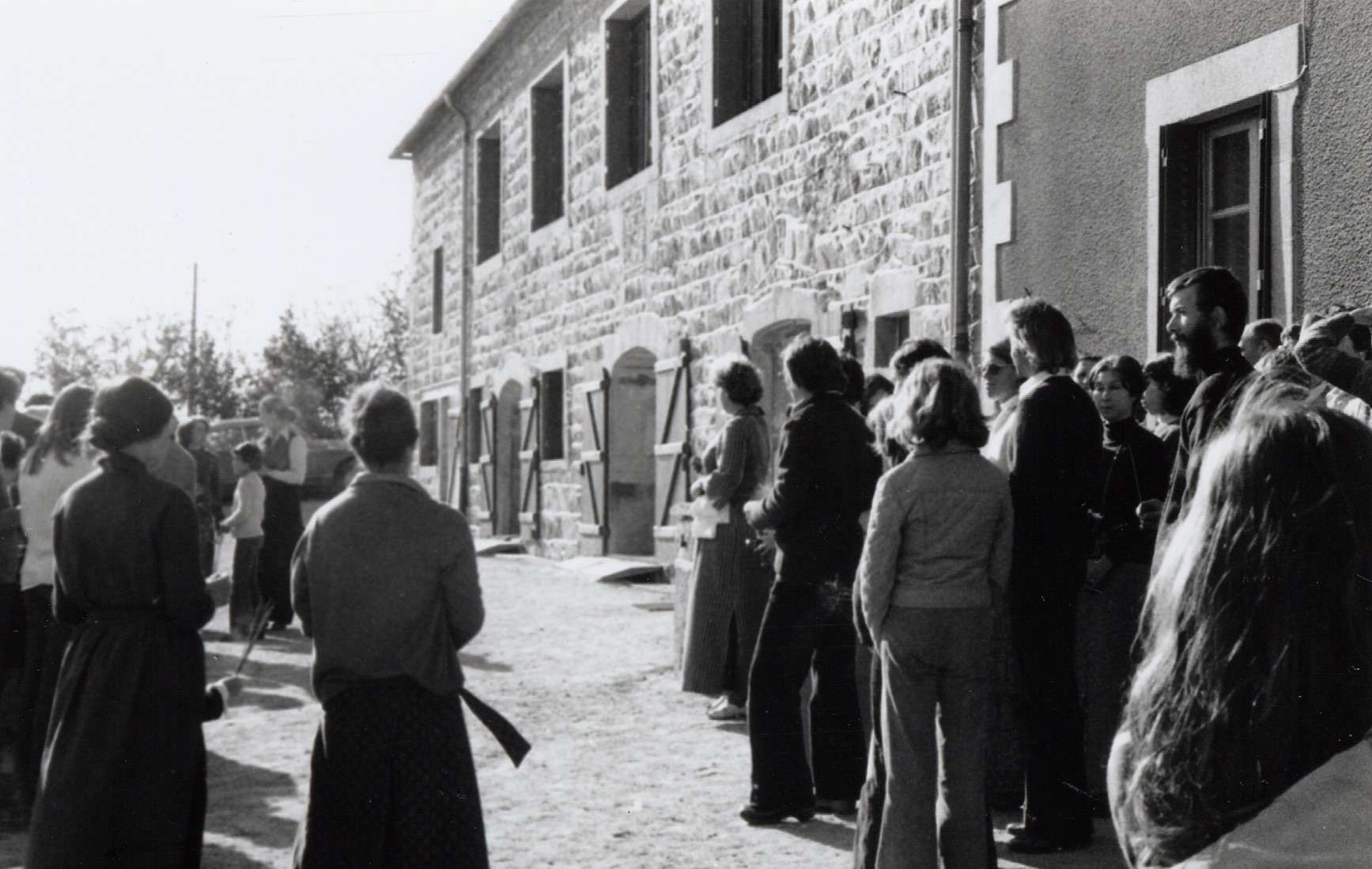
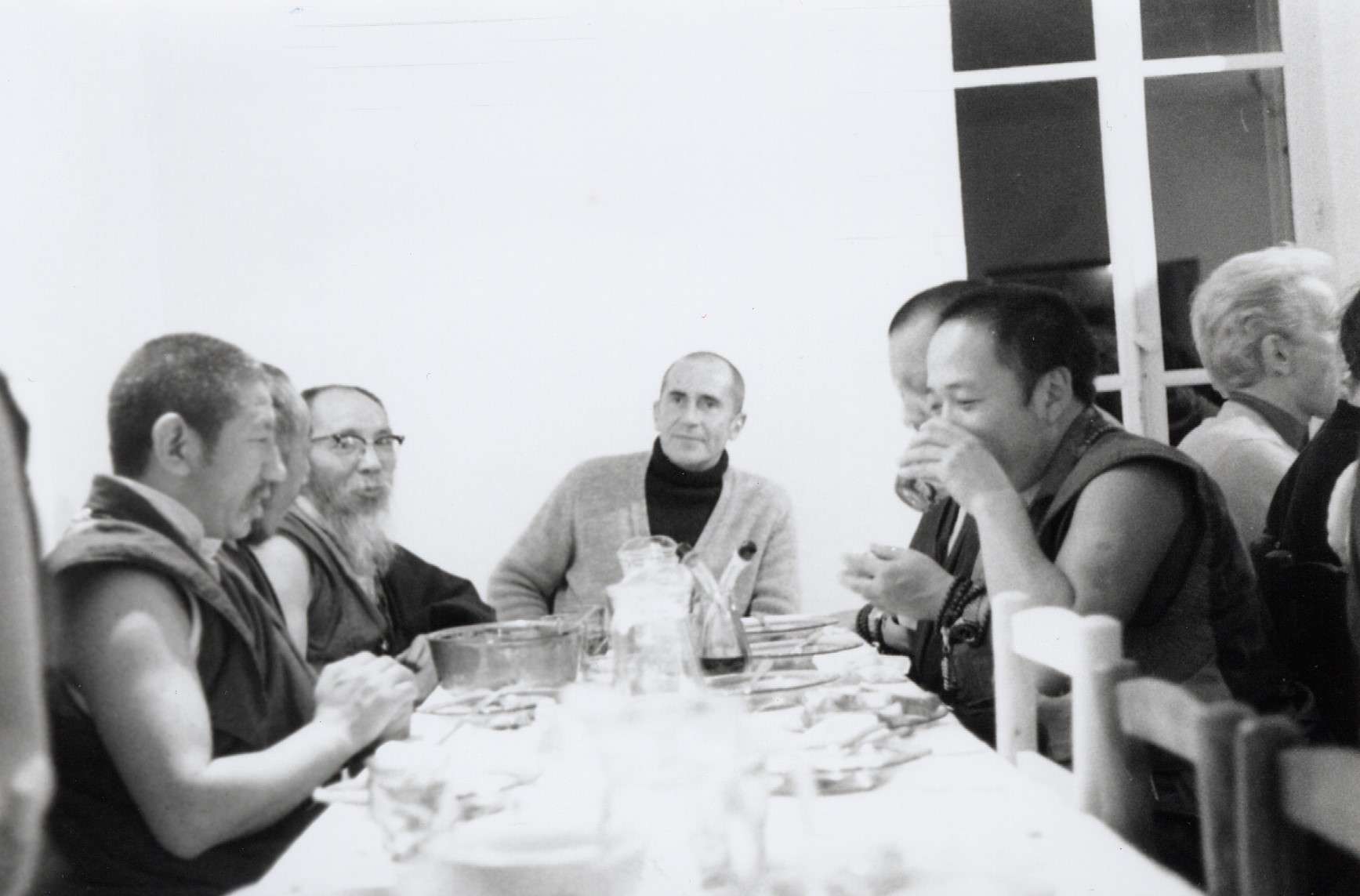
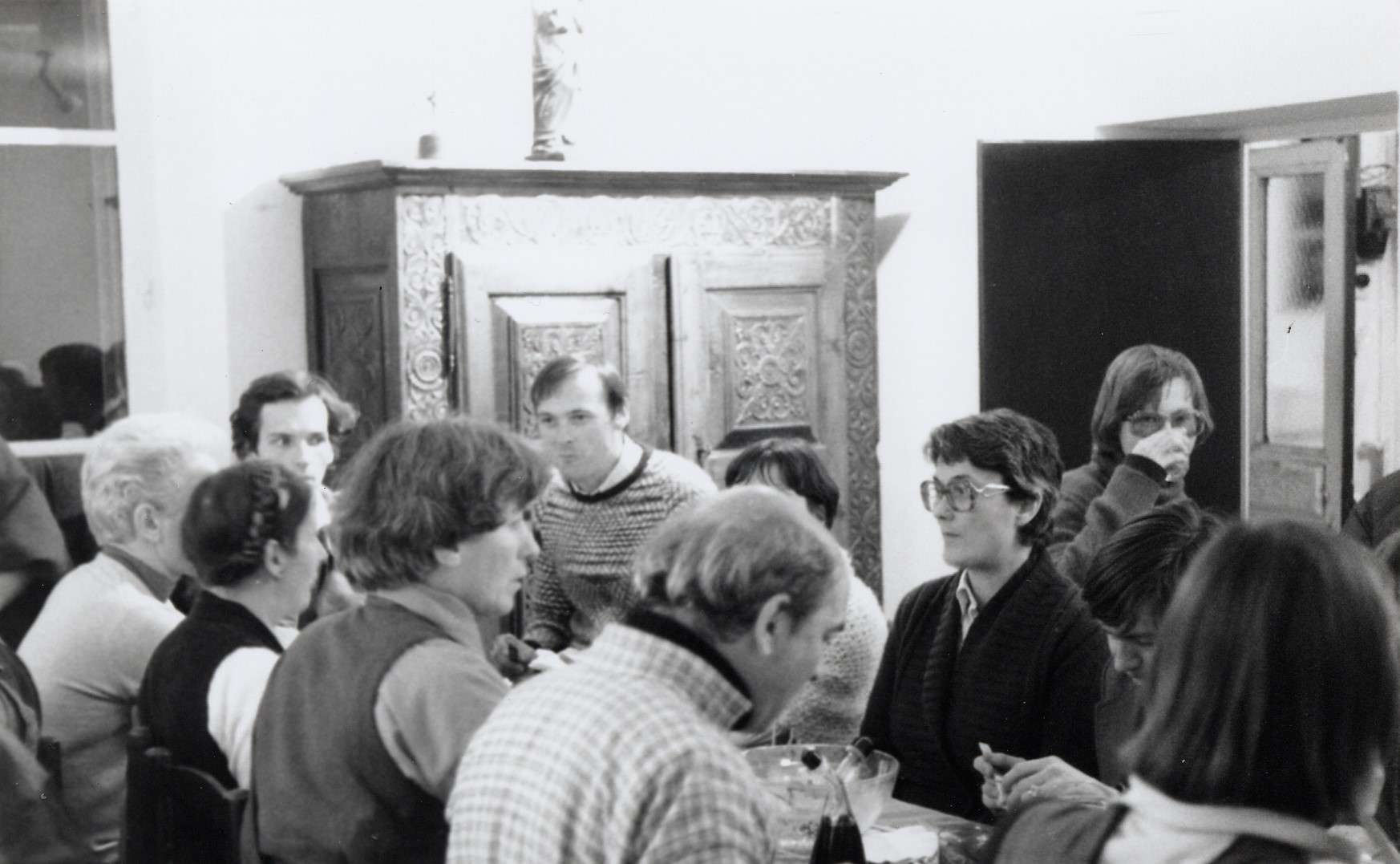
While filming documentaries for television, Arnaud Desjardins met the Karmapa again in 1967. Then, in 1977, the 16th Gyalwa Karmapa accepted Arnaud Desjardins’ invitation to visit Le Bost, in the commune of Biollet. Together with his wife Denise, Arnaud Desjardins had created an ashram there on the instructions of his master Swami Prajnanpad.
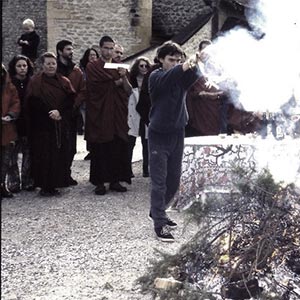
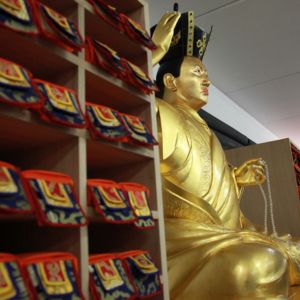
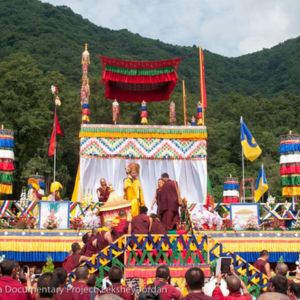
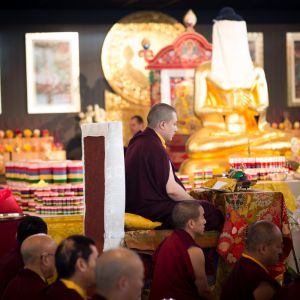
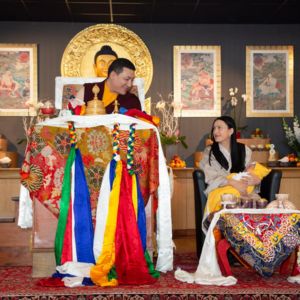
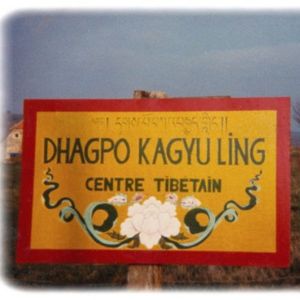
In November 1977, the Karmapa performed the Black Crown ceremony there, as he had done at Dhagpo Kagyu Ling in July of the same year. The Crown Whose Vision Confers Liberation is not only an important physical representation of the qualities of the Karmapas, it is also a means by which these qualities can inspire beings and accomplish their benefit.
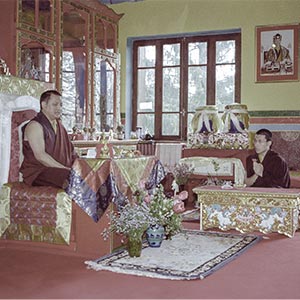
According to an account reported in the second volume of Gerd Bausch’s book on the 16th Karmapa, ritual music recorded in Rumtek in the 1960s by Arnaud Desjardins was played through loudspeakers placed in the windows of the ashram. The Karmapa was staying in the room that would later become Gendun Rinpoche’s. Gerd Bausch continues,
Surprising everyone, he declared that this center would become important in the future for the Karma Kagyu lineage—even though Desjardins was a disciple of the Hindu master Swami Prajnanpad and practiced Adhiyatma Yoga, a practice inspired by Advaita Vedanta. Here too, his words proved prophetic.[2]
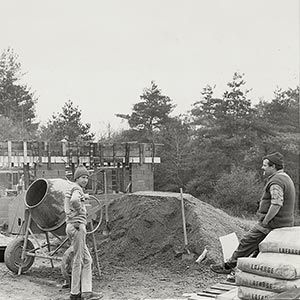
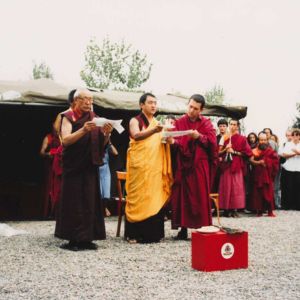
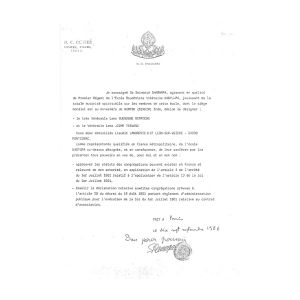
In November 1983, the Desjardins family sold the Bost property to the Karma Kagyu Lama Association, paving the way for the first traditional retreats lasting three years, three months, and three days. In the same book, Eric Edelmann, founder of the Arnaud Desjardins ashram in Quebec, recalls,
After his departure, Arnaud allowed us to meditate for twenty-four hours in the room where Karmapa had stayed. It was incredible, we felt his radiant presence so strong and magnetic that it was as if the atmosphere was nothing but dancing particles and atoms.[3]
Thus, with every step he takes, with every encounter, Gyalwa Karmapa sows the seeds for the Dharma to unfold and benefit sentient beings. In April 2011, a few months before his death, Arnaud Desjardins, aged 85, gave an interview to Gerd Bausch for his book Compassion rayonnante (Radiant Compassion). He spoke warmly, with strength and lucidity, about the unforgettable impact of his encounter with the 16th Karmapa.
He gave such a complete impression of strength, power, mastery, wisdom, kindness, and humility. No pretension whatsoever. […] There was this contrast between his grandiose presence in the Black Crown ceremony and then I felt completely at ease in front of him, so I could feel this immense veneration and simple love. […] The most important thing was to observe him […] to see how he adapted so perfectly to all the different situations. […] The great unforgettable teaching was simply to see what wisdom is. [4]
[2] Bausch, Gerd. Compassion rayonnante. Regards sur la vie et l’activité du 16e Gyalwa Karmapa Rangdjoung Rigpé Dordjé. Tome 2. Éditions Karuna. June 2024. p. 130.
[3] Bausch, Gerd. Op cit. p. 130.
[4]Arnaud Desjardins parle de ses rencontres avec le 16ème Karmapa. Entretien tourné en avril 2011 à Hauteville. Gerd Bausch, Karmapa Biography Project.

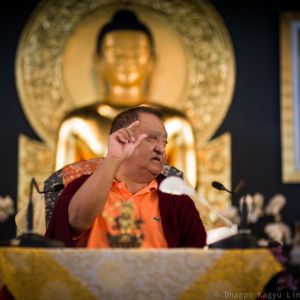
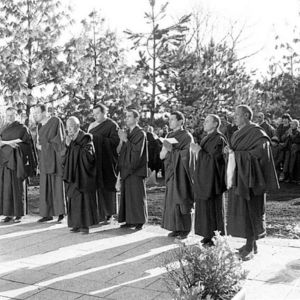
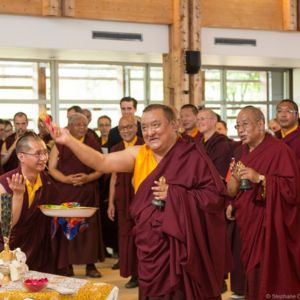
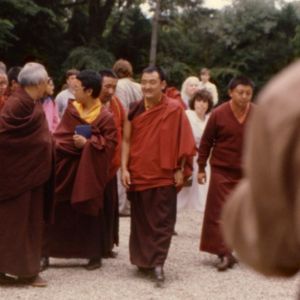
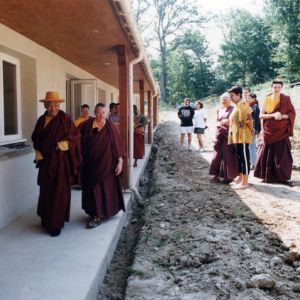
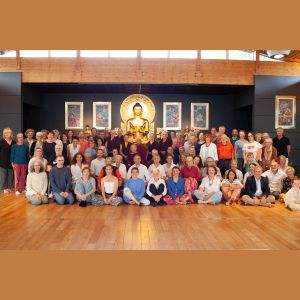
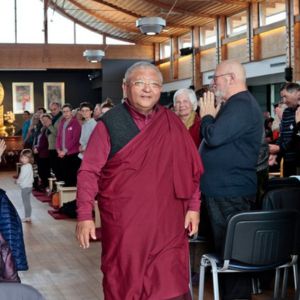
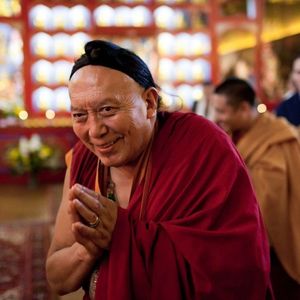
These photos come from our archives or were collected as part of the research for Dhagpo Kagyu Ling’s 50th anniversary. We have not been able to identify all the authors. The use of these photos is solely for informational purposes within the context of Dhagpo Kagyu Ling’s 50th anniversary celebration. Their use is limited to this event and our website and is not for commercial purposes.
Event
To commemorate this event, a day of practice will be held at Dhagpo Kundreul Ling.
These photos come from our archives or were collected as part of the research for Dhagpo Kagyu Ling’s 50th anniversary. We have not been able to identify all the authors. The use of these photos is solely for informational purposes within the context of Dhagpo Kagyu Ling’s 50th anniversary celebration. Their use is limited to this event and our website and is not for commercial purposes.