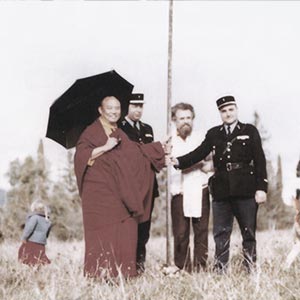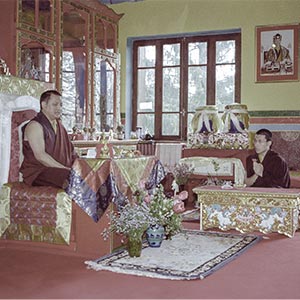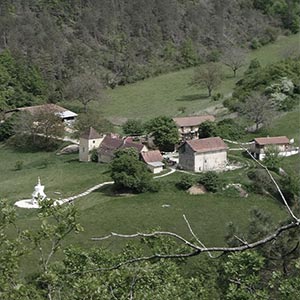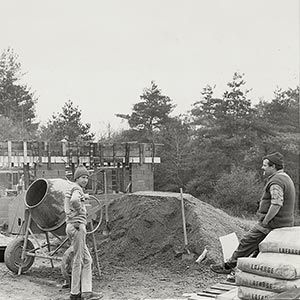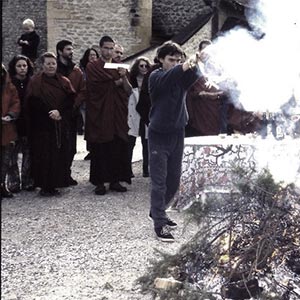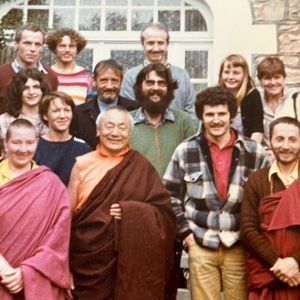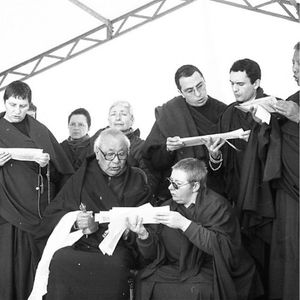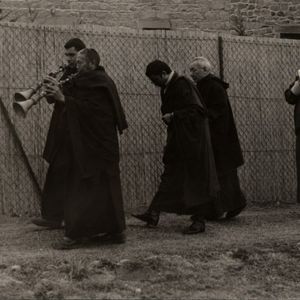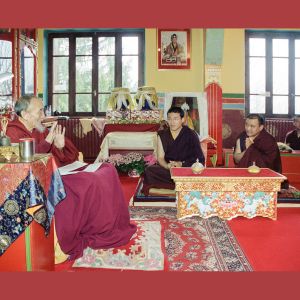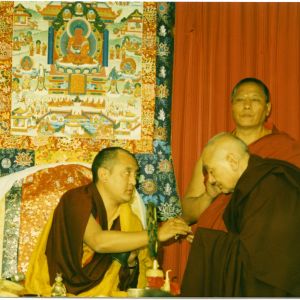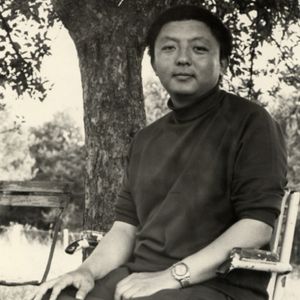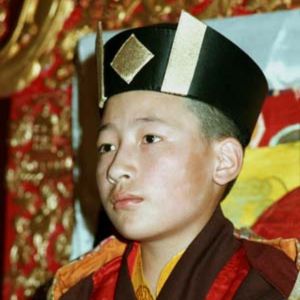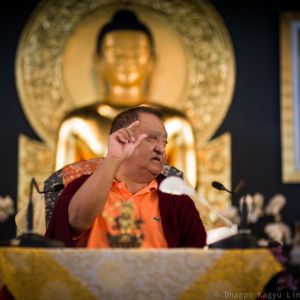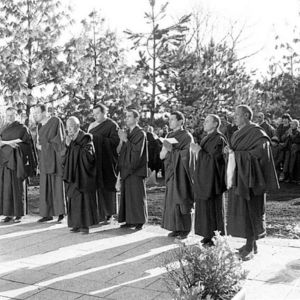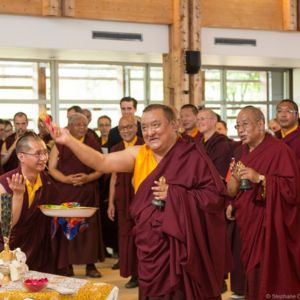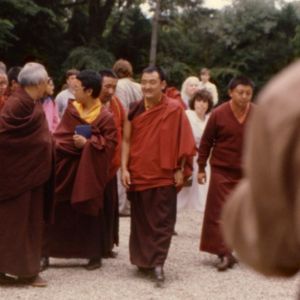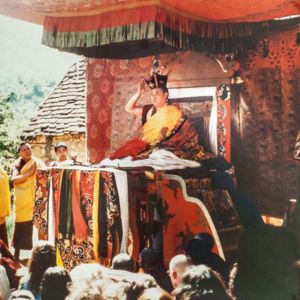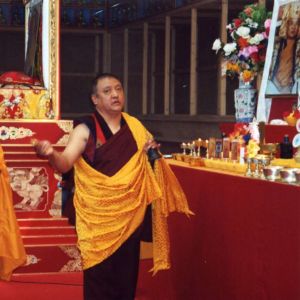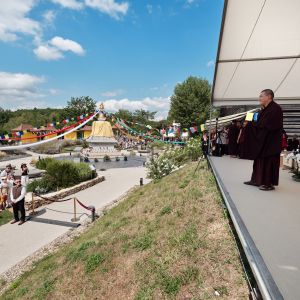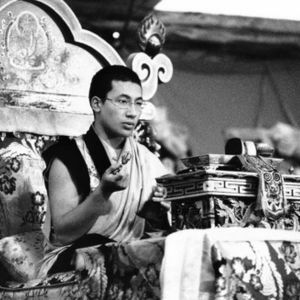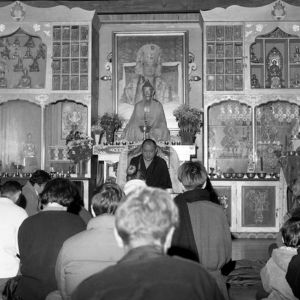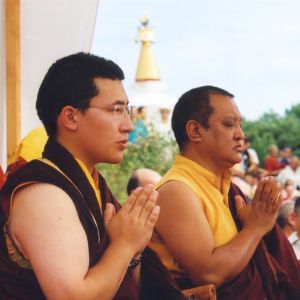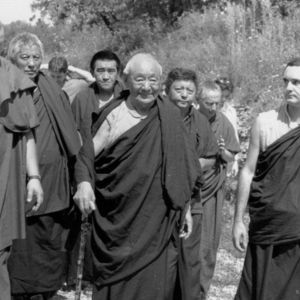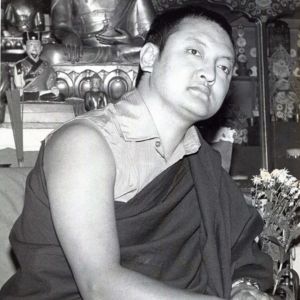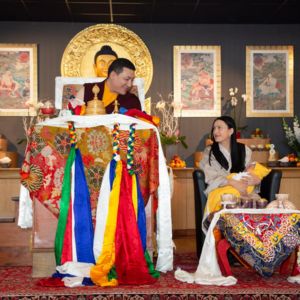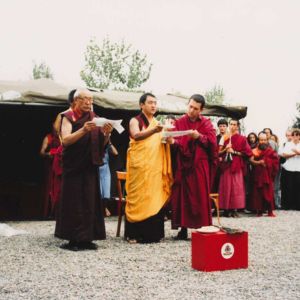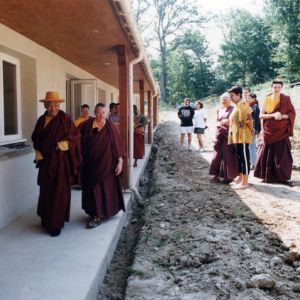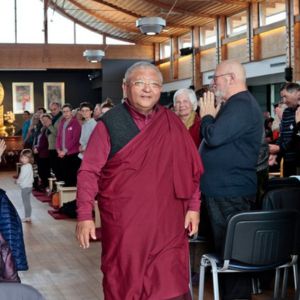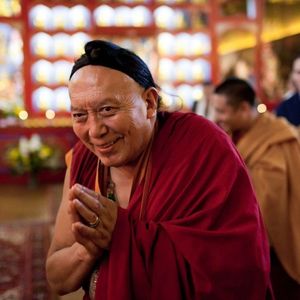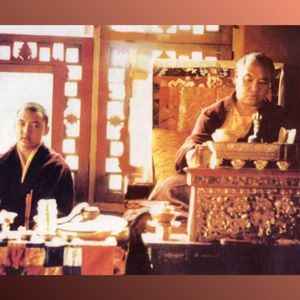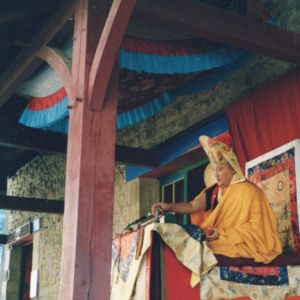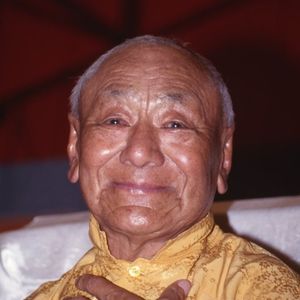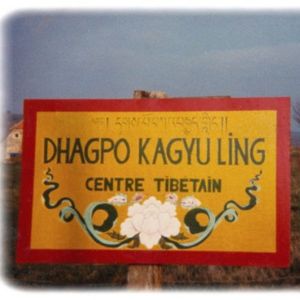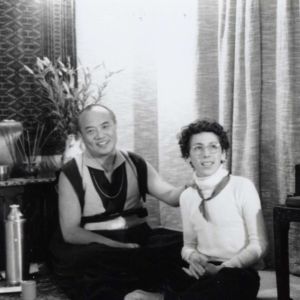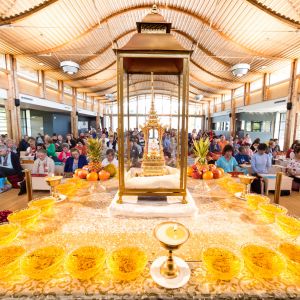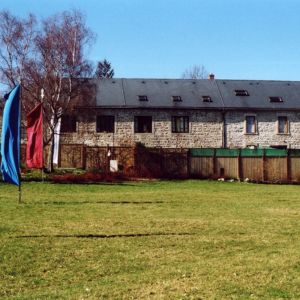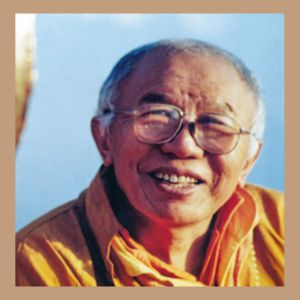
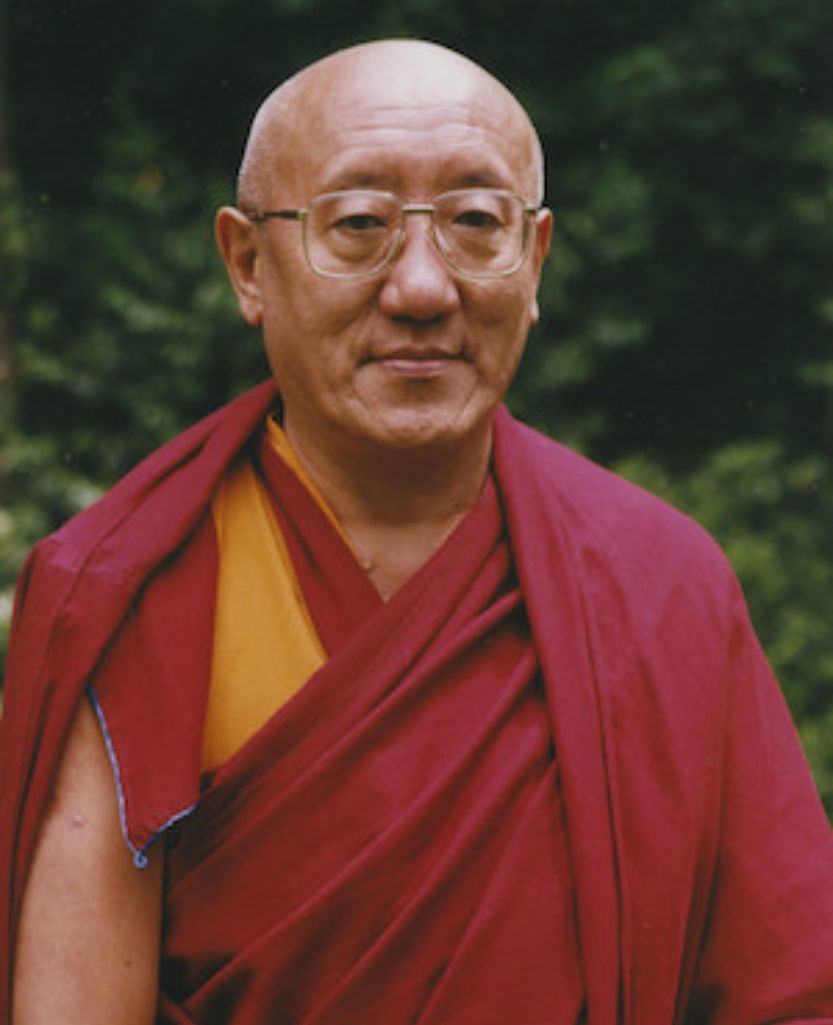
 In 1980, Venerable Bokar Rinpoche (1940-2004), one of Tibetan Buddhism’s renowned meditation masters, travelled to the West for the first time with Venerable Kalu Rinpoche, of whom he was a disciple. From December 18 to 26, he stayed at Dhagpo Kagyu Ling to teach about the practice of Nyungne and confer several empowerments.
The first Nyungne retreat at Dhagpo Kagyu Ling was held that same year, from February 29 to March 2. Bokar Rinpoche’s teaching took place just a few weeks prior to Losar, the Tibetan New Year—after which Nyungne retreats are generally held. Thus it allowed practitioners to approach the meaning of this meditation practice, which is a powerful means of purification, and to deepen their understanding. The Buddha stated that Nyungne practice definitively closes the door to rebirths in the six realms and enables rebirth in the Pure Land of Dewachen.
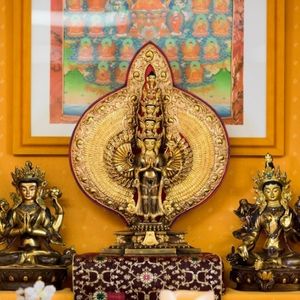
During his stay, Bokar Rinpoche conferred the empowerment of thousand-armed Chenrezig— associated with the Nyungne practice—as well as the six-armed Mahakala and Guru Rinpoche. In February 1983, it was Kalu Rinpoche’s turn to bestow this same empowerment before the Nyungne retreat.
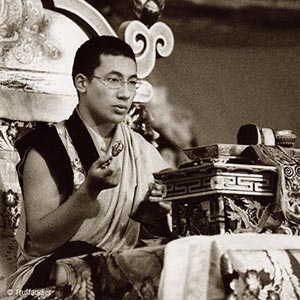
Bokar Rinpoche’s presence once again marks a strong connection with the 16th Gyalwa Karmapa Rangjung Rigpe Dorje, who recognized him at four years old as the reincarnation of the first Bokar Rinpoche. First raised in the monastery founded by his previous incarnation, he continued his education at Tsurphu under the personal guidance of the 16th Karmapa for three years. When he was still very young, he became the abbot of Bokar monastery, located close to Mount Kailash. During the Chinese invasion, he fled Tibet and joined the 16th Karmapa in Rumtek, Sikkim.
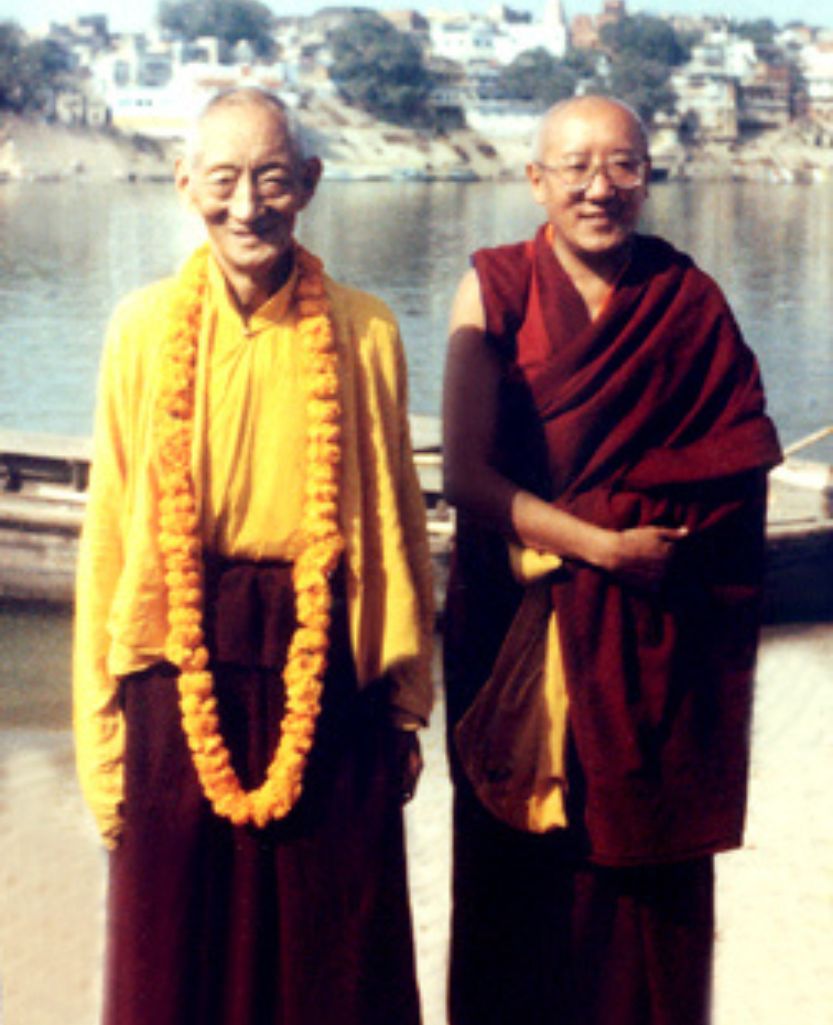
After this, he met Kalu Rinpoche in India and became his main disciple. Under his guidance, he carried out two three-year retreats in Sonada, near Darjeeling, the seat of the Shangpa Kagyu lineage in India. When he came out of retreat, Kalu Rinpoche appointed him head of the Sonada retreat centers, while the 16th Karmapa entrusted him with those in Rumtek. Bokar Rinpoche also founded a retreat center in Mirik, in the Darjeeling area, more specifically for the practice of Kalachakra. After Kalu Rinpoche’s parinirvana, Bokar Rinpoche succeeded him as the head of the Shangpa Kagyu lineage.
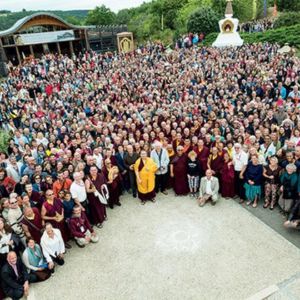
As we have seen throughout this commemoration of Dhagpo Kagyu Ling’s fiftieth anniversary, the historic temple has welcomed the most eminent masters of Tibetan Buddhism—an entire generation of highly realized spiritual beings, forced into exile and who came to share the Buddha’s wisdom in the West under the guidance of the 16th Gyalwa Karmapa.
These photos come from our archives or were collected as part of the research for Dhagpo Kagyu Ling’s 50th anniversary. We have not been able to identify all the authors. The use of these photos is solely for informational purposes within the context of Dhagpo Kagyu Ling’s 50th anniversary celebration. Their use is limited to this event and our website and is not for commercial purposes.l
These photos come from our archives or were collected as part of the research for Dhagpo Kagyu Ling’s 50th anniversary. We have not been able to identify all the authors. The use of these photos is solely for informational purposes within the context of Dhagpo Kagyu Ling’s 50th anniversary celebration. Their use is limited to this event and our website and is not for commercial purposes.l