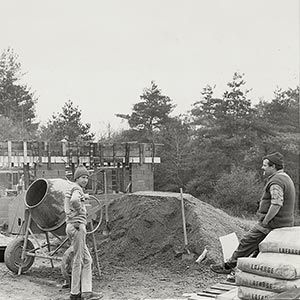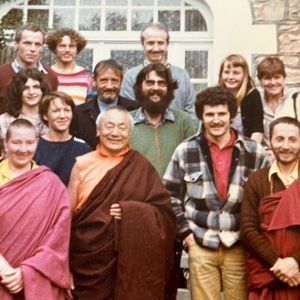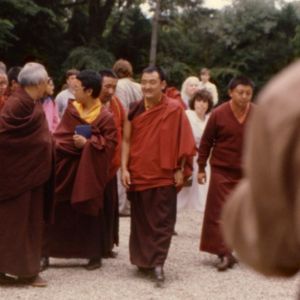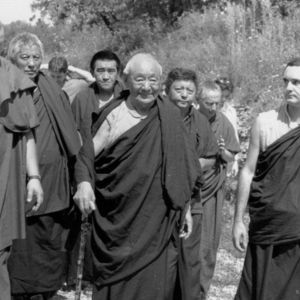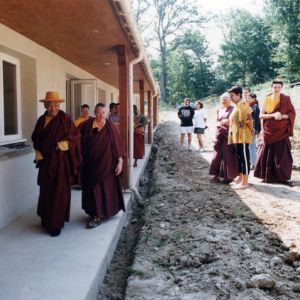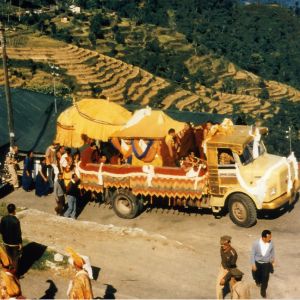
Gendun Rinpoche told us to work from sunrise to sunset so that everything would be ready for Karmapa! That’s what we did! We finished laying the last floorboards the night before he arrived.
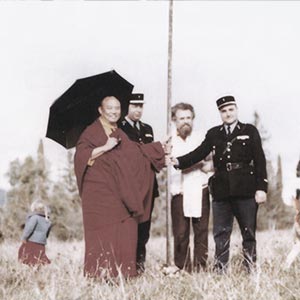
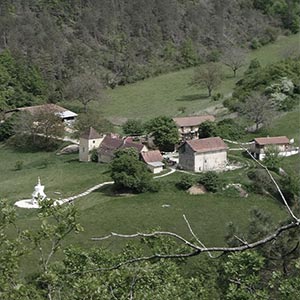
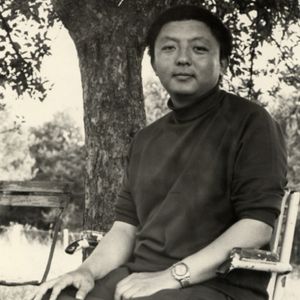
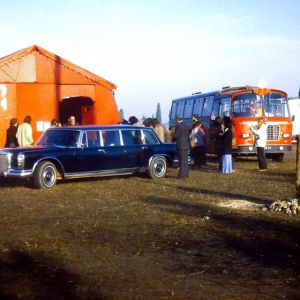
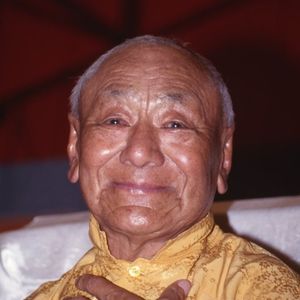
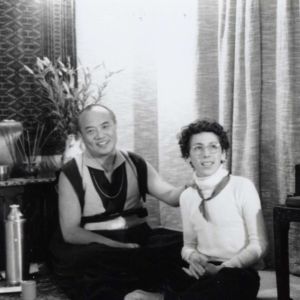
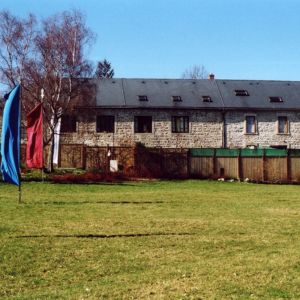
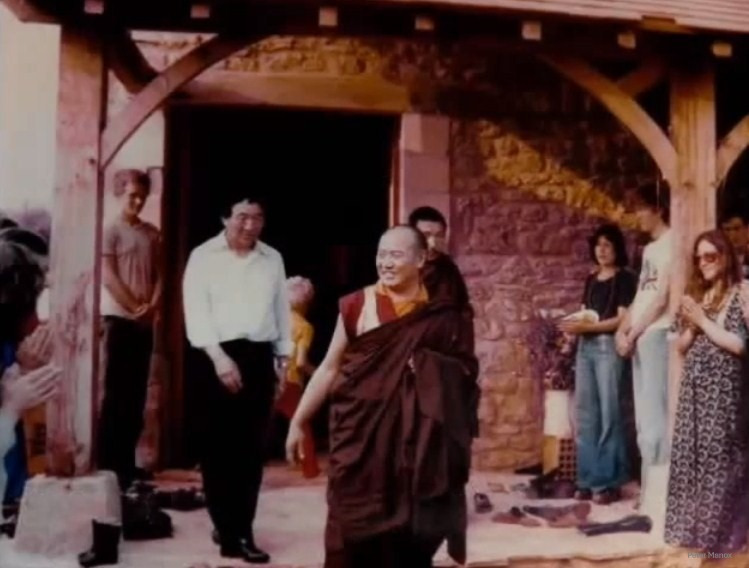
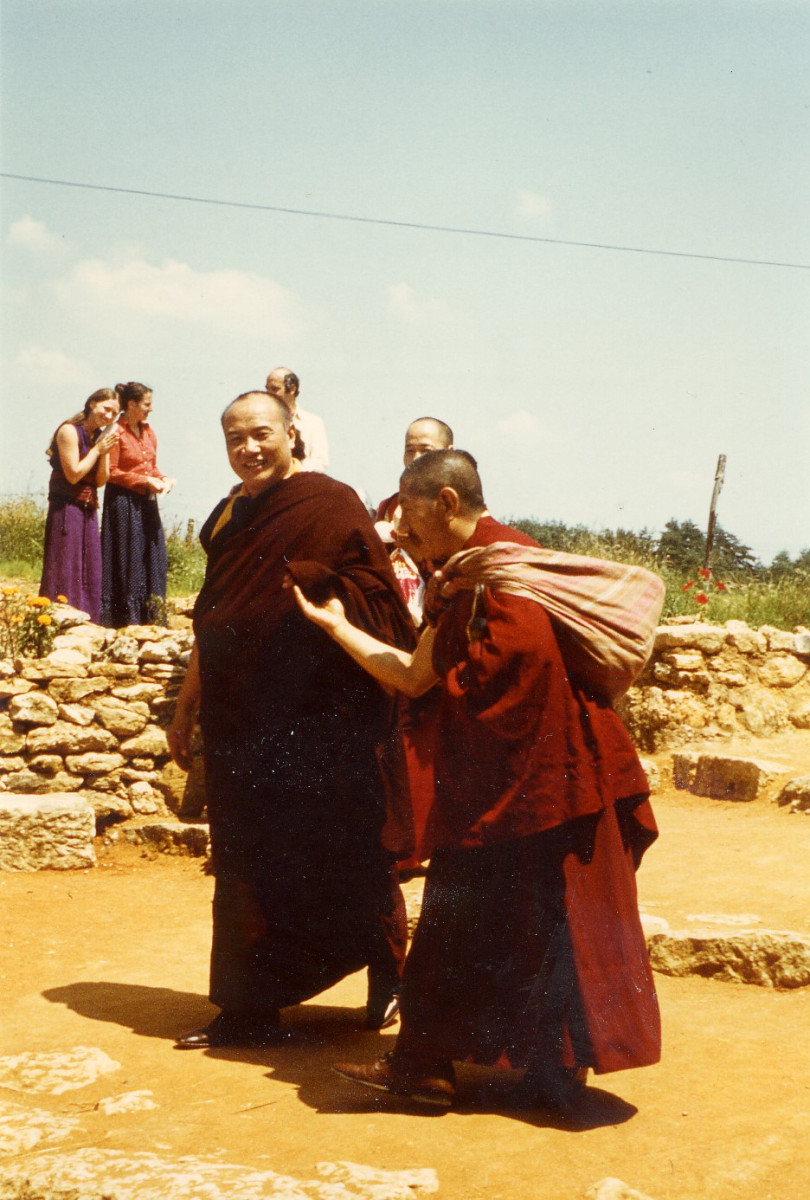
Karmapa stayed at the Château de Chaban, owned by Bernard Benson and his wife, as there were no showers, toilets or decent accommodation in Landrevie at the time. ”We used to wash at the public showers in Montignac!” adds Tsony.
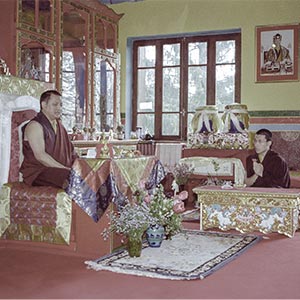
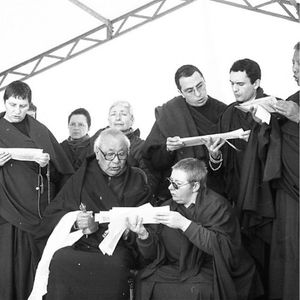
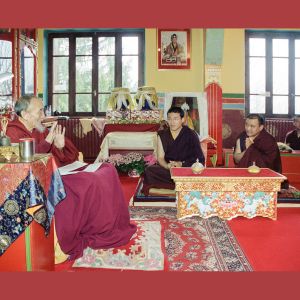
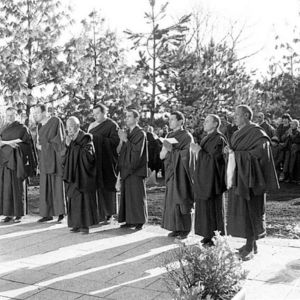
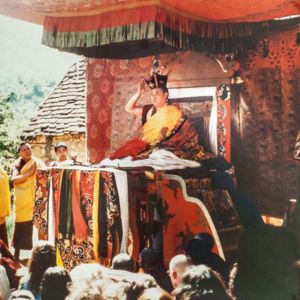
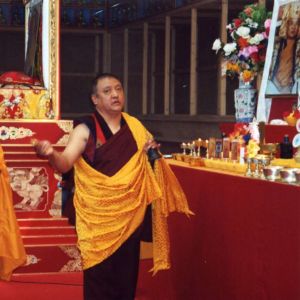
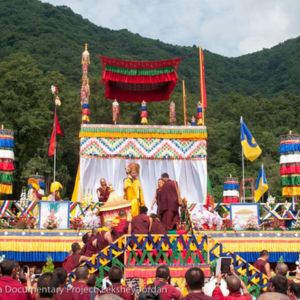
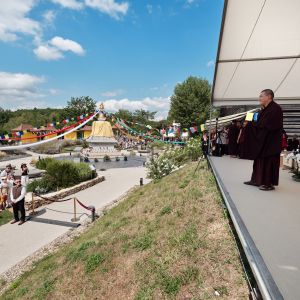
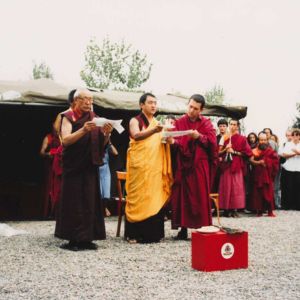
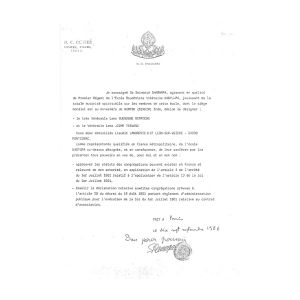
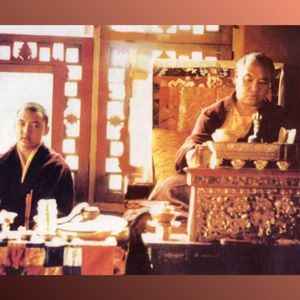
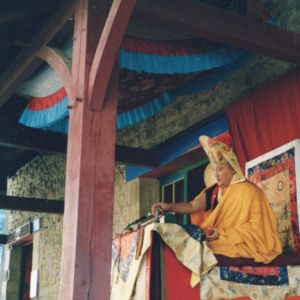
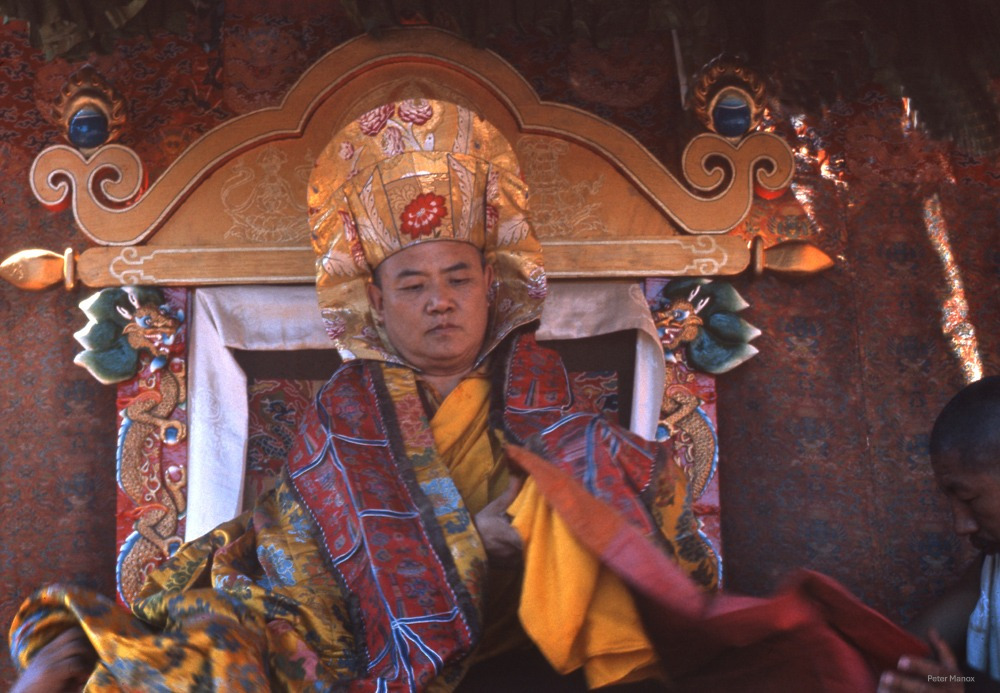
On July 1, 1977, the courtyard of what was not yet the lamas’ house, but simply a very rudimentary farmhouse, was converted into an open-air temple. A throne was built by Frisou and Max. Zimpönla, Karmapa’s chamberlain, who had come with Lama Jigme Rinpoche to the Dordogne in May 1975, insisted that a large padded seat be made so that Karmapa could sit comfortably on the throne. Tsony recalls,
Zimpönla wanted a large cushion to be made. He went to the attic where we stored the clothes we had been given. He took all the clothes to make the padding for the seat!
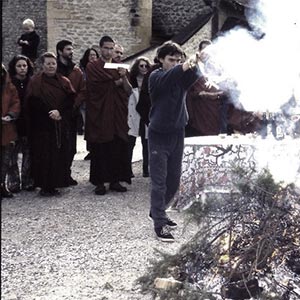
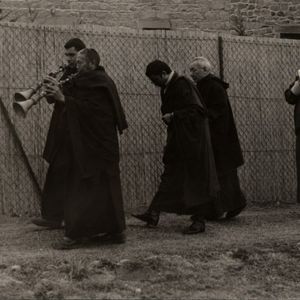
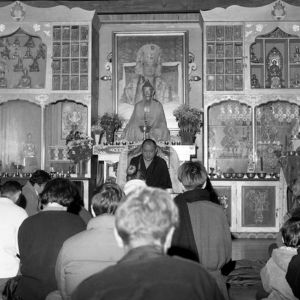
The throne, topped with a brocade canopy, was set up in front of a shimmering fabric hanging. About a hundred people filled the courtyard, waiting for Karmapa to take his seat and perform the Black Crown Ceremony.
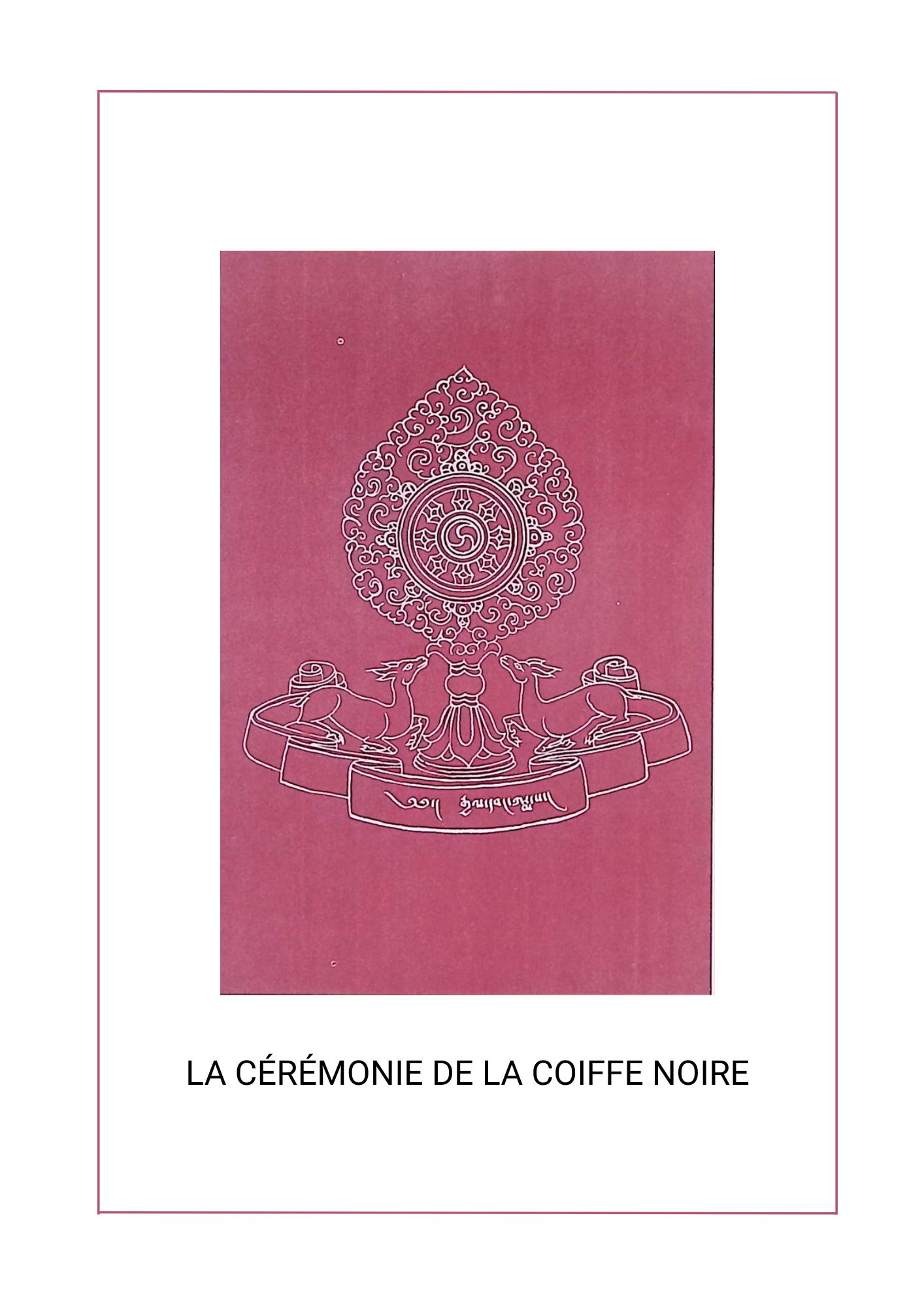
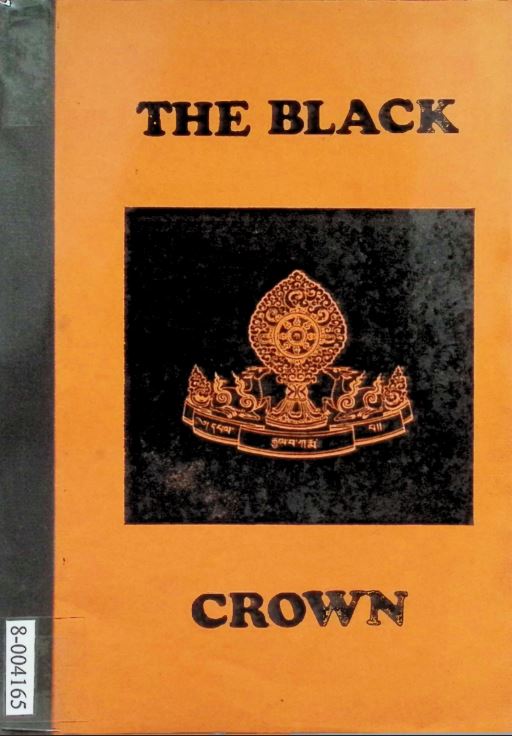
Origin of the Black Crown which Bestows Liberation on Sight
 In the early 1400s, the Fifth Gyalwa Karmapa, Dezhin Shekpa (1384–1415), accepted an invitation from the third Ming emperor of China, Yong Le (1360–1424), to come and teach at the imperial court. The journey from Tibet to the capital, Nanjing, took three years. Karmapa traveled with an entourage called the Eminent Camp that Adorns the World (garchen dzamling gyen གར་ཆེན་འཛམ་གླིང་རྒྱན། in Tibetan). Thousands of hermit practitioners, authentic renunciates, and Karmapa’s entire administration travelled with him.
The camp therefore moved slowly towards China, stopping many times along the way so that Karmapa could give teachings and empowerments. Once he reached the imperial capital, Karmapa offered the court a series of extraordinary teachings and empowerments over a period of twenty-two days. Emperor Yong Le developed deep trust in Karmapa. During one of the ceremonies led by Karmapa Dezhin Shekpa, he saw a black crown floating above Karmapa’s head.
Deeply inspired by this experience, the emperor asked Karmapa for permission to make an exact replica of what he had seen. Karmapa agreed, and the emperor guided the craftsmen in reproducing the crown. Although it was deep blue in color, it appeared black from a distance and thus became known as the Black Crown which Bestows Liberation on Sight (üsha tong drol དབུ་ཞྭ་མཐོང་གྲོལ། in Tibetan).
The crown is an inherent aspect of the physical manifestation of all Karmapas. Long before his birth as Düsum Khyenpa, in a previous life, the 1st Karmapa (1110-1193) had attained the tenth bhumi of the bodhisattvas. Whenever a bodhisattva reaches such a degree of realization, the buddhas of the ten directions gather to confer upon the new bodhisattva of the tenth land a special empowerment: the vajra-like samadhi empowerment.
In the case of the being who was to become the Karmapa, from the moment of this empowerment, this Crown from the hair of a hundred thousand dakinis became a naturally present characteristic of his being. Called the Naturally Manifesting Wisdom Crown (yeshe rangnang gi chöpen ཡེ་ཤེས་རང་སྣང་གི་ཅོད་པན། in Tibetan), it can only be seen by those who possess pure vision that allows them to perceive Buddhas in their enlightened form, or sambhogakaya in Sanskrit.
Although imperceptible to most ordinary beings, a disciple with a pure mind imbued with unshakeable confidence can see this crown manifesting naturally. Thus, the 13th Dalaï- Lama, Thupten Gyatso (1876-1933), also perceived, during his meeting with the 16th Karmapa, that the latter wore a second crown in addition to the one that was visible.
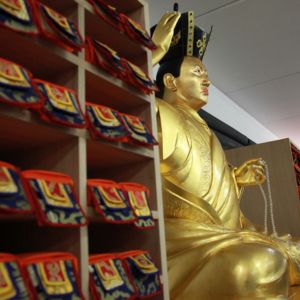
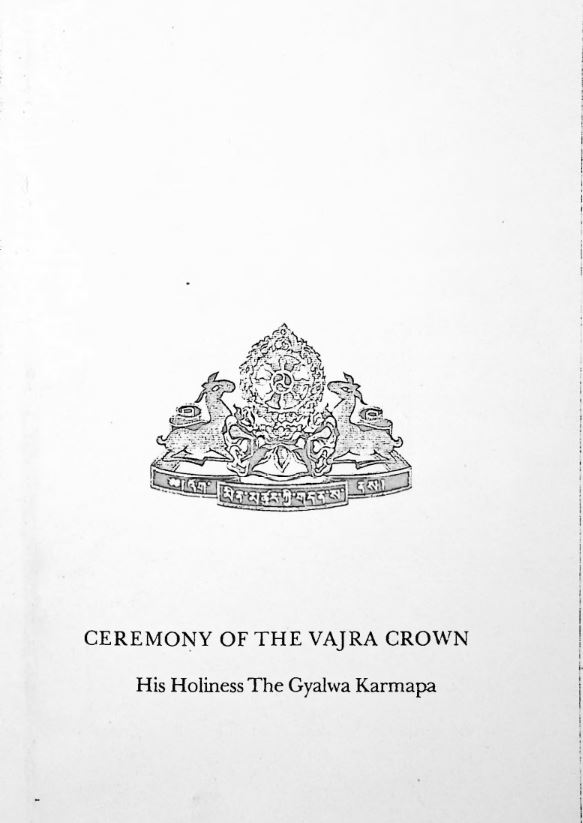
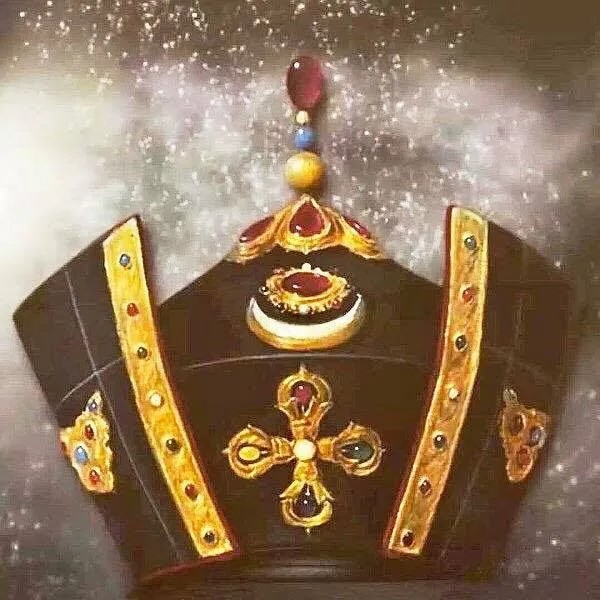 “The Black Crown which Bestows Liberation on Sight” is not only an important physical representation of the qualities of the Karmapas; it is also a means by which these qualities can inspire and accomplish the good of beings. To this end, the Karmapas of the past developed a ceremony that became known as the Vajra Crown Ceremony, or Black Crown Ceremony. Although the witnesses to this ceremony are ordinary beings, the experience of seeing the Karmapa wearing the physical crown anticipates a future time when their purified minds will be able to perceive the qualities of enlightened beings fully, without the need for an external support. History does not specify when the very first Black Crown Ceremony was conducted, but it is clear that this practice was widespread at the time of the ninth Karmapa, Wangchuk Dorje (1556–1603).
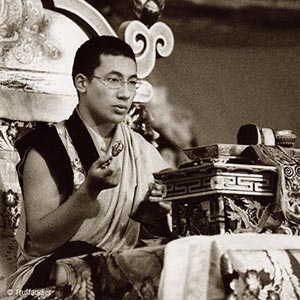
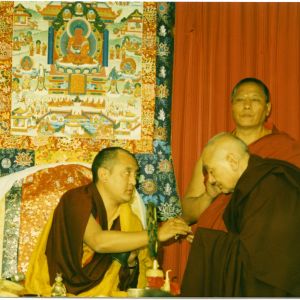
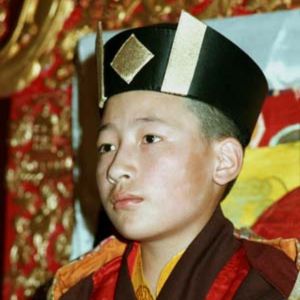
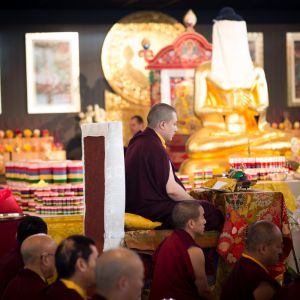
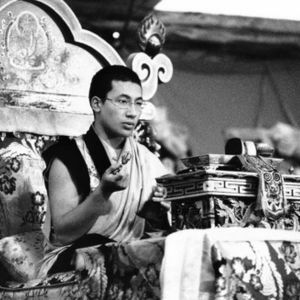
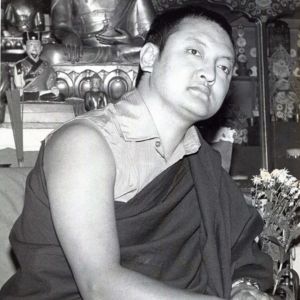
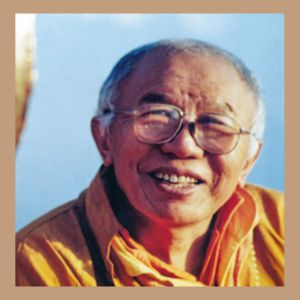
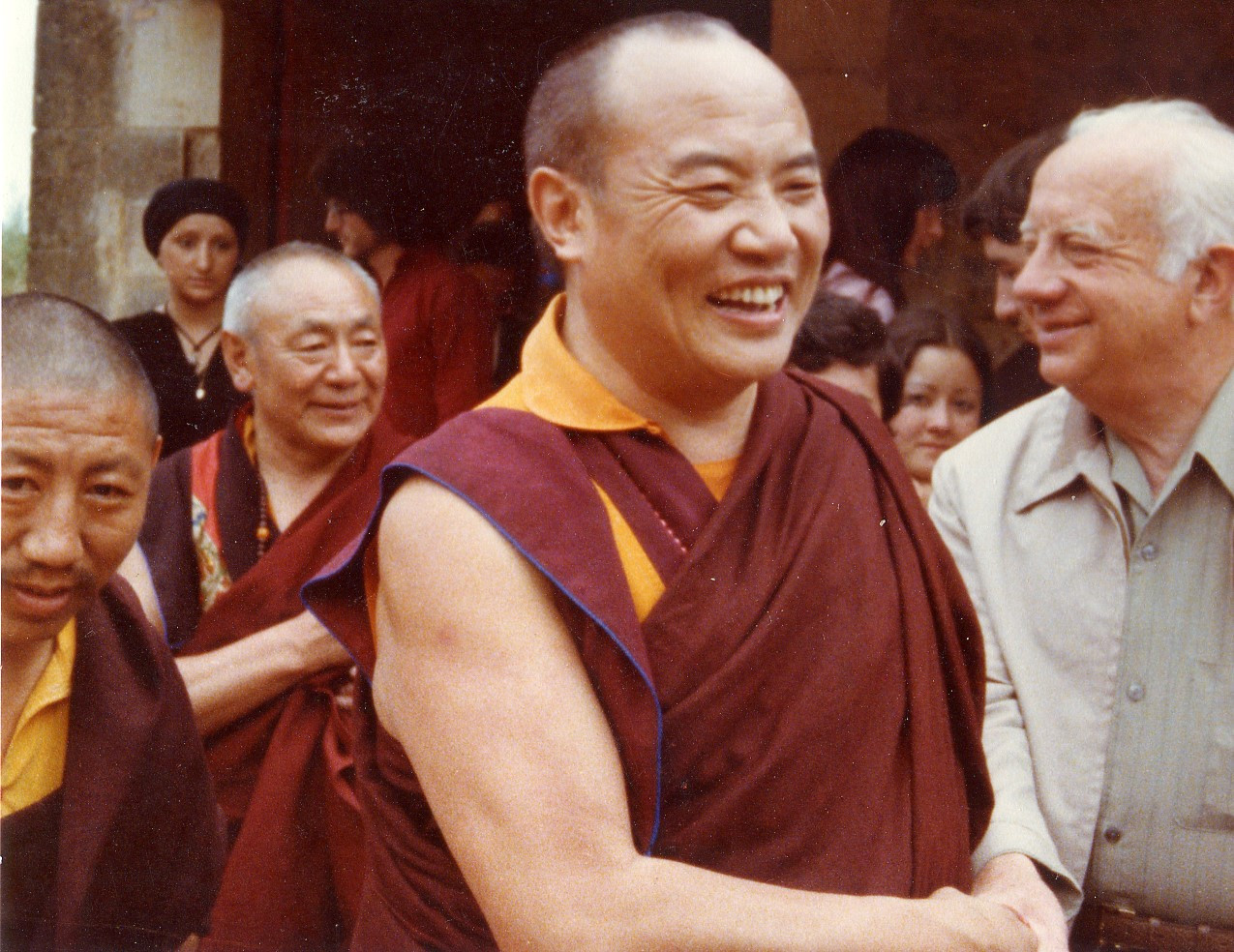
On July 1, 1977, the 16th Gyalwa Karmapa stepped forward to the throne and took his seat. Tsony remembers clearly, “I had been told that he was a great lama, but he wasn’t very tall! A bit like Shamar Rinpoche. But he had a really impressive bearing! He was like an elephant!”
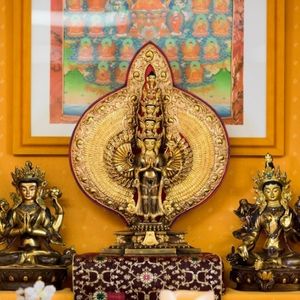
The ceremony began with a request addressed to Karmapa as an emanation of Chenrezig. This was followed by a mandala offering and a traditional seven-branch practice, as had been performed in all the Black Crown ceremonies before this one. Karmapa entered deep meditation. Without leaving his samadhi, he performed the same gesture as the Karmapas of the past and put on the Black Crown. Inseparable from Chenrezig (Avalokiteshvara), he then recited the latter’s six-syllable mantra, Om Mani Padme Hung, praying with his crystal rosary beads.
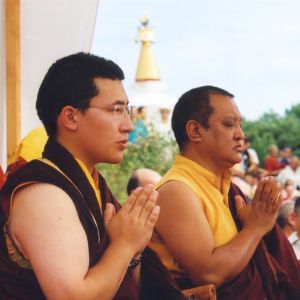
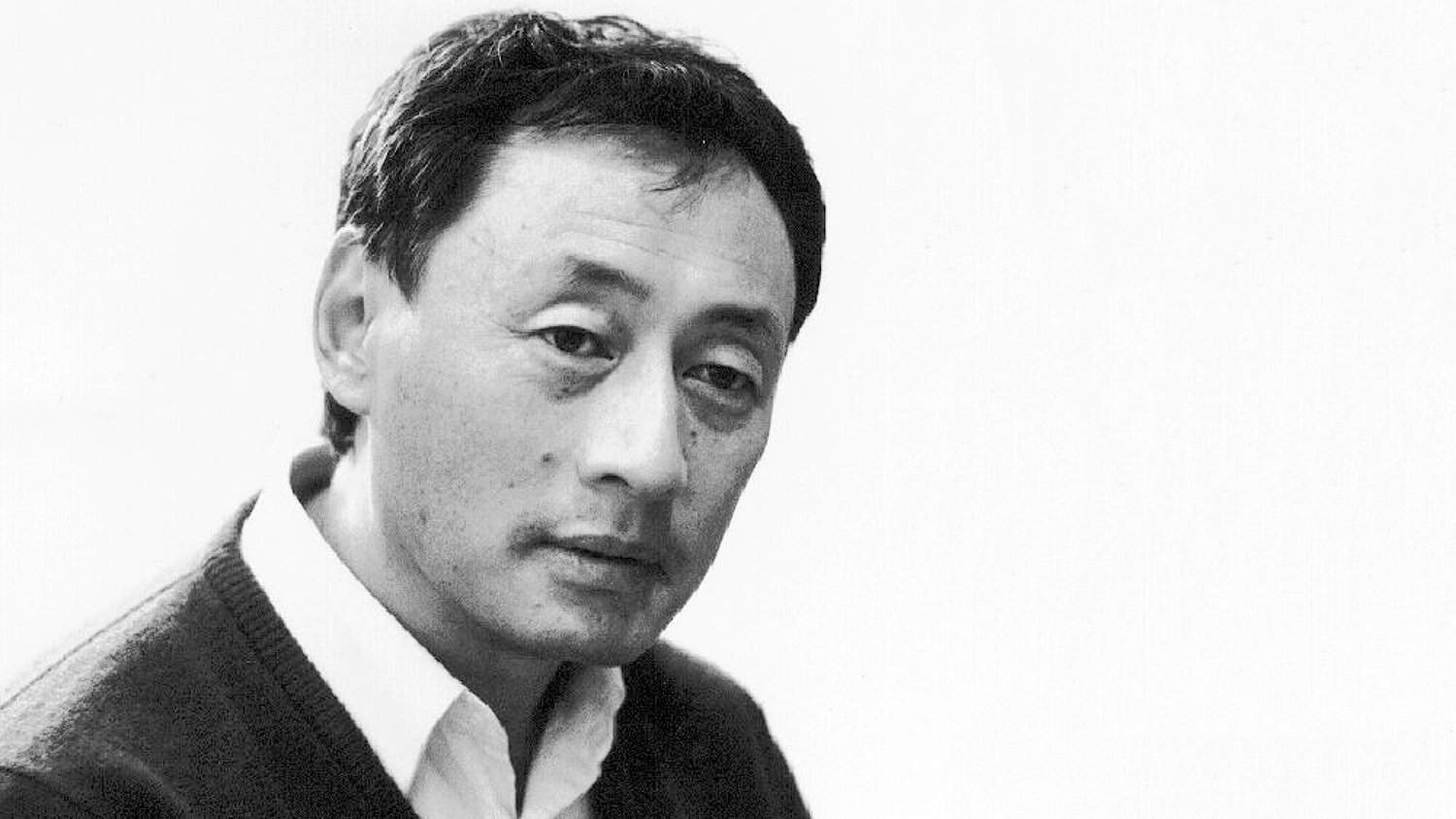 Topga Yugyal Rinpoche (1942-1997), appointed dorje lopön of the lineage and then secretary-general by the 16th Karmapa, explains that the assembly does not passively attend the ceremony but must take an active part in order to reap its benefits:
When you see this Black Crown, visualize in a one-pointed way, with confidence and devotion that rays of light emanate from Karmapa’s body, speech, and mind and penetrate you. In this way, the harmful inclinations caused by the double veil of afflictive obscurations and the knowable, at the level of your body, speech, and mind, will be purified. This will enable your body, speech, and mind to become inseparable from those of Karmapa. […] Think that seeing this Black Crown which Bestows Liberation on Sight, enables you and all beings to actualize the state of Buddhahood.
In the Lankavatara Sutra, the Buddha said:
Those having a Black Crown with their monastic dress,
Will accomplish without ceasing the benefit of beings
Until the time when the teachings of the thousand buddhas touch upon their end.
According to Guru Padmasambhava:
An emanation of the speech of Avalokitesvara,
Removed himself from the Tushita heaven for the sake of beings.
The first incarnation, known as Düsum Khyenpa of secret action,
Holds the Black Crown as a mark of initiation and as the ornament of his family.
Every moment of his life, he guides a limitless number of beings to enlightenment
Those people who see, hear of, recollect or touch these Karmapas
Upon leaving this life, will be reborn before Arya Avalokitesvara.


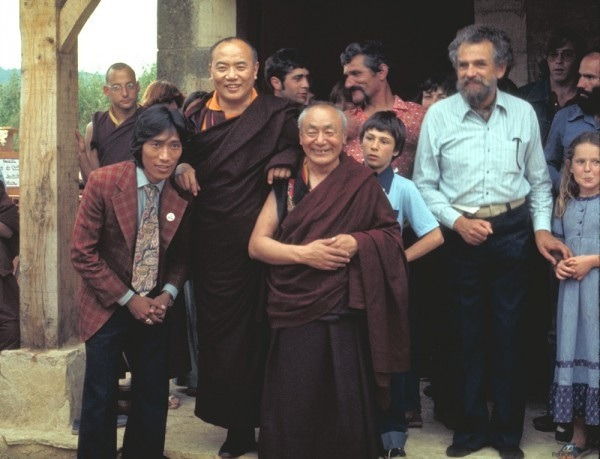





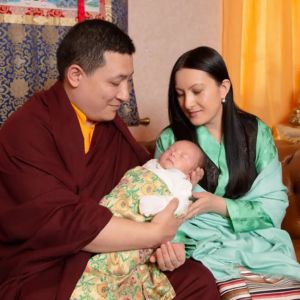
These photos come from our archives or were collected as part of the research for Dhagpo Kagyu Ling’s 50th anniversary. We have not been able to identify all the authors. The use of these photos is solely for informational purposes within the context of Dhagpo Kagyu Ling’s 50th anniversary celebration. Their use is limited to this event and our website and is not for commercial purposes.
Event
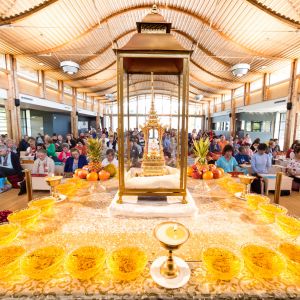
To commemorate this event, on July 1, we will recite the Guru Yoga of the 16th Karmapa during four sessions in the Temple
These photos come from our archives or were collected as part of the research for Dhagpo Kagyu Ling’s 50th anniversary. We have not been able to identify all the authors. The use of these photos is solely for informational purposes within the context of Dhagpo Kagyu Ling’s 50th anniversary celebration. Their use is limited to this event and our website and is not for commercial purposes.