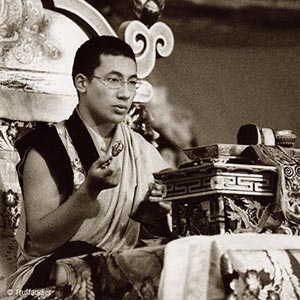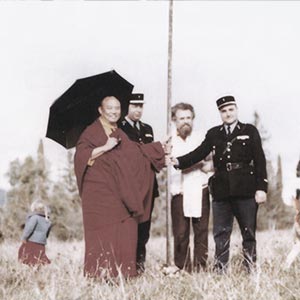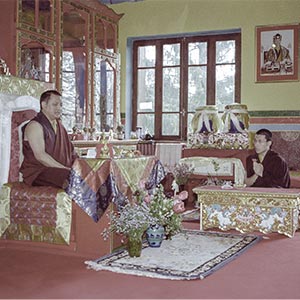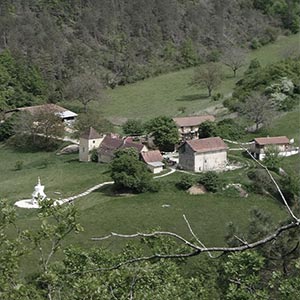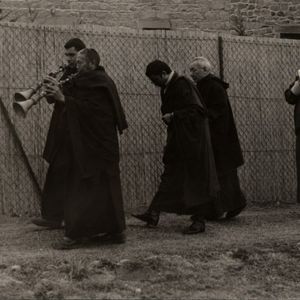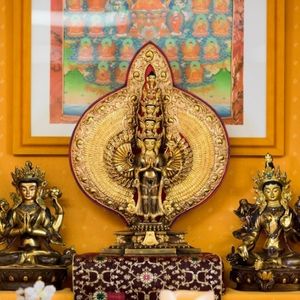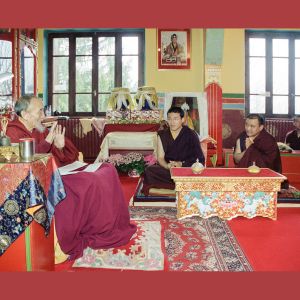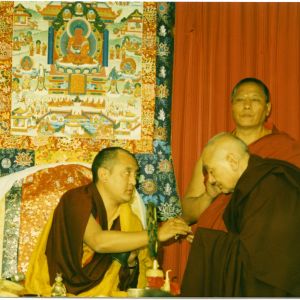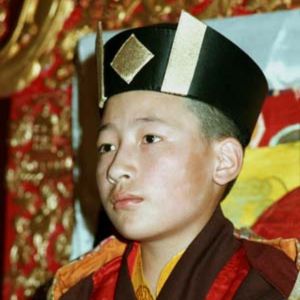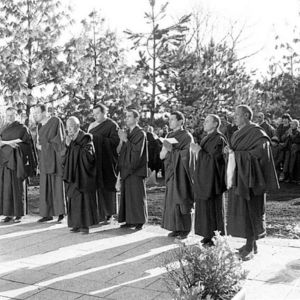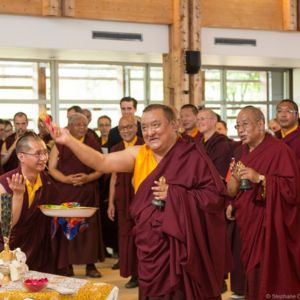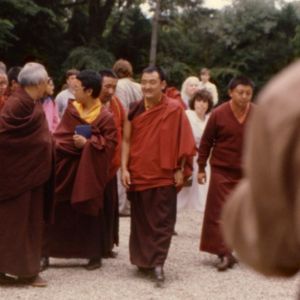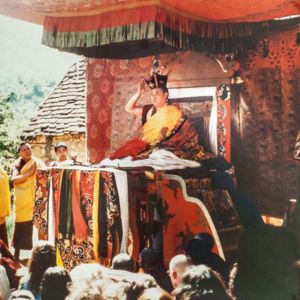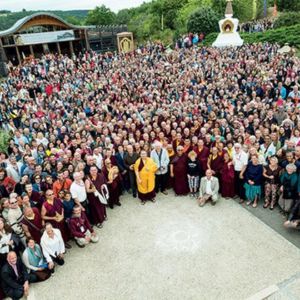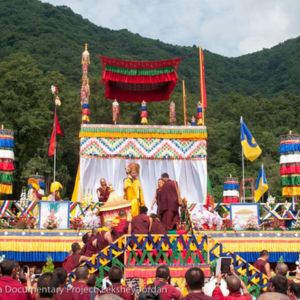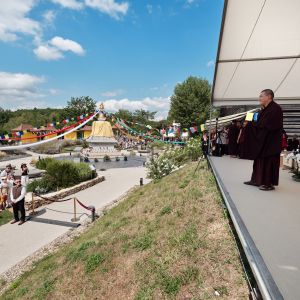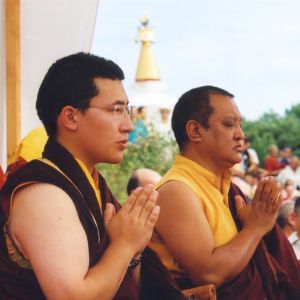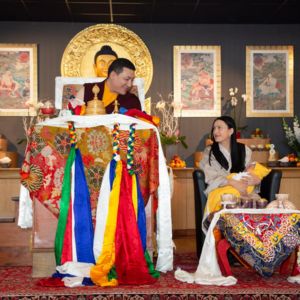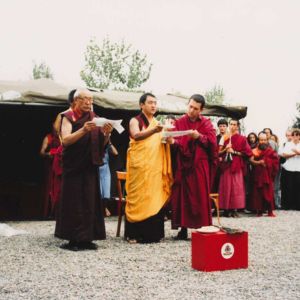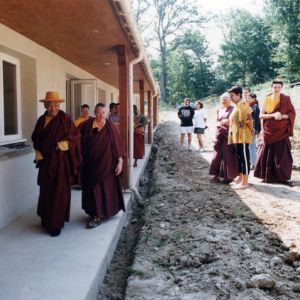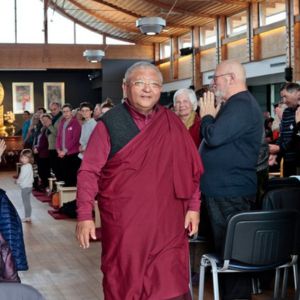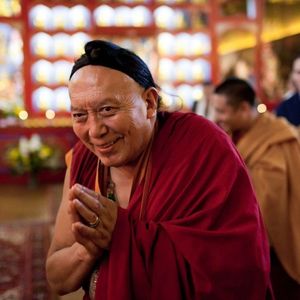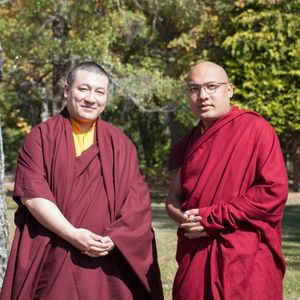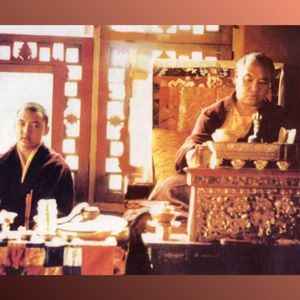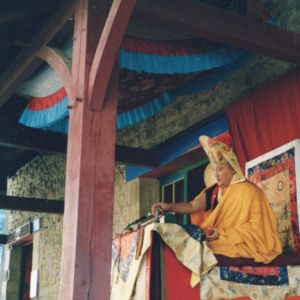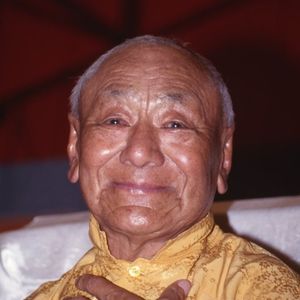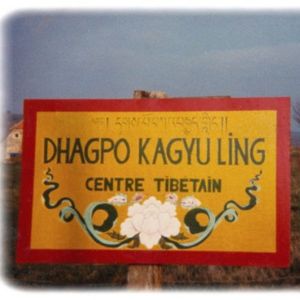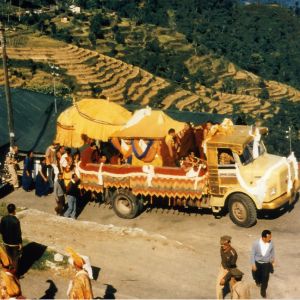
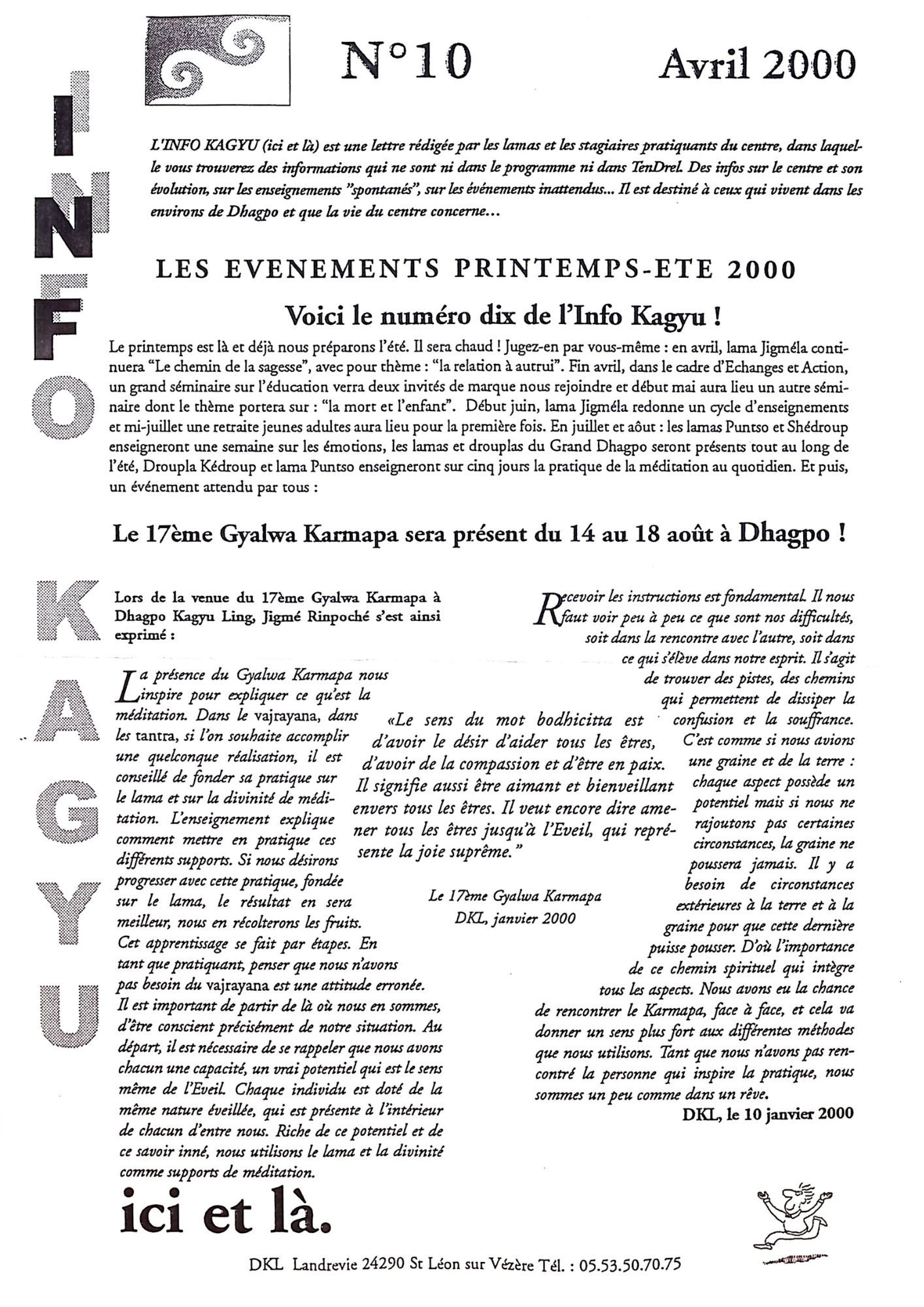
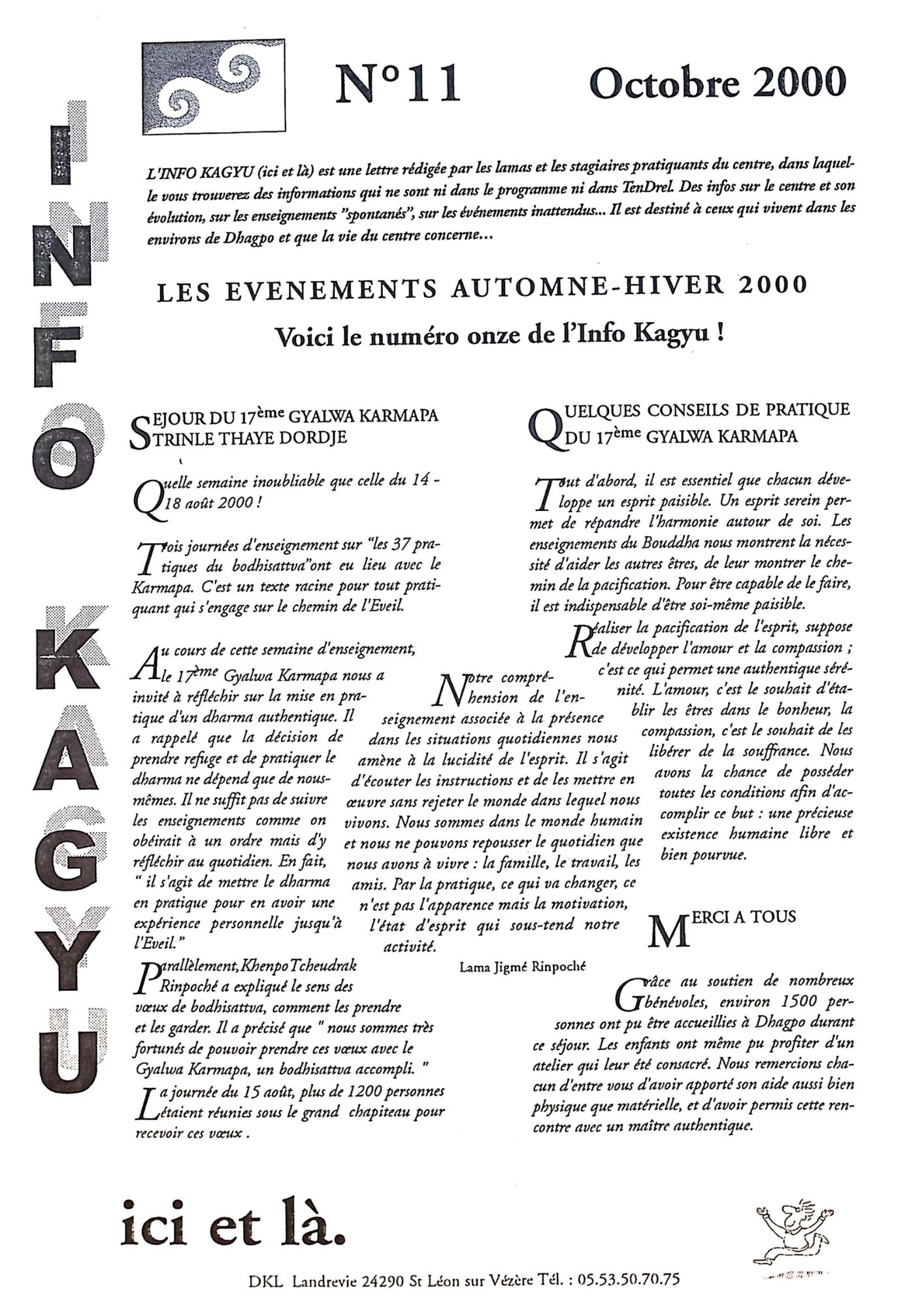
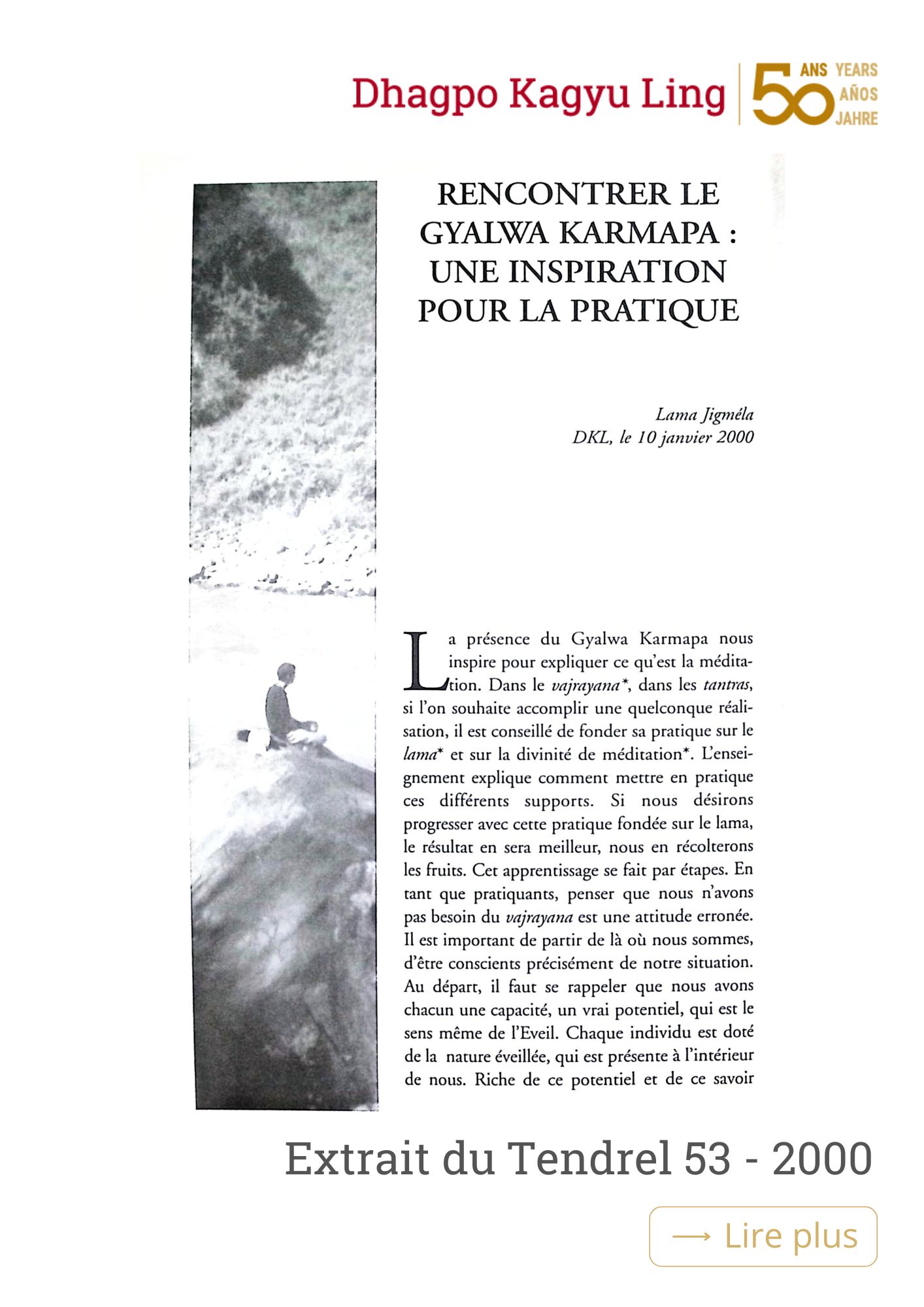
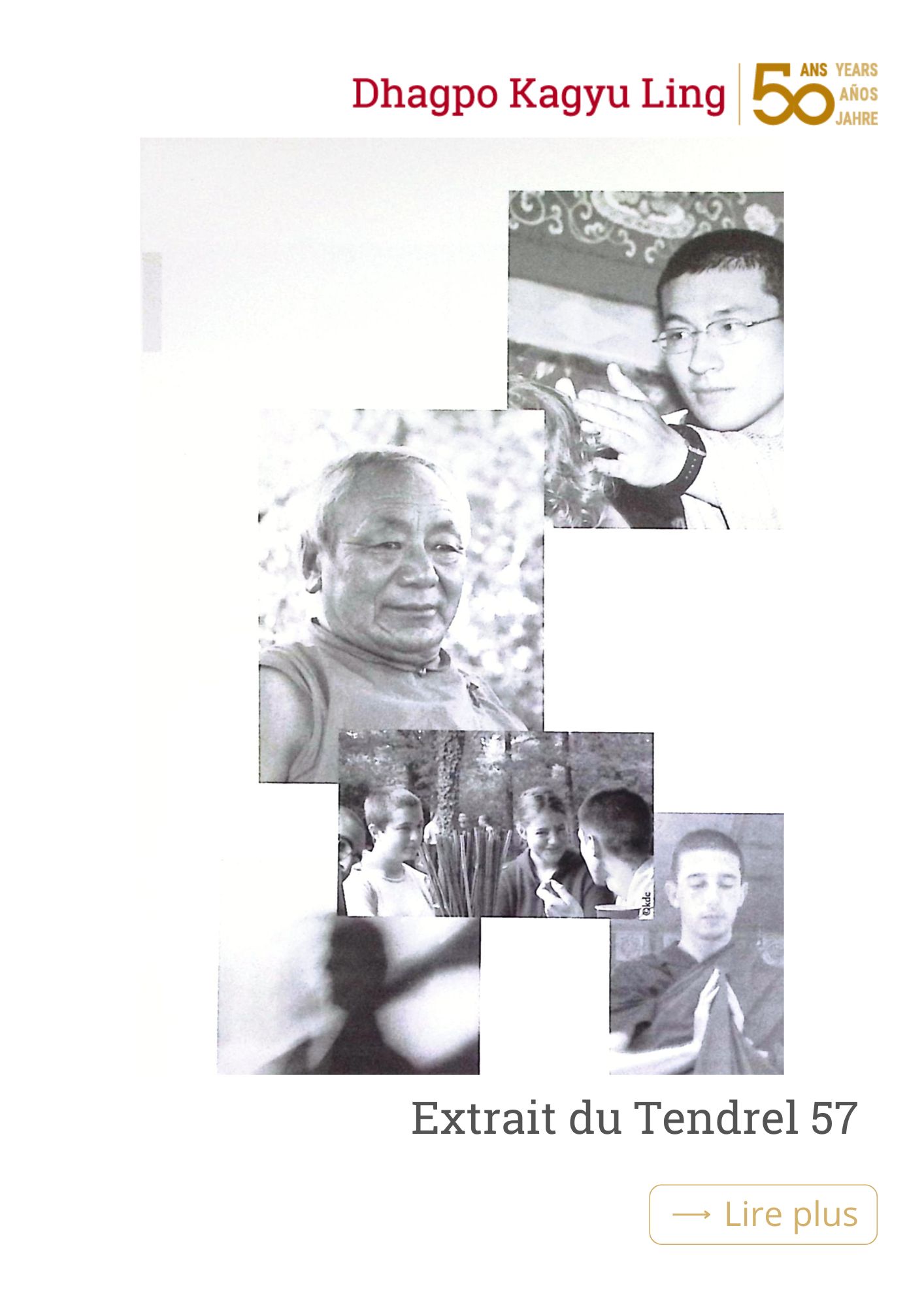
During his first visit to Europe in January 2000, Thaye Dorje, the 17th Gyalwa Karmapa, visited Dhagpo Kagyu Ling before continuing on to Dhagpo Kundreul Ling for a retreat that lasted several months, during which he received numerous transmissions.
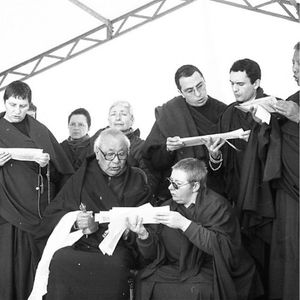
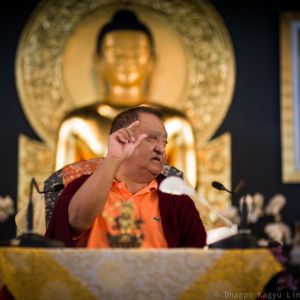
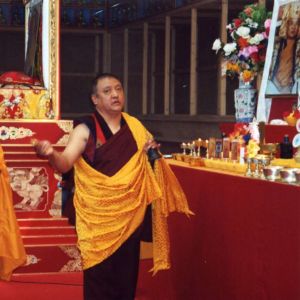
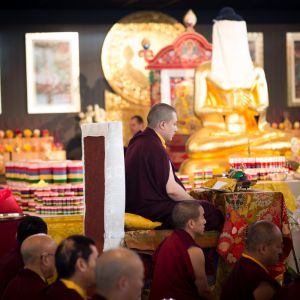
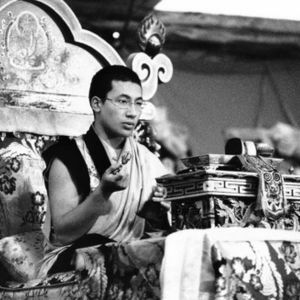
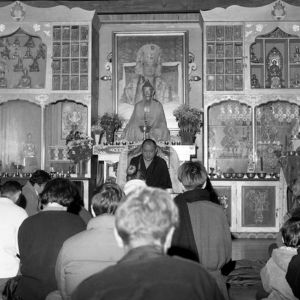
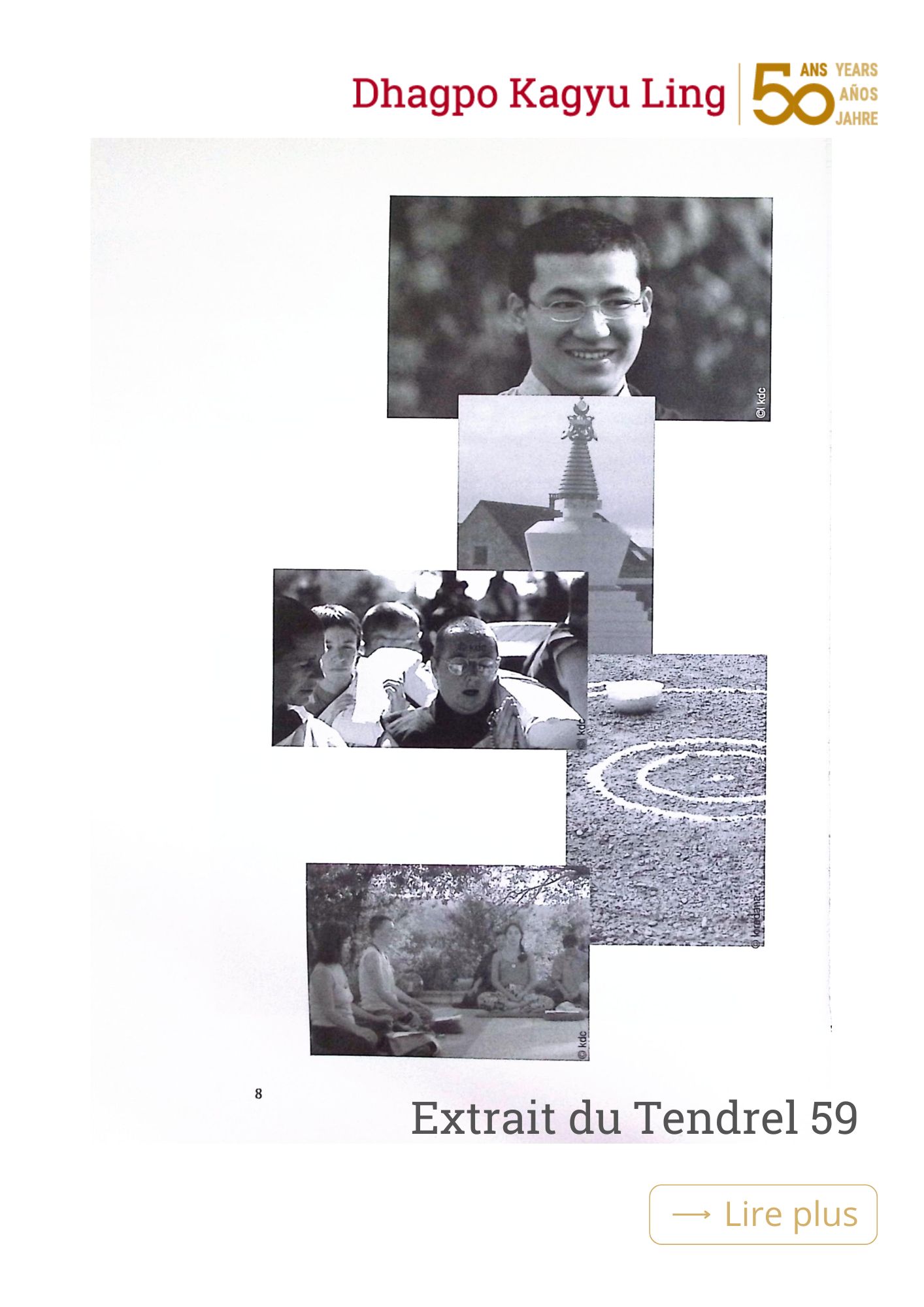
On August 14, 2000, the 17-year-old Gyalwa Karmapa returned to Dhagpo Kagyu Ling to teach for several days on the theme of bodhicitta, the enlightened mind, based on the Thirty-Seven Practices of a Bodhisattva by Gyelse Thogme, a 13th-century author (1). “Just as to accomplish the Dharma, one must know how to put it into practice, so here I will explain the practice of bodhisattvas,” writes the author in his promise of composition.
His Holiness taught in Tibetan and kept close to the text, detailing the first fourteen stanzas on precious human existence, uncertain moment of death, obstacles to practice, the spiritual friend, the protection of the three jewels, and the application of love and compassion in all circumstances.
His Holiness emphasized motivation and enlightened mind,
Always have bodhicitta in your mind and at the heart of your practice. Also, if you have a little moment, five minutes, try to develop this peace, and compassion. No matter whether it is day or night, always try to find time to generate bodhichitta.” Furthermore, he added, “We must have the profound motivation to help all beings. We shouldn’t be afraid of effort, and be patient in the face of all the difficulties we may meet in gaining the ability to help sentient beings. […] If we think of other sentient beings as our parents, it becomes easier to help them, to have this intention through our Dharma practice.
Throughout the verses, Karmapa also focused on the origin of suffering,
The reason why we all suffer is due to ignorance. Due to this, we follow our illusions. To free ourselves from suffering, we must cut the roots of ignorance, and then we will be able to attain ultimate happiness. This ultimate happiness can only be obtained with the help of the three jewels; their protection is always there. By asking them to be our protectors, the three jewels help us to generate love and compassion. Then we ourselves become equal to the three jewels, a protection for others.
With love and compassion, we should have the desire to help all sentient beings and the intention to bring them all the happiness we possess and take away all their suffering. These intentions are necessary to attain buddhahood. Even if we cannot actually make this exchange, we must always have the intention to do so. Love and compassion develop on the basis of a “certain non-ordinary way of seeing situations,” such as the understanding that people act under the influence of strong passions and create negative actions that we should not fuel with more hatred and aversion.
This path involves study and reflection. “To cross the ocean of samsara, we must listen, reflect and meditate on the Dharma, and do so with perseverance, day and night, at all moments,” explains Karmapa. “We must not practice the Dharma or take refuge out of pure belief, but through our knowledge and understanding, after analyzing the Buddha’s teachings. It is therefore very important to analyze the Buddha’s teachings in order to see for yourselves their validity. And once you understand their validity, you will naturally grow more confident in his teachings, and this confidence will help you attain buddhahood more swiftly,” explains Karmapa.
During his stay, the Gyalwa Karmapa also conferred the bodhisattva vows (see Tendrel, nº. 59) and the Green Tara empowerment..
1

Gyelsé Thogmé
This renowned master lived in Tibet until the age of seventy-five. His birth in 1235 was accompanied by many miraculous signs. From an early age, he showed an extraordinary disposition of mind for the practice of compassion. After completing his studies with distinction and acquiring great erudition in the five sciences, the sutras, and the tantras, he spent most of his time in retreat, his knowledge equaled only by the purity of his renunciation of the world. A true embodiment of the bodhisattva ideal, he devoted his entire life to spirituality, revealing extraordinary abilities in his practice of compassion and altruism.
He composed admirable verses, clear and profound, from the heart of his awakened mind, the most famous of which is the Thirty-Seven Practices of the Sons of the Victors, which summarizes all the stages of the bodhisattva path. He died at a place known as Ngul Tchou, sitting in meditation posture, his gaze unmoving, in the luminosity of the body of reality, amid a shower of flowers and a display of rainbow lights, at sunset on the twentieth day of the tenth moon of the earth-female-bird year (1309).
Introduction by translator Christian Masse to the work L’Excellente aiguière d’élixir, commentaire des Trente-sept pratiques des fils des vainqueurs by Ngawang Tenzin Norbou (in French only). Rabsel Éditions, La Remuée, 2016.
CThese photos come from our archives or were collected as part of the research for Dhagpo Kagyu Ling’s 50th anniversary. We have not been able to identify all the authors. The use of these photos is solely for informational purposes within the context of Dhagpo Kagyu Ling’s 50th anniversary celebration. Their use is limited to this event and our website and is not for commercial purposes.
Event
To commemorate this event, we will broadcast a teaching by the 17th Gyalwa Karmapa (time to be confirmed).
.

These photos come from our archives or were collected as part of the research for Dhagpo Kagyu Ling’s 50th anniversary. We have not been able to identify all the authors. The use of these photos is solely for informational purposes within the context of Dhagpo Kagyu Ling’s 50th anniversary celebration. Their use is limited to this event and our website and is not for commercial purposes.l