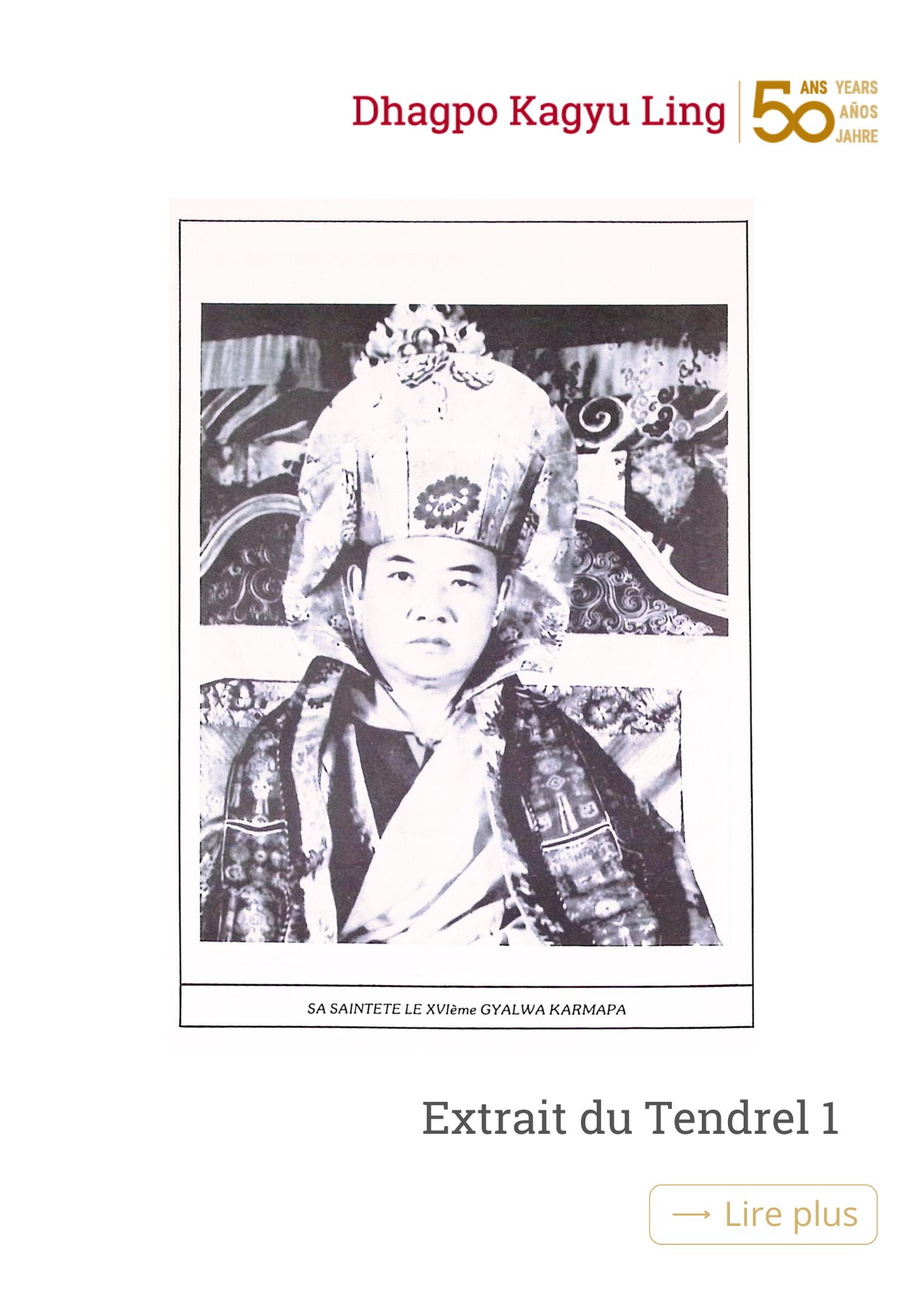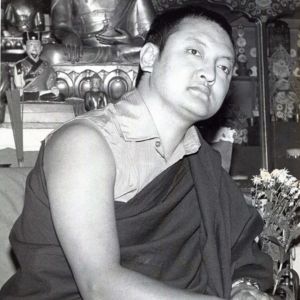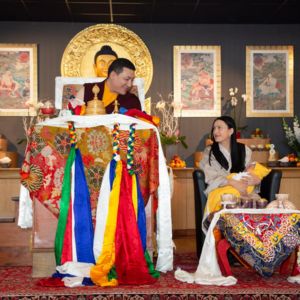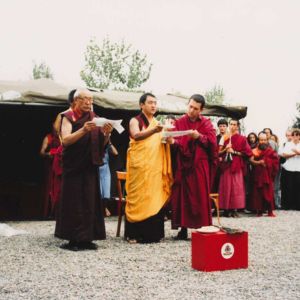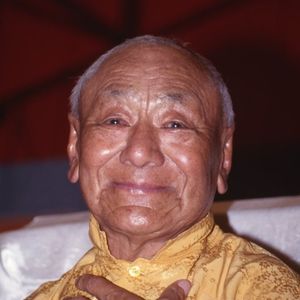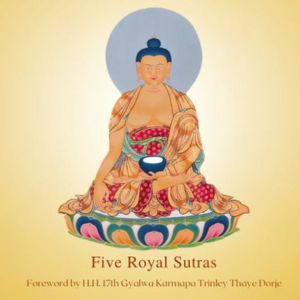
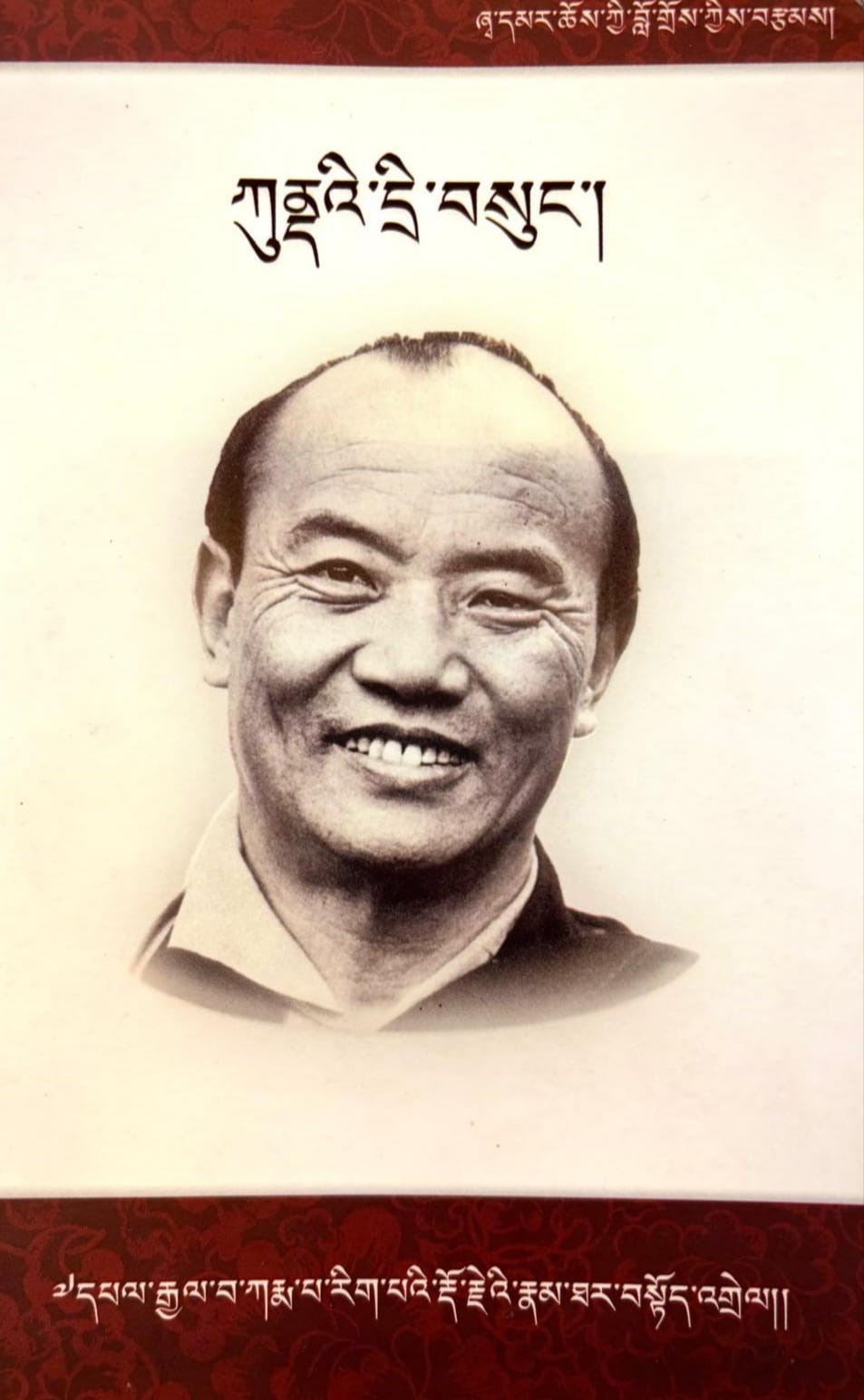
Cover of the book written by Künzig Shamarpa
The Fragrance of White Lotuses:
Praise and Commentary of the Account of Liberation of the Glorious 16th Gyalwa Karmapa, Rigpe Dorje
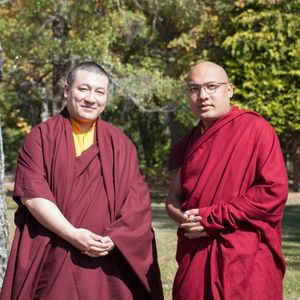
November 5, 1981, Rangjung Rigpe Dorje, His Holiness the 16th Gyalwa Karmapa left his physical body at the American International Hospital of Zion in Chicago in the United States. The mahaparinirvana of eminent beings like the Karmapa escapes our immature understanding veiled by various obscurations. Let us thus listen to the words of another eminent being on this subject—words free from confusion—those of the Red Crown Karmapa, Mipham Chökyi Lodrö, His Holiness the 14th Künzig Shamarpa.
In 1982, Künzig Shamarpa wrote The Garland of White Lotuses: Praise in Verse Form Narrating the Account of Liberation of the 16th Gyalwa Karmapa (ཀརྨ་པ་བཅུ་དྲུག་པ་རིག་པའི་རྡོ་རྗེའི་སྐུ་ཚེའི་རྣམ་ཐར་ལ་བསྟོད་པ་ཚིག་སུ་བཅད་པ་ཀུནྡའི་ཕྲེང་བ།), which he complemented with an explanatory commentary in 2012, The Fragrance of White Lotuses (ཀུནྡའི་དྲི་བསུང་།). In a traditional style of Tibetan poetry that reveals his full literary mastery, Shamarpa relates the essence of the 16th Gyalwa Karmapa’s life, from his manifestation up through the abandonment of this body of emanation.
The 16th Karmapa had evoked his imminent departure on multiple occasions, as expressed in Stanza 40.
In a teasing manner, [Gyalwa Karmapa] sometimes said
That he would soon leave behind this formal body
To take care of his future disciples.
It would be the final act he gave us to see.
Shamarpa explains in his commentary that beginning in 1976 Karmapa announced to several renowned teachers such as Adro Rinpoche and His Holiness Drukchen Rinpoche that he would not live much longer and would soon leave for a new field of activity.
What we commonly call “illness,” and which is accompanied by physical and mental suffering—the seal of suffering of a human existence—is described and experienced in a much different way here by the nirmanakaya of a buddha.
Shamarpa states as much in Stanzas 41 and 42.
In order to take the suffering of others
And dissipate the nets of grasping at permanence
Within the dualistic manifestation of disciples of this earth,
[Gyalwa Karmapa] showed the process of illness.
Having seen that wellbeing and suffering are illusions,
His aggregates were free of pain.
He abided with a joyful mind,
A sign that his experience of happiness was free of all stains.
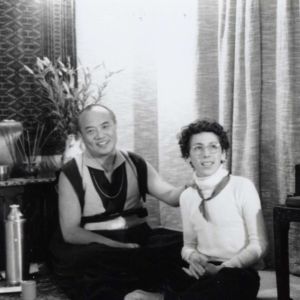
Over the course of the 16th Karmapa’s long illness, during which he underwent various surgeries and painful treatments, both doctors—Cartesian thinkers and hardened scientists—and Karmapa’s close entourage, including Sopön Tsültrim Namgyal and Lama Jigme Rinpoche, witnessed the extraordinary relaxedness of this uncommon being, who was more concerned with the aches and difficulties of his caregivers than his own state and refused all pain medication. Shamarpa explains in his commentary of these lines.
“At that time, Karmapa must have experienced unbearable pain, but he could sleep soundly. He didn’t want to take any pain medication. The doctors were dumbfounded. They began to have true confidence [in him]. […] From the outside, it seemed as though Karmapa was sleeping, but in reality, he was abiding in the [dimension] of clarity-luminosity, experiencing no physical pain. When a change occurs at the level of the basis-for-all consciousness from which arises the sixfold collection [of consciousnesses], [the individual] then abides in the clarity-luminosity [of their mind]. Due to this, the experience of the six sense objects such as visible phenomena, sounds, etc. and their six respective consciousnesses thus changes to become [that] of dharmata. Concerning his sensations when he was awake, the phase of meditative absorption was not mixed with post-meditation. In post-meditation, dualistic appearances were experienced as illusions.”
Following various fruitless attempts at treatment, Karmapa left his body for pure lands on November 5, 1981, as Shamarpa recounts in Stanzas 43 and 44.
Having long been free
Of the chains of birth and death,
You are able to be reborn as you wish
In all lands, both pure and impure.
At dawn on the eighth [day] of the ninth [lunar] month
Of the Female Metal Bird Year of the sixteenth cycle,
In the West, surrounded by many disciples,
[Gyalwa Karmapa] departed to the absolute dimension.
Shamarpa explains in his commentary of these stanzas that at the moment of Gyalwa Karmapa’s departure, he himself was in Belgium. That same night, he had the following dream,
In the sky, amidst a sea of white clouds, Rigpe Dorje appeared in the form of a stupa. He floated about a meter above my head. I began to progressively recite praise to the protector Bernagchen,
Within dharmadhatu,
The wisdom protector and his entourage approach,
Consider me,
And grant their blessing.
While I sang the lines of receiving accomplishments, at that moment, the voice of the supreme Gyalwang—free of all confusion— addressed me with these words, “You have accumulated immense abundance throughout these eons.” I listened, and he repeated these words once more. I thought to myself that this abundance referred to an immense accumulation [of merit] over the course of eons. Then, his body dissolved as though absorbed by the clouds, and I awoke to the ringing of the telephone. My brother Jigme shared the news of [Gyalwa Karmapa’s] passing. The doctors said that the machines showed that his heart had stopped. I looked at the time. It was 3:02 a.m. It must have been 3:00 when he passed, the eighth day of the ninth month of the Tibetan calendar, in Belgium. It must have been 8:00 p.m. in Chicago, the seventh day.
[…]
The 16th Gyalwa Karmapa left his body November 5, 1981.
Of all footprints,
That of the elephant’s footprint is supreme.
Of all perceptions,
That of impermanence is the supreme perception.
Of all visions,
The pure vision of a noble being’s nirvana seen in a dream is the supreme vision.
མདོར་ན་ད་ལྟ་འཕགས་ཡུལ་སོགས།།
གང་ན་མདོ་སྔགས་ཐུབ་པའི་གསུང་།།
འཆད་ཉན་སྒོམ་པའི་ལེགས་ཚོགས་ཀུན།།
ཕལ་ཆེར་ཉིད་ཀྱི་མཐུ་ལས་བྱུང་།།
In few words: Today, in India and throughout the world,
The Muni’s speech, be it the sutras or the tantras, has spread widely.
The teachings, learning, and meditation gather all excellence.
We owe this to your power.
Stanza 50
Such are the words of Shamarpa in homage to Rangjung Rigpe Dorje, His Holiness the 16th Gyalwa Karmapa.
1 Kalimpong: Diwakar Publications, 2013. These two texts are forthcoming from Rabsel Publications. The stanzas were translated from Tibetan
2 This refers to the sixteenth sixty-year cycle that is made up of twelve years associated with twelve animals, linked with five elements.
3 In the text, the literal term is རྔུལ་ཆེན་, which means sweat.
Event
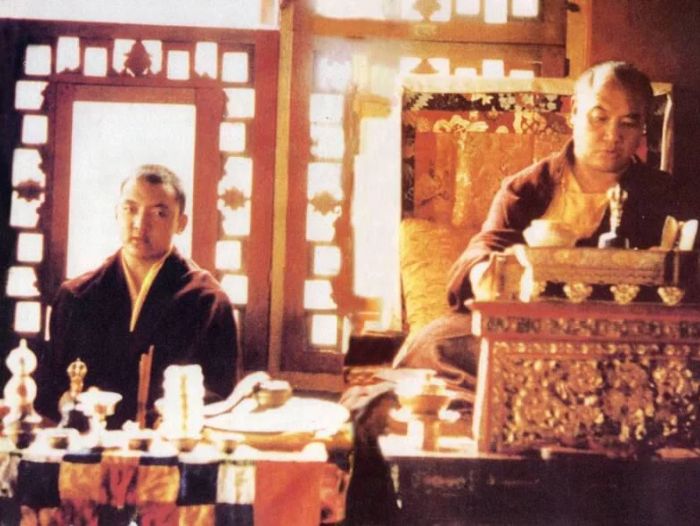
To commemorate this event, a day of dropcheau practice will take place at Dhagpo Kagyu Ling. Then, on Sunday, November 9, Lama Jigme Rinpoche will share his reflections and memories of the mahaparinirvana of the 16th Karmapa at 2:30 p.m. This event will take place in Dhagpo Kagyu Ling’s Institute. It will be streamed online and translated into several languages.