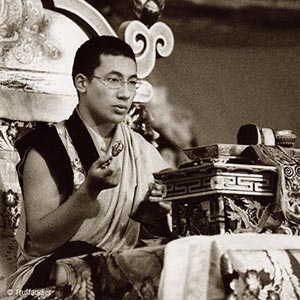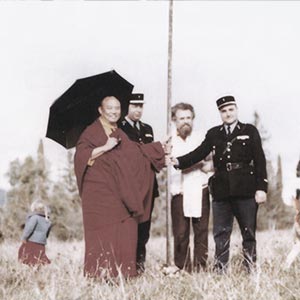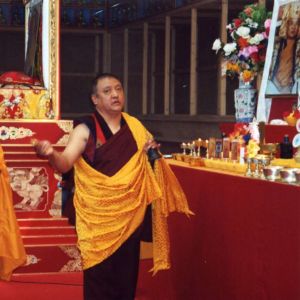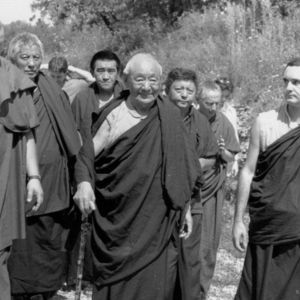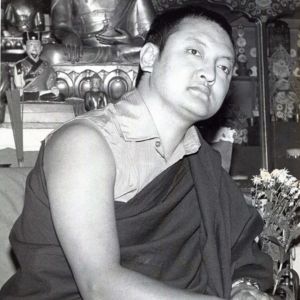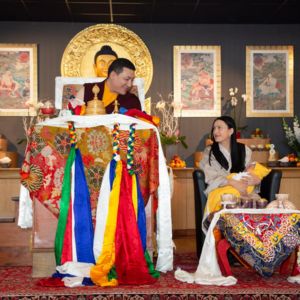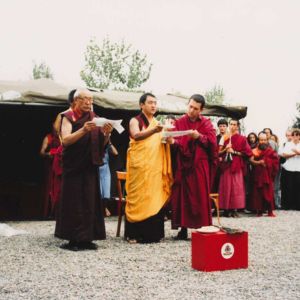
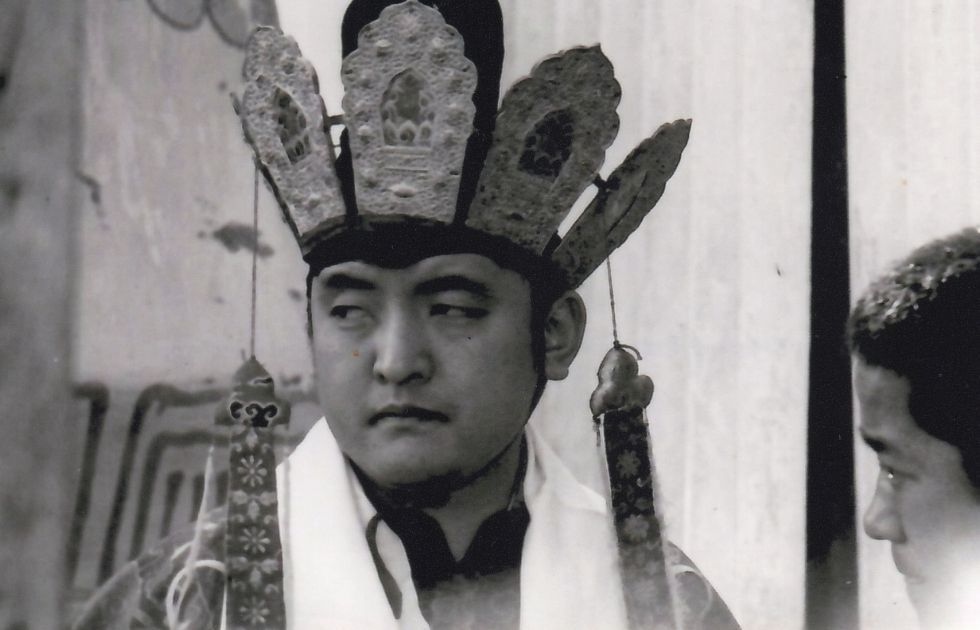
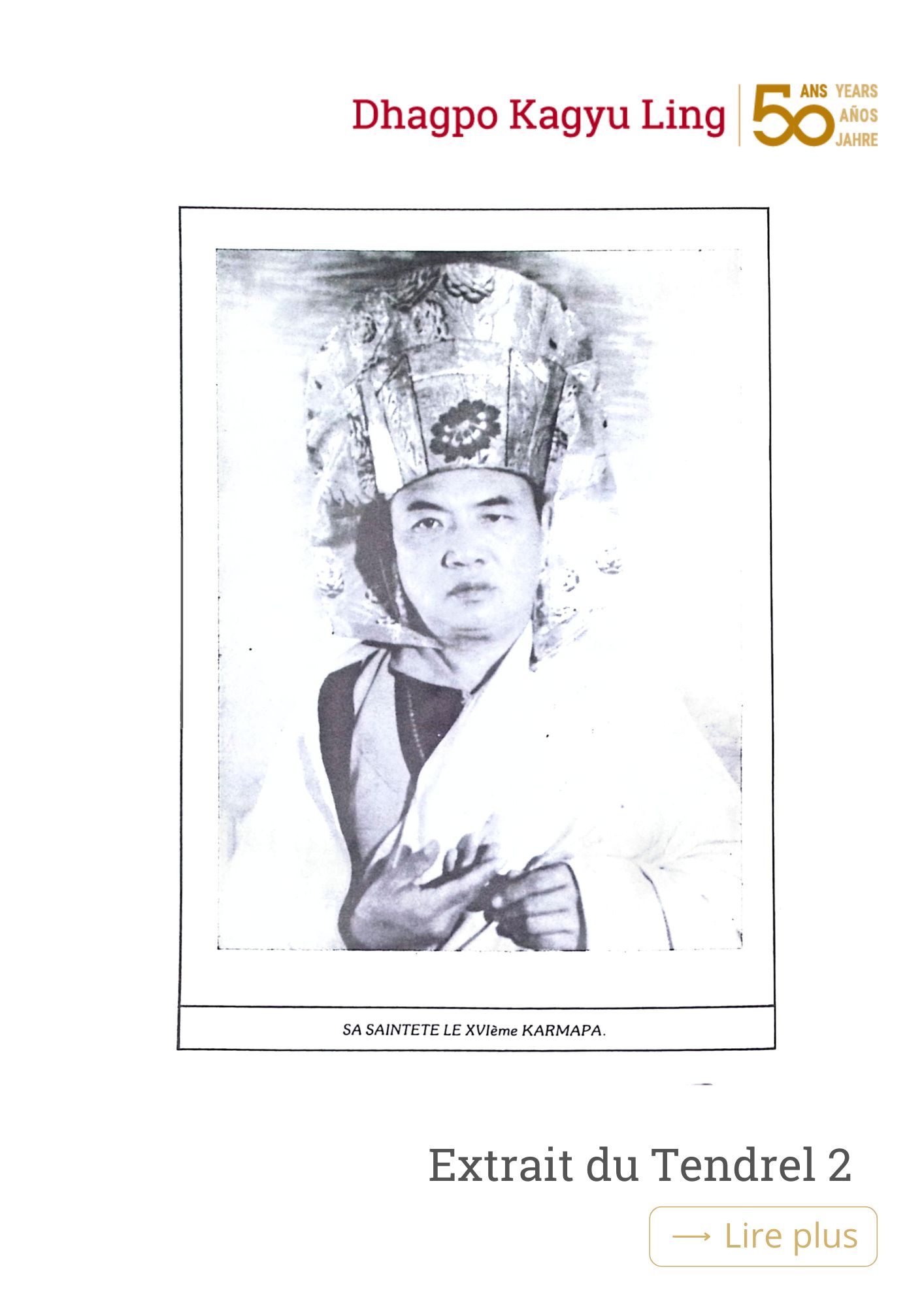
On November 5, 1981 His Holiness the 16th Gyalwa Karmapa Rangjung Rigpe Dorje passed away at Zion Hospital in the United States. At the time, Khenpo Chödrak Rinpoche was at Rumtek Monastery, in India. He recalls the days following the repatriation of Karmapa’s kudung (the remains of an eminent master) to India in detail, as well as the preparations leading up to the final funeral rites on December 20:
“Upon receiving the call, we immediately started preparations in Rumtek monastery for everything concerning the next proceedings, including the reception and safekeeping of His Holiness’s physical remains.
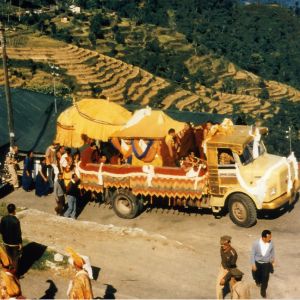
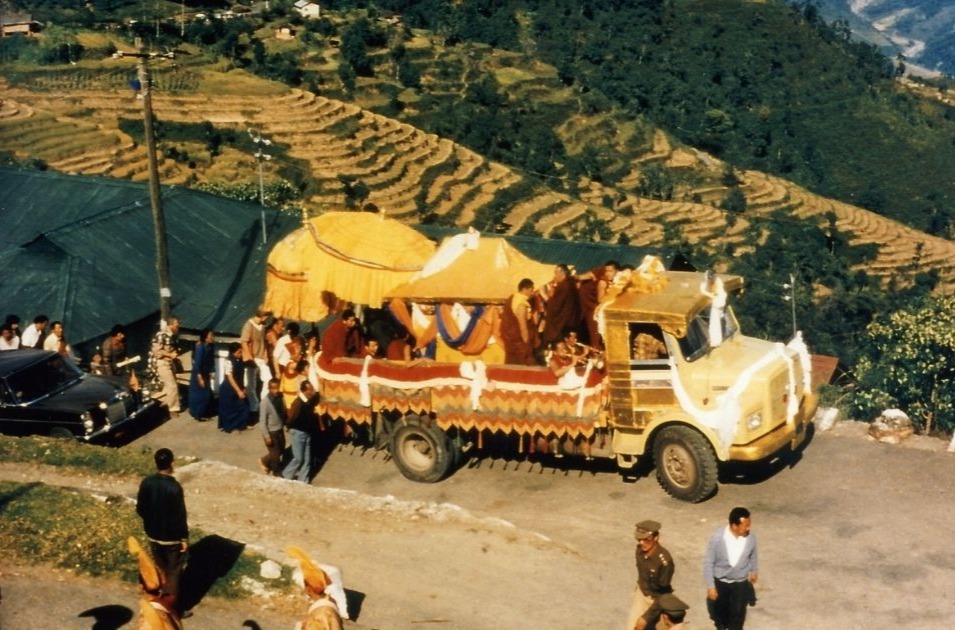
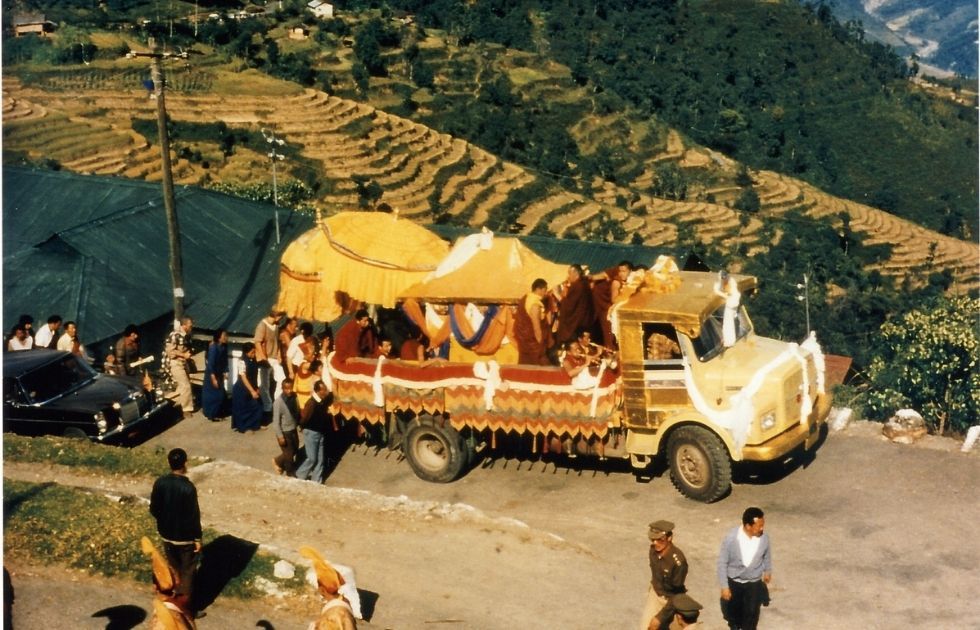
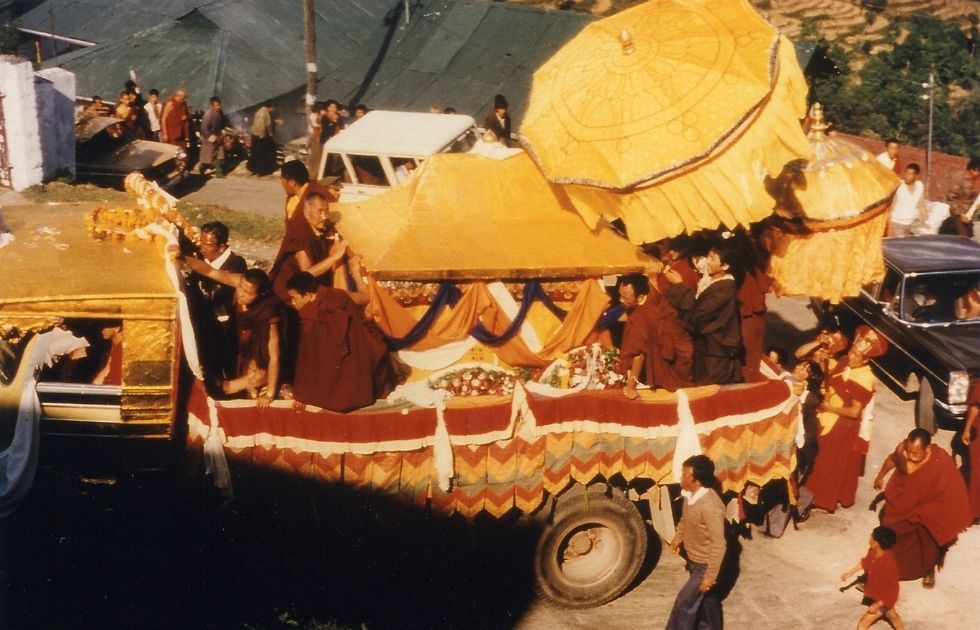
The main building of the monastery of Karma Dharme Chakra in Rumtek has three stories, with a big shrine hall on the top floor. That is where the remains of His Holiness were to be safeguarded for the time being. We divided ourselves into nine teams and made all the necessary preparations for that, including organizing various rituals and assemblies that were to take place. When the body of His Holiness arrived at the Upper Tadong Indian Army Helipad, we, the Rumtek monks, drove to receive him and accompany him on that last journey.
 I was called in by the venerable general secretary of His Holiness, [Damchö Yongdü], who told me, “We need to take care of the bodily remains, is that something you would manage?” Thinking, “taking care of the remains is my last act of service,” I accepted. Therefore, Bokar Tulku, Bardo Tulku and I were put in charge of looking after His Holiness’s remains in the old Tibetan custom, which meant embalming the physical remains in salts that dry all the liquid elements of the body, placing the body in a wooden container and so forth.
The following weeks were indeed a source of personal amazement for me. Despite the fact that His Holiness’s stature was rather large, sometimes the body felt very light when we removed it from the container. It was just like handling a small Buddha statue. And other times, it was so heavy! We always placed it back into the container in the same position and it also happened that when we opened the box the next week, His Holiness’s face was turned to a different direction!
Every week we would open the container, remove the old salts, wash the body, dry it, and place it with new embalming salts back into the container. I can attest to the fact that there was never any whiff of unpleasant smell or odour, the smell was always very pleasant. There was never any sign of decay or rot. Moreover, the body never became corpse-like, it remained as pliant as a live person. When a great master passes away, it is customary to place the body in full meditation position, with crossed legs, and ritual items of bell and dorje placed in their hands, and this all could be done very easily. The body, embalmed in salts, was then enclosed in a wooden container that was positioned on a mandala.
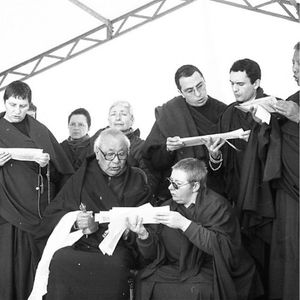
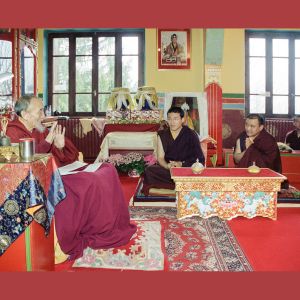
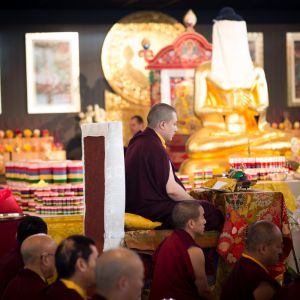
There was an assembly that performed ritual practices in front of the enclosed body of His Holiness, including the four so-called great Rinpoches: Kalu Rinpoche, Zurmang Trungpa Rinpoche, and others. Down in the large shrine hall, there was an assembly of many monks led by the Vajramaster of Rumtek. There were at least six different assemblies, performing different ritual practices related to various deities such as Cakrasamwara, Kalachakra, Gyalwa Gyamtso, Hevajra, Vajra Varahi, Guhyasamaja. Up to six hundred monks gathered daily. The expenses for that, such as for providing food and refreshments, were sponsored by the Tsurphu administration, the various Rinpoches, and also Sikkimese and Bhutanese governments.
Simultaneously, there were many meetings happening, where different things were decided, but as I was a ‘junior’ then, I was not included in many of them and sometimes would just have to wait outside. In those meetings, the various organizational aspects were decided and the date and circumstances of the cremation were determined.
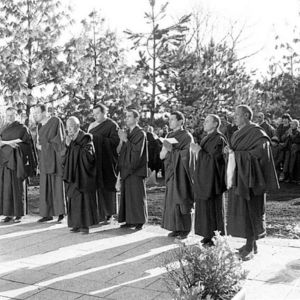
Vast numbers of lamas were present, including many representatives of the Kagyu and Nyingma lineages. His Holiness Dilgo Khyentse Rinpoche and Dzigar Thugse Rinpoche arrived well ahead of the cremation. Other masters arrived a day or two before the cremation, such as His Holiness Drikung Khyabgon Rinpoche. It is impossible to name all those in attendance.
December 19, 1981
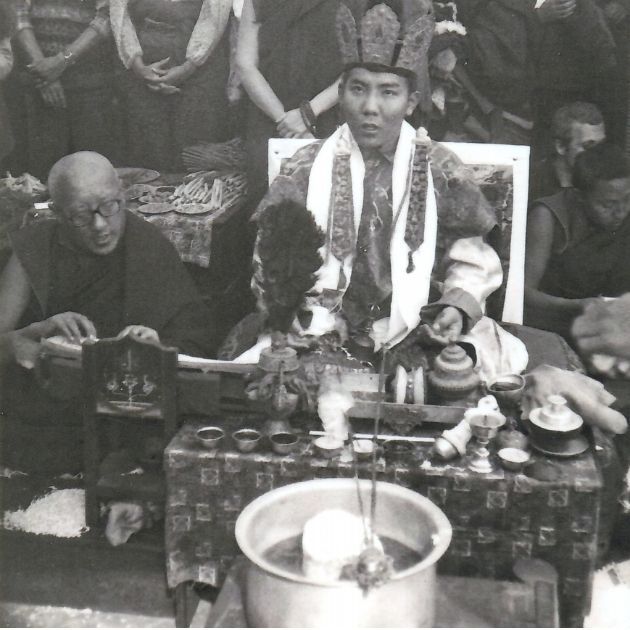
The evening before the cremation, we removed the body from the container one last time and washed it. It was then covered in gold, which was an offering performed mainly by Jamgon Rinpoche, Shamar Rinpoche and His Holiness Dilgo Khyentse Rinpoche. It was also adorned by the attributes of sambhogakaya. Many offerings of perfumes and medicinal herbs were made. The most famous and highly valued kind of saffron was offered in great quantity. Bokar Tulku, Bardo Tulku and I served as attendants during those proceedings. The assembled masters recited the Treasury of the Kagyu Songs of Realization (kagyü gur tso བཀའ་བརྒྱུད་གུར་མཚོ།) continuously the entire time until morning.
December 20,1981
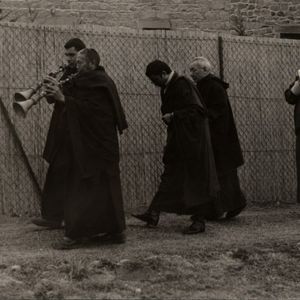
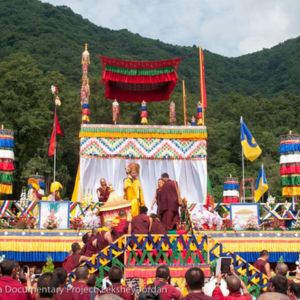
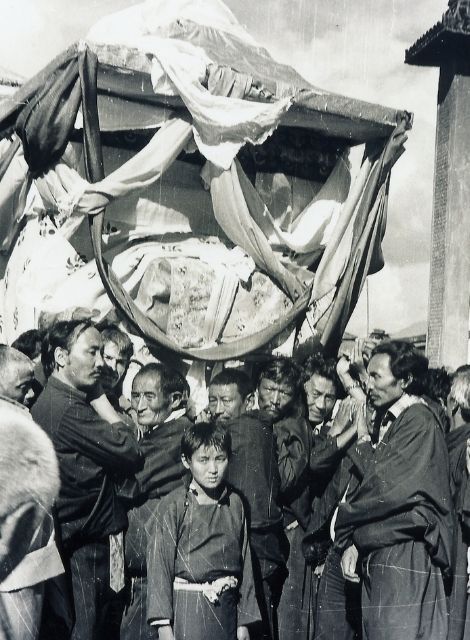
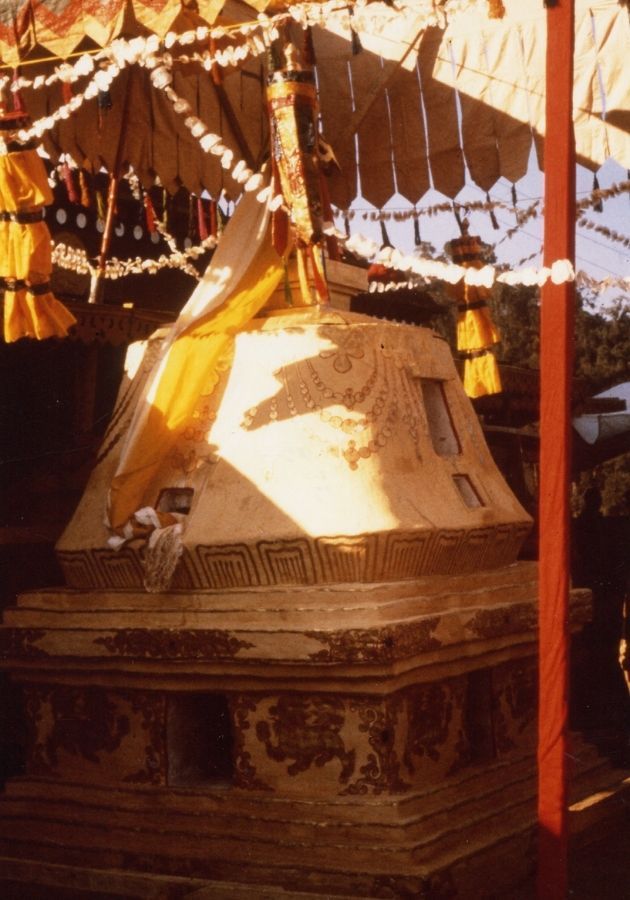
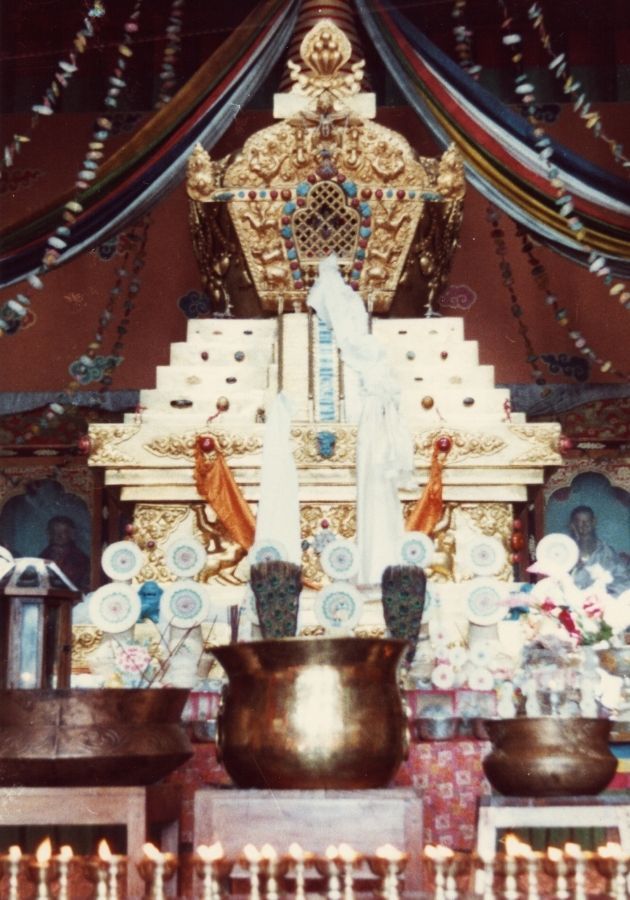
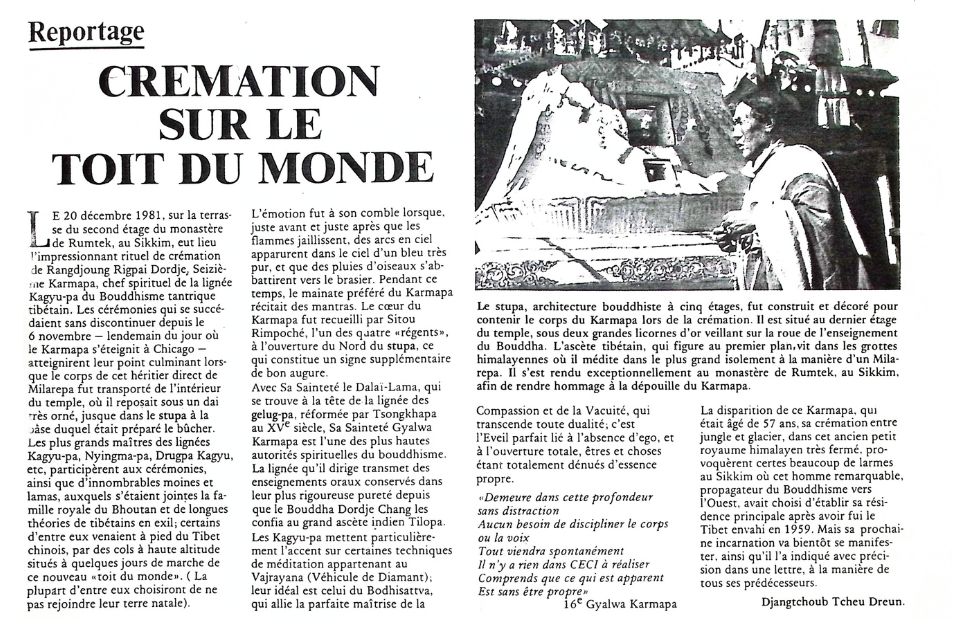
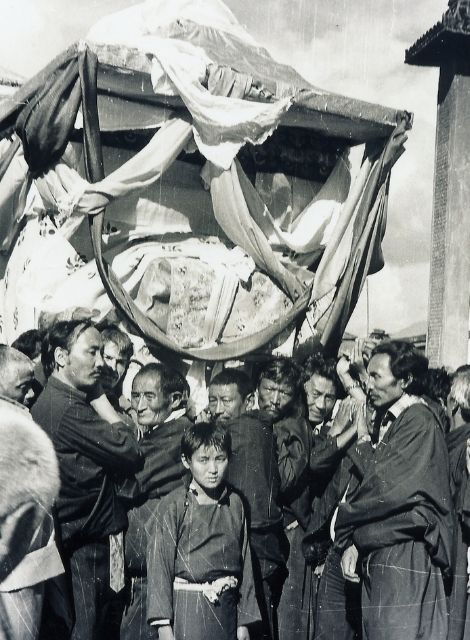 At daybreak, the remains were transported to the parinirvana stupa constructed outside, which was surrounded by many assemblies reciting various rituals.
- To the west of the stupa were Shamar Rinpoche and Beru Khyentse Rinpoche presiding over the Gyalwa Gyamtso mandala rituals.
- In the south was Situ Rinpoche presiding over the Vajravarahi mandala and ritual.
- In the North, Jamgon Kongtrul Rinpoche with tülku Bokar presided over the Hevajra mandala and ritual.
- To the East were Gyaltsab Rinpoche and Sangye Nyenpa presiding over the Kunrig Akhsobhya mandala.
Kalu Rinpoche presided over the Kalachakra ritual. His Holiness Drikung Khyamgon Rinpoche and Trangu Rinpoche together with many lamas and tülkus from Drikung Kagyu, amongst them Ontrul Rinpoche and Ayang Rinpoche, performed the Chakrasamvara mandala rituals.
His Holiness Dilgo Khyentse Rinpoche, Shechen Rabjam, Payül Dzongnam Rinpoche and Katog Shingkyong Rinpoche presided over the assembly performing Dorje Sempa rituals. Druk Thugse Rinpoche together with many lamas of the Drugpa Kagyu presided over the ritual and the mandala of the Thirteen Deities of Chakrasamvara.
On another side, the Gelug master Lama Gangchen presided over the mandala of Guhyasamaja, surrounded by several of his disciples.
All in all, there was one mandala in each cardinal direction and one mandala for each ordinal direction. All the rituals started at the same time.
Representing Sikkim, Governor Homi J. H. Taleyarkhan and the Chief Minister Nar Bahadur Bhandari were present to pay respect. The Bhutanese royal family was represented by Ashi Sonam Chodron, Dashu Namgyal Wangchug, Ashi Chocik, Ashi Dekyi and Yum Pema Dechen as well as many other representatives. On the behest of the Indian government, the Sikkimese police stood guard of honor.
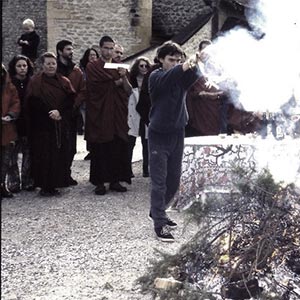
Four people were tasked with igniting the funeral pyre and guarding each side of the funerary stupa: Lobpon Tsechu Rinpoche, His Holiness’s personal secretary Thubten Gyaltsen Dronye Ngodrub, Minister of the King of Nangchen, Pon Namkhai Dorje and myself. There were many thousands of people present for the cremation itself. I have no idea how all of them actually fit considering the fact that the Rumtek area is rather limited. The whole mountain was covered with people in prayer. Once the fire was started, I heard a humming sound from inside of the cremation stupa. Other people reported hearing the sounds of mantras. I was next to Lobpon Tsechu Rinpoche who turned to me saying: “Can you hear all those mantras?” Some people reported hearing the principal mantra of Chakrasamvara, “Om Shri Ha Hung Peh.”
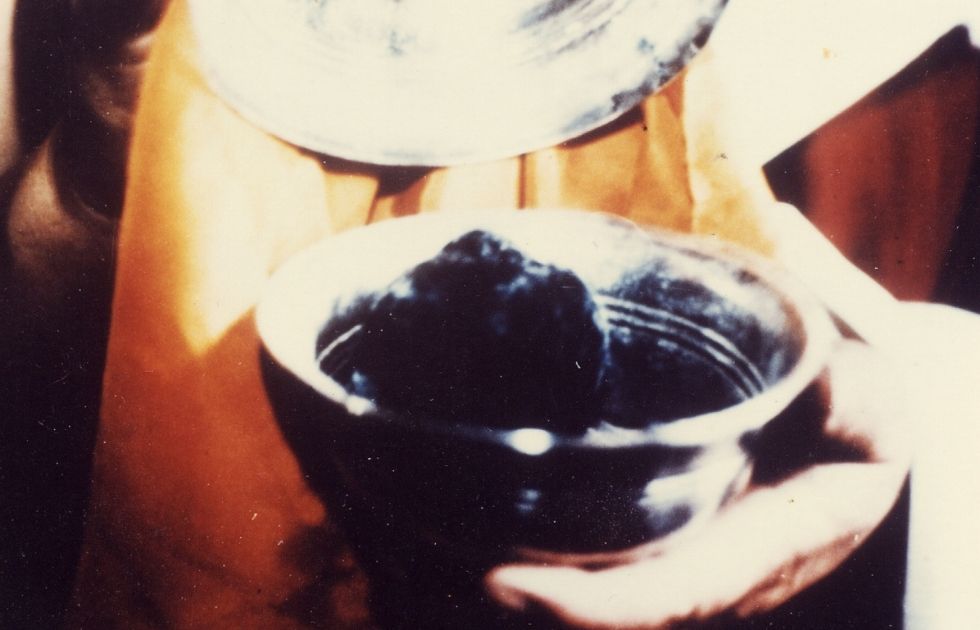
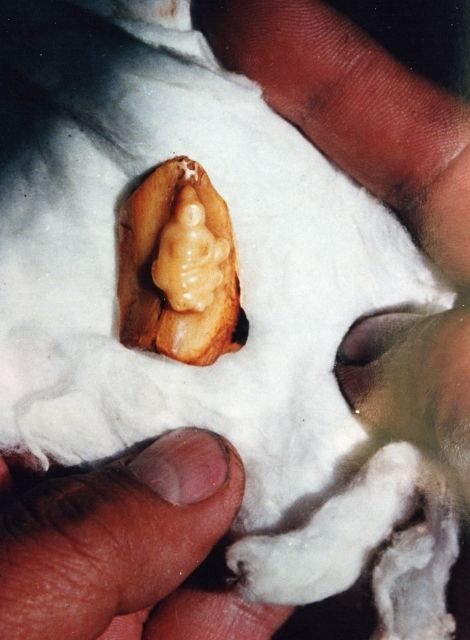
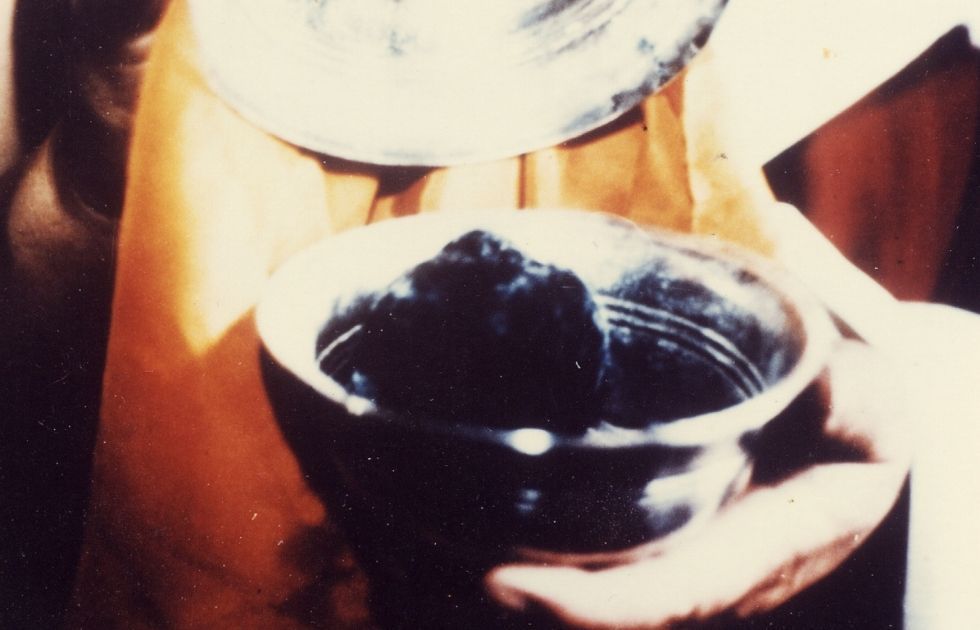
When the fire slowly started to die out, we heard a noise from within the stupa and from the northern opening of the stupa a fleshy red lump rolled out. I wondered what that item was and was quite sure that it was something special. I alerted Lobpon Tsechu Rinpoche and he told me to put it aside. […] I touched it and discovered that it was the heart relic that fell out. […] Later, the item became a bit smaller, but it stayed brightly red and radiant and was enshrined in the smaller stupa of Rumtek.
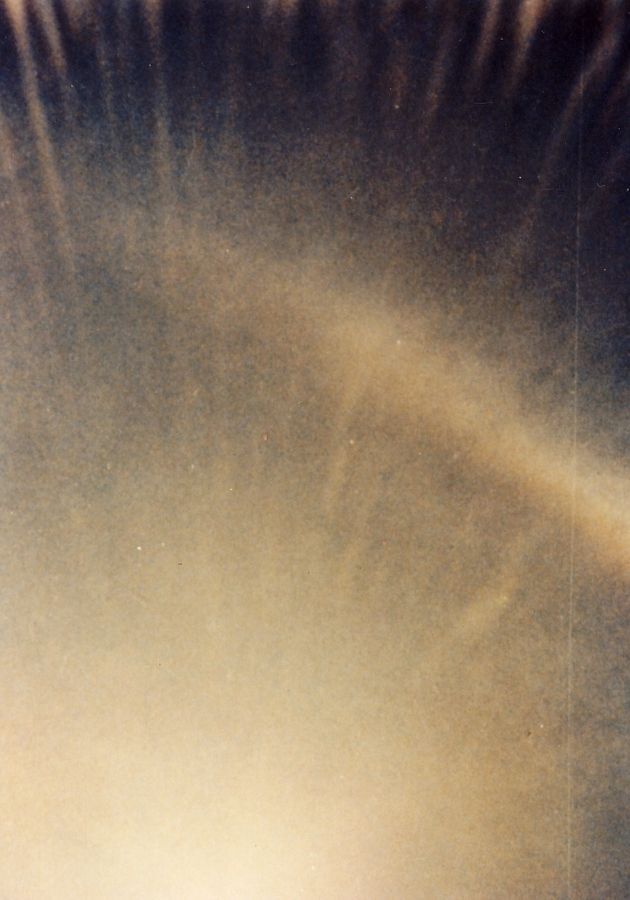
[…] While the funeral pyre was burning, all of the magnificent signs one can think of appeared, including multiple rainbows in the skies.
Once the funeral pyre burnt out, the openings of the stupa were blocked with stones inscribed with the various root mantras associated with the different mandalas and the stupa was left undisturbed for three days.
When we opened the stupa again, we found out that most of the bones remained unburnt. In the skull, we found the remains of the brain, but it was a spherical egg-like shape and of shiny golden color. His Holiness Dilgo Khyentse Rinpoche saw it and explained that it was a special kind of relic, which is one of the signs proving that someone has achieved the state of Buddhahood. It was later enshrined in the Rumtek monastery stupa.
The funeral pyre was constructed over a mandala, and we also examined the ashes that fell down. In the direction of Tibet, three very clear footprints were visible! This was a clear indication that the Karmapa would take His next rebirth in Tibet.
I have now explained the events just as they happened.”
In The White Lotus Garland, Praises in Verse Narrating the Account of Liberation of the 16th Gyalwa Karmapa, Künzig Shamarpa describes the final funeral rites and extraordinary manifestations associated with them, such as Karmapa’s heart that he left to his disciples. It is stated as such in verses forty-five, forty-six and forty-seven:
At the monastery of Shedrup Chö[korling],
Hundreds of eminent beings
And individuals of all sorts came from the world over,
Offered clouds of offerings to the remains [of His Holiness].
Sign of the magical manifestation of the sambhogakaya,
Space was replete with rainbows;
Amidst the net of the sun’s rays,
He revealed his body of light.
In order to guide his remaining disciples,
The treasure of generosity, the sight of which liberates—
The sphere of the heart of Rangjung [Dorje]
Appeared from the funerary stupa as a support of the dharmakaya.
1 Excerpt of the teachings on the life of His Holiness the 16th Karmapa given at Karma Samphel Ling during the autumn on 2024 and spring of 2025, as well as an interview done by Marta Gyorgy-Kessler for the film Meeting the Buddha in Vienna in 2024. Translated from Tibetan to English by Jana Svejdova.
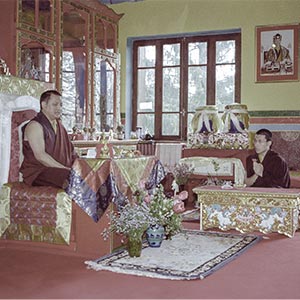
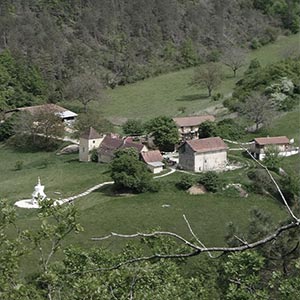
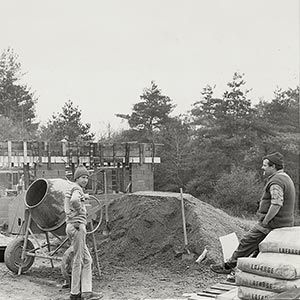
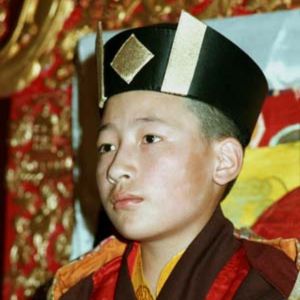
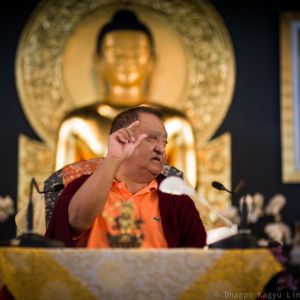
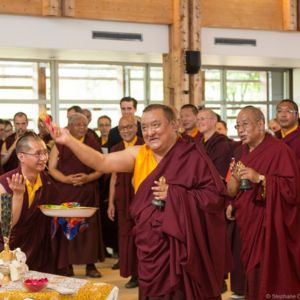
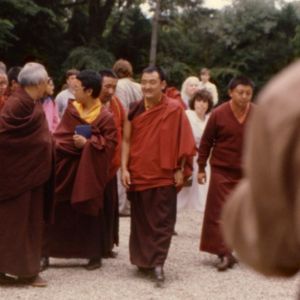
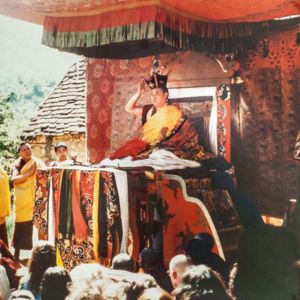
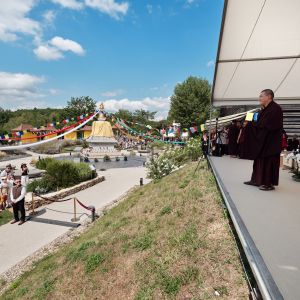
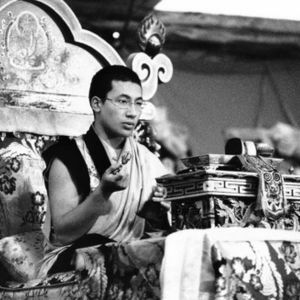
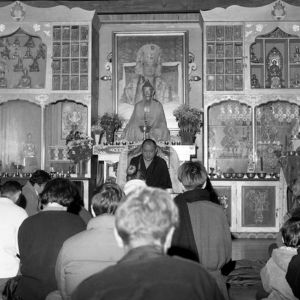
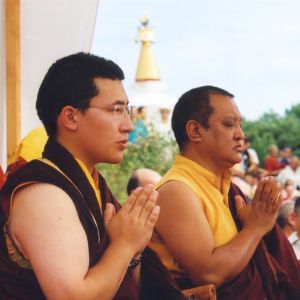
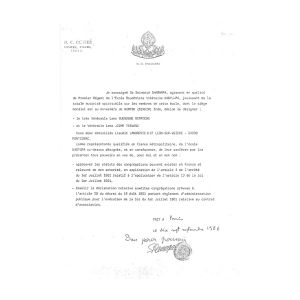
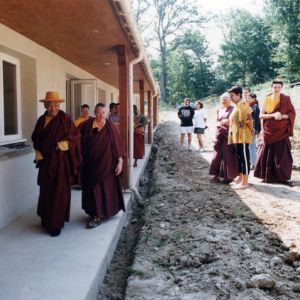
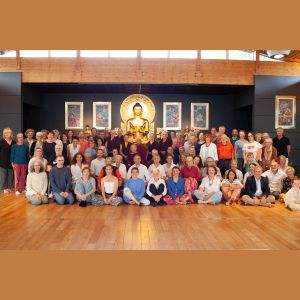
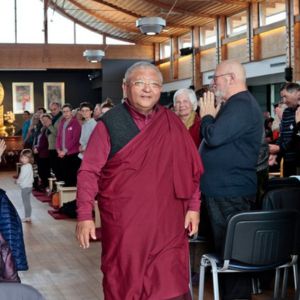
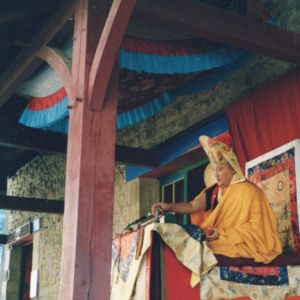
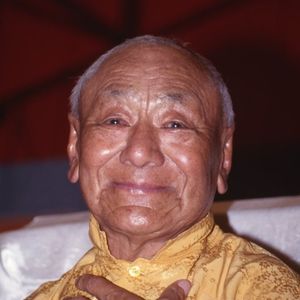
These photos come from our archives or were collected as part of the research for Dhagpo Kagyu Ling’s 50th anniversary. We have not been able to identify all the authors. The use of these photos is solely for informational purposes within the context of Dhagpo Kagyu Ling’s 50th anniversary celebration. Their use is limited to this event and our website and is not for commercial purposes.
Event
To commemorate this event, a day-long practice of the Guru Yoga of the 16th Karmapa will take place on Saturday, December 20 in the Dhagpo Kagyu Ling Institute.

These photos come from our archives or were collected as part of the research for Dhagpo Kagyu Ling’s 50th anniversary. We have not been able to identify all the authors. The use of these photos is solely for informational purposes within the context of Dhagpo Kagyu Ling’s 50th anniversary celebration. Their use is limited to this event and our website and is not for commercial purposes.