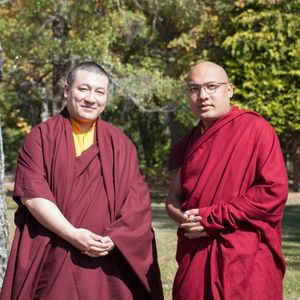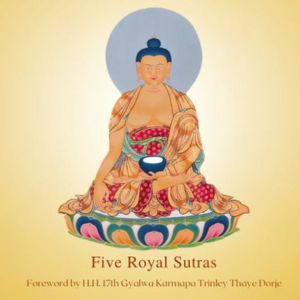
In the preface to the book The Fourfold Application of Mindfulness: Discernment through Learning, Reflection, and Meditation (Rabsel Publications, 2025) Jigme Rinpoche writes,
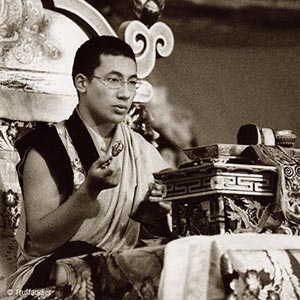
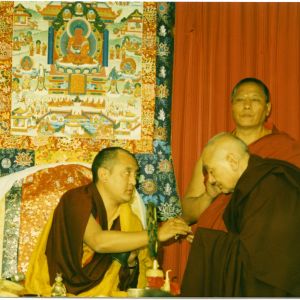
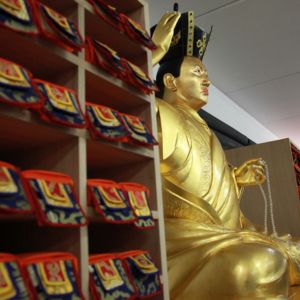
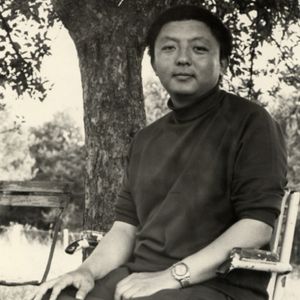
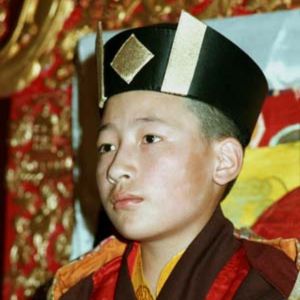
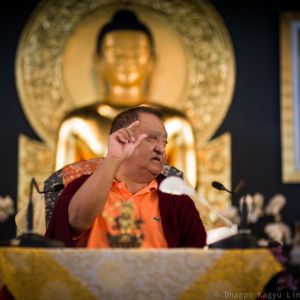
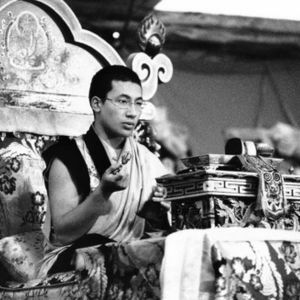
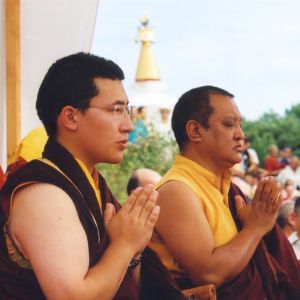
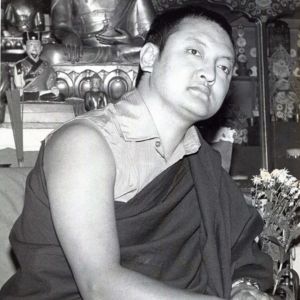
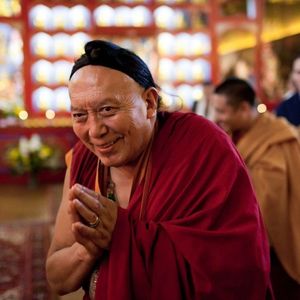
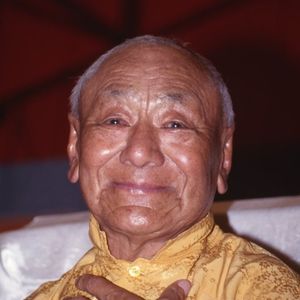
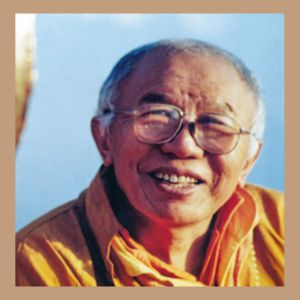
Mipham Chökyi Lödrö, the 14th Shamar Rinpoche, went into parinirvana in 2014. Ten years have passed since he left this world, but he is very present in Dharma centers that apply the learning and meditation practice curriculum he systematized. In the image of Rangjung Rigpe Dorje, the 16th Gyalwa Karmapa, Shamar Rinpoche devoted himself to making the Dharma accessible in the most authentic way possible.
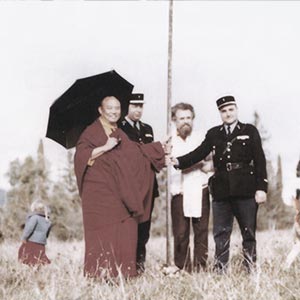
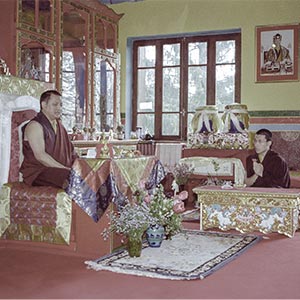
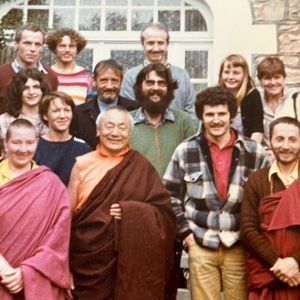
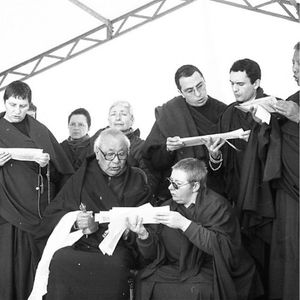
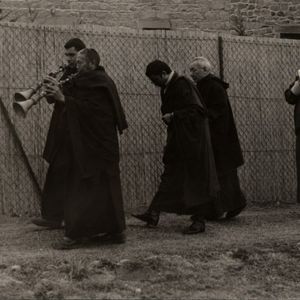
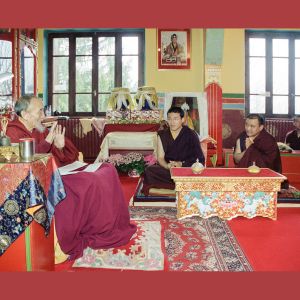
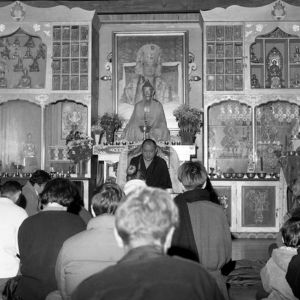
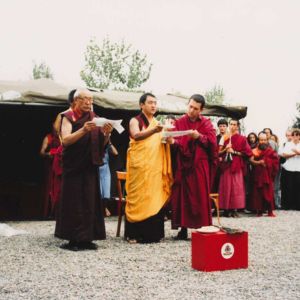
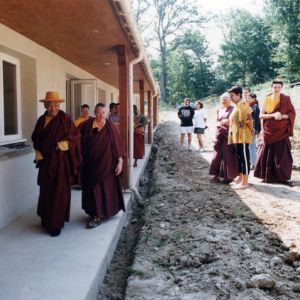
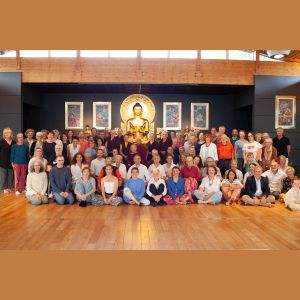
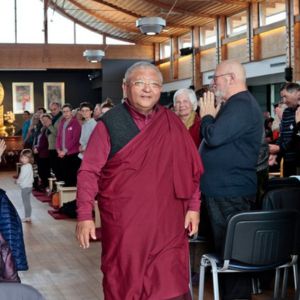
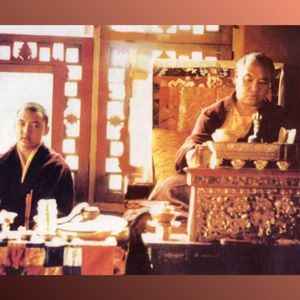
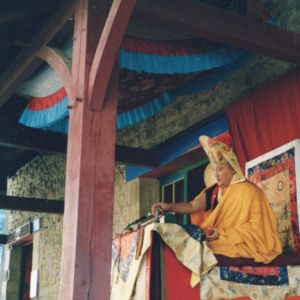
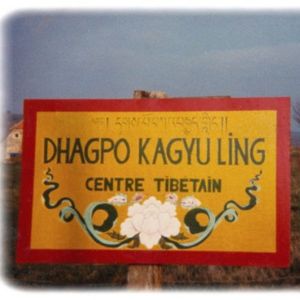
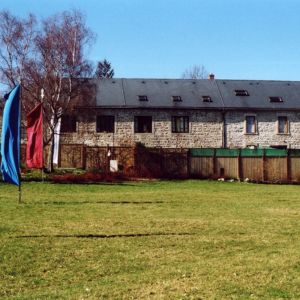
For thirty-three years, from 1981 to 2014, Shamarpa took care to come to Dhagpo Kagyu Ling nearly every year to share teachings and empowerments. Primary holder of the Karma Kargyü lineage, he also took care to confer the essential transmissions of the lineage in the traditional three-year-three-month-three-day retreat center at Dhagpo Kundreul LIng.
What ordinary mind understands of the generic term trülku in Tibetan, nirmanakaya in Sanskrit, or body of emanation, is conditioned by our limited field of knowledge and meditation experience. Simplistic interpretations are easy to make and mistakes in understandings, numerous.
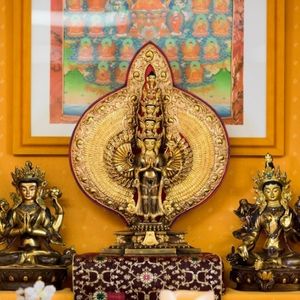
During his talk based on scriptural sources concerning the Shamarapas, Lama Tréhor explained that nirmanakayas can be different types: they can be distinguished according to whether their manifestation arises based on their wishes for accomplishing the benefit of beings or whether their spontaneous manifestation is that of a being who has actualized enlightenment for the benefit of beings. The latter case concerns a supreme nirmanakaya (མཆོག་གི་སྤྲུལ་སྐུ་). The Karmapas and Shamarpas are supreme nirmanakayas, the enlightened expression of two buddhas.
Although what a buddha truly is escapes our ordinary experience, it is nevertheless possible to study scriptural sources, meditate, and formulated aspirations that we may one day be able to apprehend the truth of enlightened manifestation.
I have managed to accomplish the most important of the many activities I carried out for the sake of Dharma in this lifetime. When it comes to the two of us, me and the Shamarpa, we are holders of the Dharma of the Karma Kagyu lineage. Concerning the Shamarpa however, after the 10th reincarnation they were mainly recognized by names but they were unable to accomplish vast activities. I, however, have managed to recognize the 14th Shamarpa, I have transferred all the empowerments and realisations to him and I have made him a lineage holder. That is my most important accomplishment.
Rangjung Rigpe Dorje, His Holiness the 16th Gyalwa Karmapa,
cited during Lama Trehor’s teaching on the Shamarpas
Shamarpa’s Teachings at Dhagpo Kagyu Ling
August 5 to September 27, 1981
August 5 to 15: Explanation of the Namshe Yeshe, Treatise of the Distinction between Ordinary Knowledge and Primordial Knowledge, by the 3rd Karmapa Rangjung Dorje – Teaching from Tendrel Magazine Issue n°2 p.34 to 65 (in French)
August 19 to 23: Commentary on the Practice of Sangye Menla and Explanation of the Relationship between Spiritual and Medical Practice in the Tibetan Tradition
August 25 to September 1: Explanation of Mahamudra that Reveals Dharmakaya, text by the 9th Karmapa Wangchuk Dorje (audio available at the library)
September 5 to 9: Teachings on Dewachen and Amitabha Empowerment – Illustration from Tendrel Magazine nº30
September 11 to 20: Empowerments for Applicants to the Three-Year Traditional Retreat
September 17 and 18: The Seven Points of Mind Training (audio available at the library)
September 25 and 27: Explanation and initiation of Dorjé Sempa
July 31 to September 1, 1985
August 2 to 4: Teaching and Detailed Transmission of Bodhisattva Vows – Teaching from Tendrel Magazine Issue n°9 (in French)
August 5 to 7: Sangye Menla Empowerment with Practice Explanations
August 8 to 14: Empowerment Associated with the Bardo
Teaching by Shamarpa and Gendun Rinpoche on the Subject of Bardos
August 16 and 17: Major Gyalwa Gyamtso Empowerment
August 18 to 24: Teaching on Mahamudra, Shine and Lhaktong Practice
August 25 to 29: Major Korlo Demchok Empowerment
August 30 to September 1: Empowerment and Teachings on the Eight Primary Disciples of the Buddha
August 1 to 29, 1986 – One Month Divided into Four Weeks
Teachings on Shine and Lhaktong – see the program
August 7: Interview with Shamarpa
Chikse Kundröl Empowerments: Knowing One to Liberate All (see article)
August 13 to 22, 1988
August 13: Dorje Sempa Empowerment
August 15 to 18: Teaching on the Nyingpo Tenpa, Showing the Essence of the Tathagatha, by the 3rd Karmapa Rangjung Dorje – (This teaching is available as an audio at the library).
August 19: Transmission of Bodhisattva Vows
August 20: Meeting with Residents
August 21: Amitayus Empowerment
April 5 to 22, 1990
April 5 and 6: Introduction to Buddhism Teachings
April 7: Dorje Sempa Empowerment
April 8: Marpa Empowerment
April 9 to 21: Teaching on the Dawe Öser, Moonbeams, by Dakpo Tashi Namgyal (see April article) – Tendrel nº 23
April 15: Karma Pakshi Empowerment
April 22: Amitabha Empowerment with Practice
July 19 to 29, 1991 – Teaching on the One Hundred Stages of Mind Training – Tendrel n°26 p.97-99
July 21: Amitabha Empowerment
July 24: Opening Speech for the Meeting of Kagyupa European Centers – Tendrel n°26 p.102-103
July–August 1992
Teaching on How to Be Reborn in Dewachen – Tendrel n°30 p.49-57
Teaching on the Lineage – Tendrel n°30 p.9-20
July 1995
Teaching
July 1997
July 1: Chenrezig Empowerment (audio available at the library)
December 1997
Teaching on Meditation Tendrel n°47 p.33-43
July 1998
July 14: Dorje Sempa Empowerment (audio available at the library)
July 1999
July 17 and 18: Teaching on Bodhisattva Disciplines – Tendrel n°52 p.6-10
July 18: Amitabha Empowerment
July 2001
July 2 to 8: Instructions on Meditation (audio available at the library) and Milarepa Empowerment
April 2003
April 23 to 25: Teaching on Samayas (audio available at the library)
August 2004
August 27 and 28: Teaching on the Text The Stages of Meditation, by Vimalamitra (audio available at the library)
May 2005
May 21 to 26: Teaching on the Text The Stages of Meditation, by Vimalamitra (audio available at the library)
August 2006
August 8 to 10: Teaching on the Text The Fourfold Application of Mindfulness (audio available at the library)
This teaching is the subject of a recently-published book: The Fourfold Application of Mindfulness: Discernment through Learning, Reflection and Meditation (Rabsel Publications)
July 2007
July 2 to 7: Teaching on Meditation (audio available at the library)
May 2008
May 23 to 25: Teaching on the Samantabhadra Aspiration Prayers (audio available at the library)
June 2009
June 21 to 25: Teaching for Dhagpo’s Lamas and Druplas on the Entry to the State of Pandita (audio available at the library)
June 27 and 28: Teaching and Amitabha Empowerment (audio available at the library)
May 2010
May 10 to 13: Teaching for Dhagpo’s Lamas and Druplas on the Entry to the State of Pandita (audio available at the library)
May 14 to 16: Public Teaching on Mind Training and 3rd Karmapa’s Guru Yoga Empowerment
May 2011
May 9 to 12: Teaching for Dhagpo’s Lamas and Druplas on the Entry to the State of Pandita (audio available at the library)
May 13 to 15: Teaching on Dewachen (audio available at the library)
May 2012
May 12 to 15: Teaching for Dhagpo’s Lamas and Druplas on the Entry to the State of Pandita (audio available at the library)
May 18 to 20: Teaching Rebirth in Dewachen (audio available at the library) and Transmission of the Bodhisattva Disciplines
June 2013
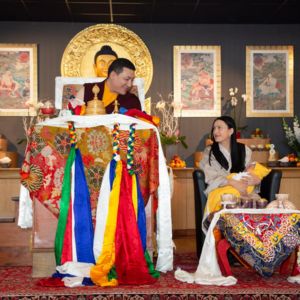
June 13 to 15: Inauguration of the Institute and Teaching on the Mahamudra Wishing Prayers (audio available at the library)
June 15 and 16: Major Empowerment of Gyalwa Gyamtso
May 2014
May 21 to 23 and May 26 and 27: Teaching for Dhagpo’s Lamas and Druplas on the Entry to the State of Pandita (audio available at the library)
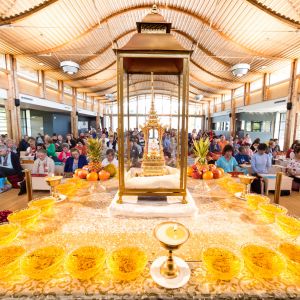
May 24 and 25: Teaching on The Fourfold Application of Mindfulness (audio available at the library) and Refuge Discipline in the Presence of the Relics of Shakyamuni Buddha.

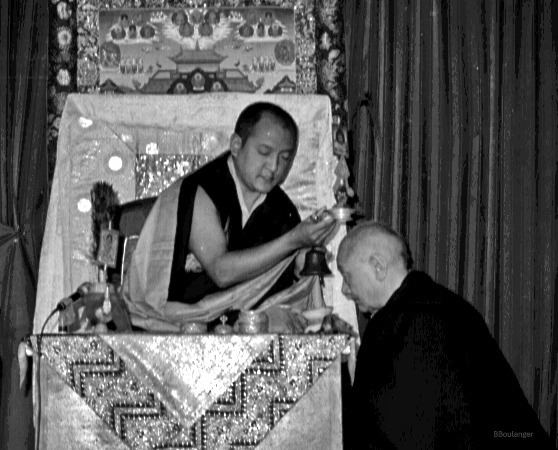


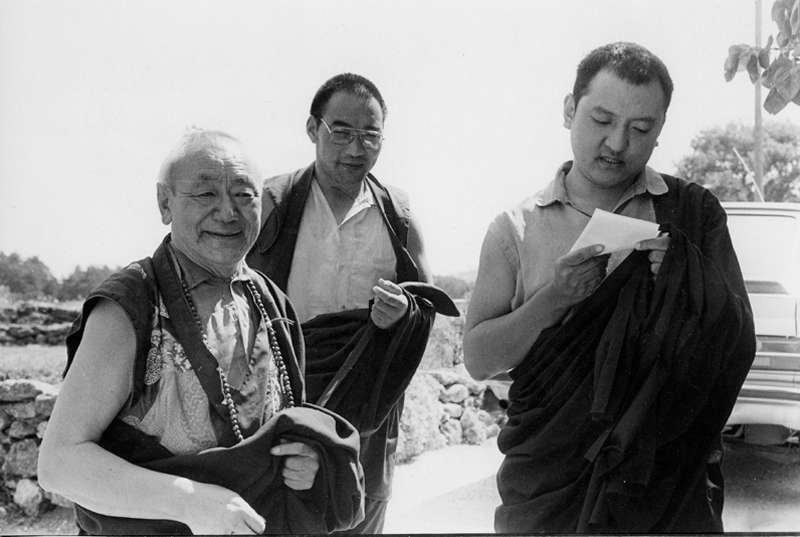
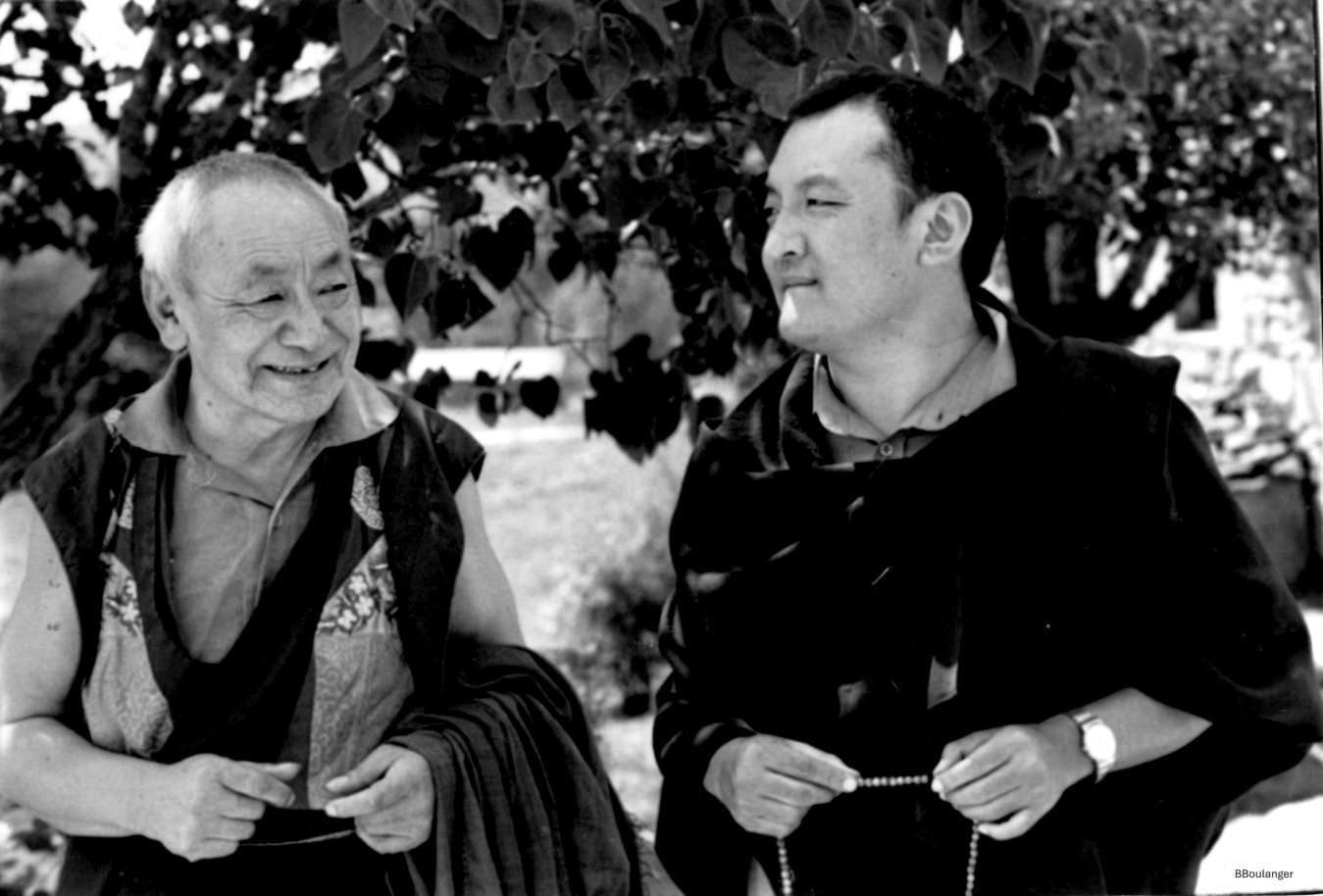
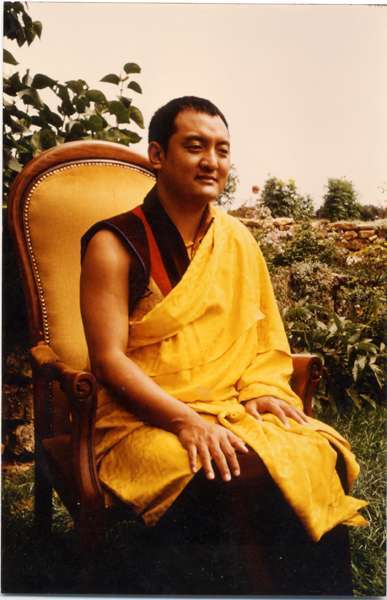


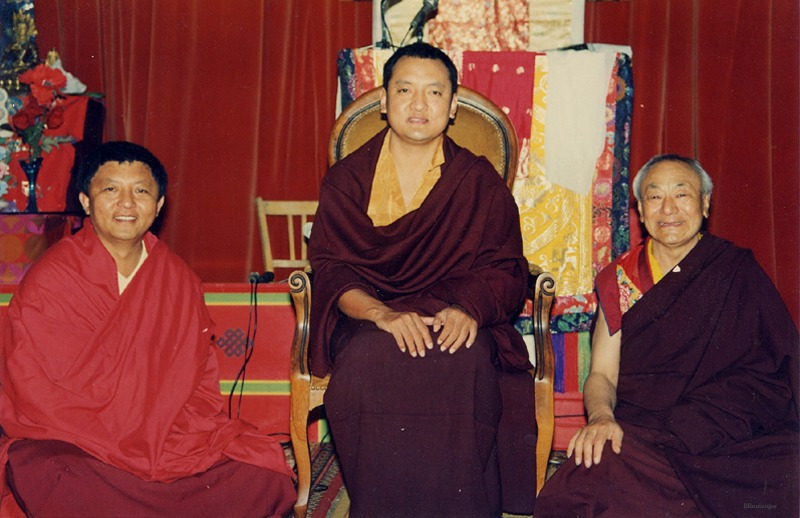

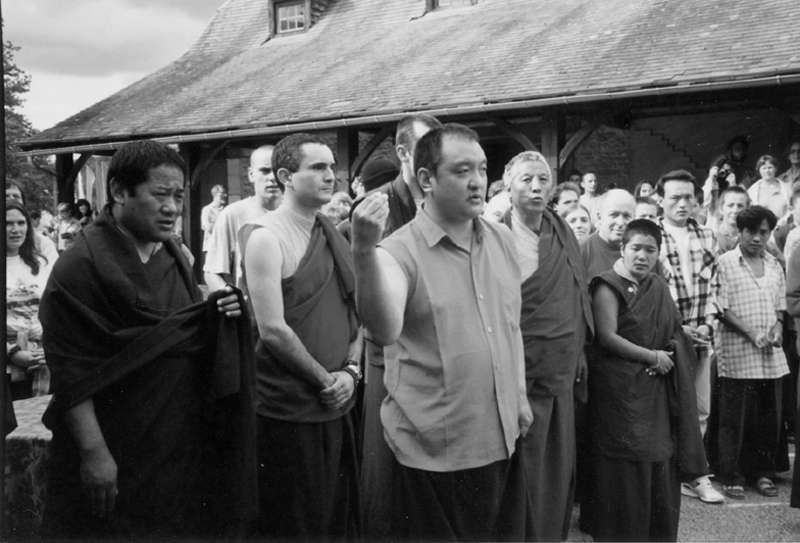


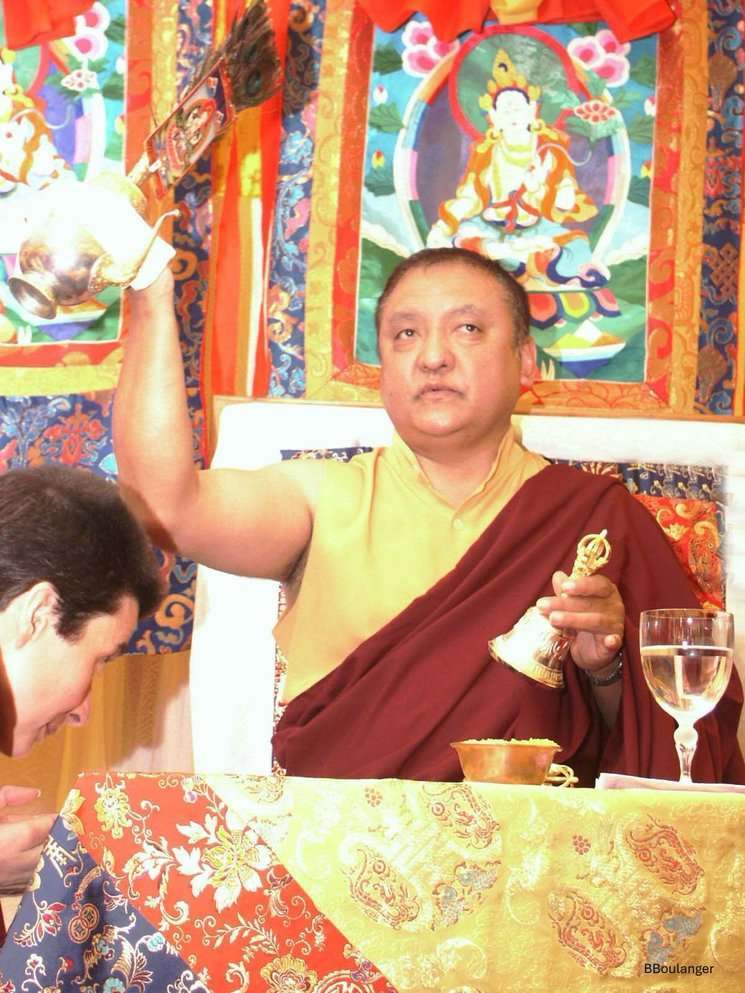

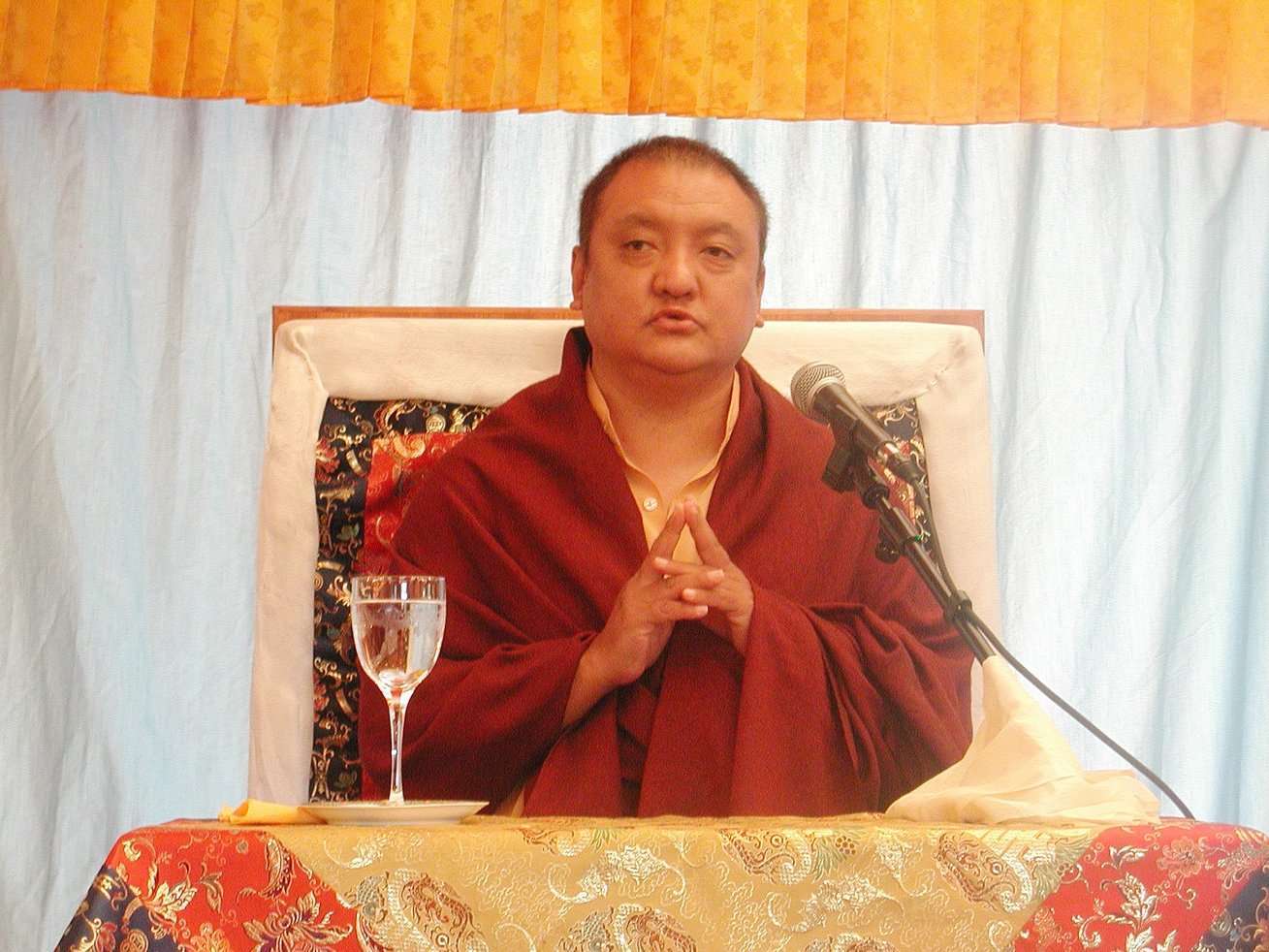
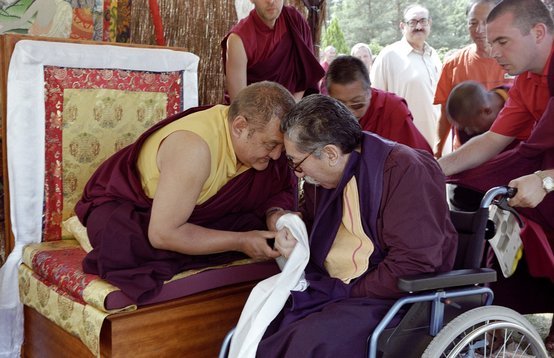


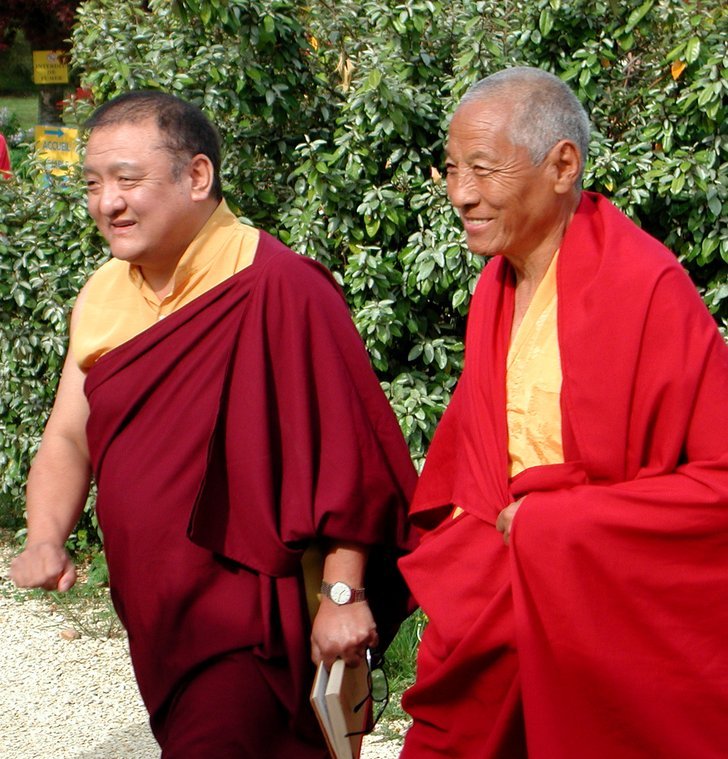


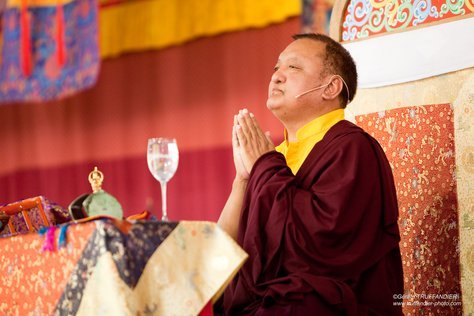


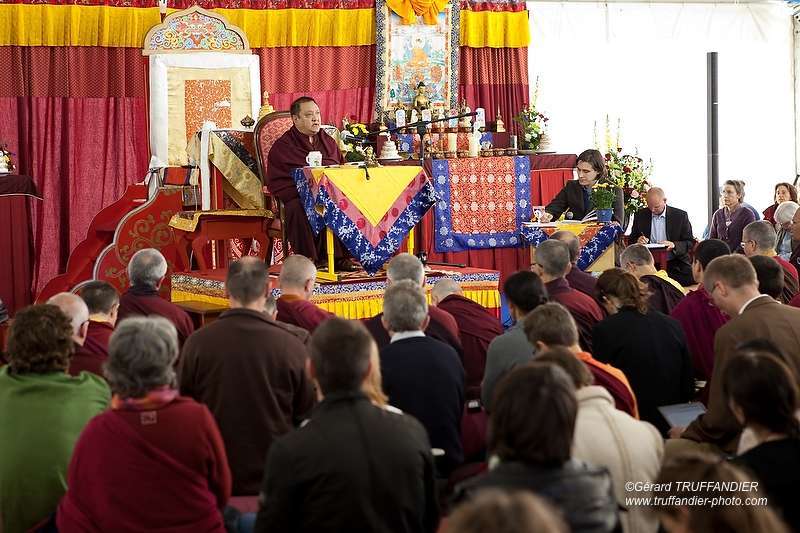


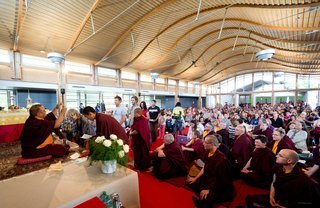

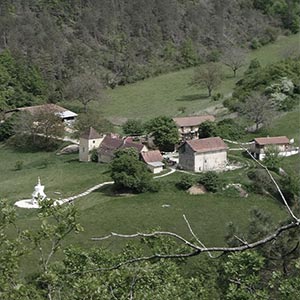
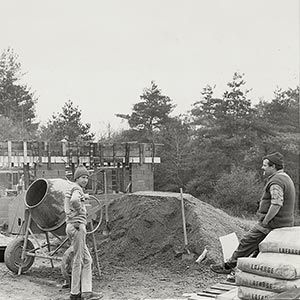
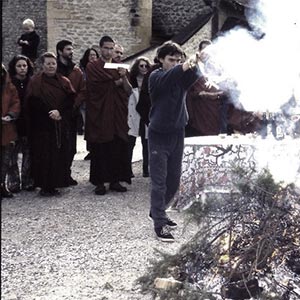
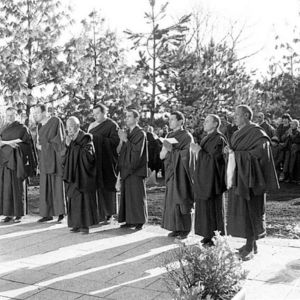
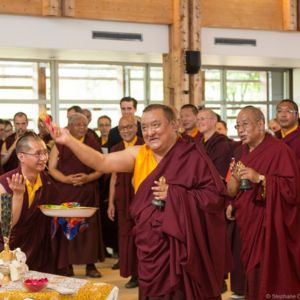
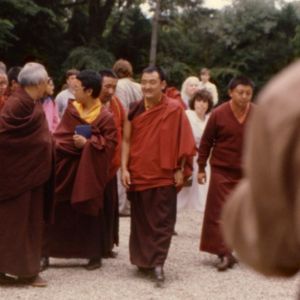
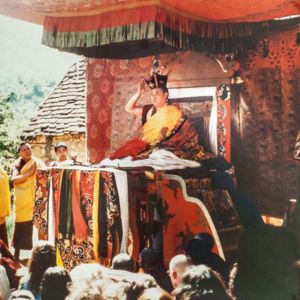
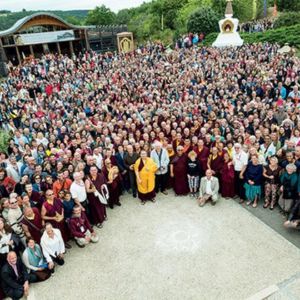
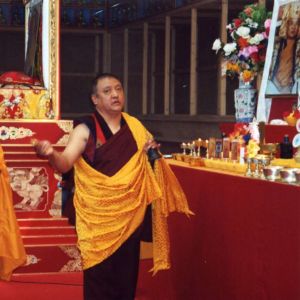
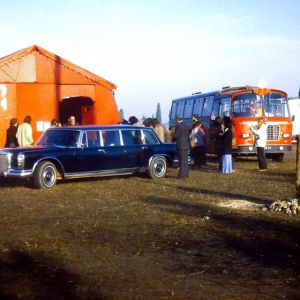
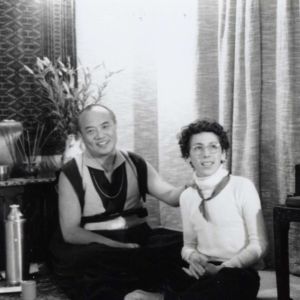
These photos come from our archives or were collected as part of the research for Dhagpo Kagyu Ling’s 50th anniversary. We have not been able to identify all the authors. The use of these photos is solely for informational purposes within the context of Dhagpo Kagyu Ling’s 50th anniversary celebration. Their use is limited to this event and our website and is not for commercial purposes.


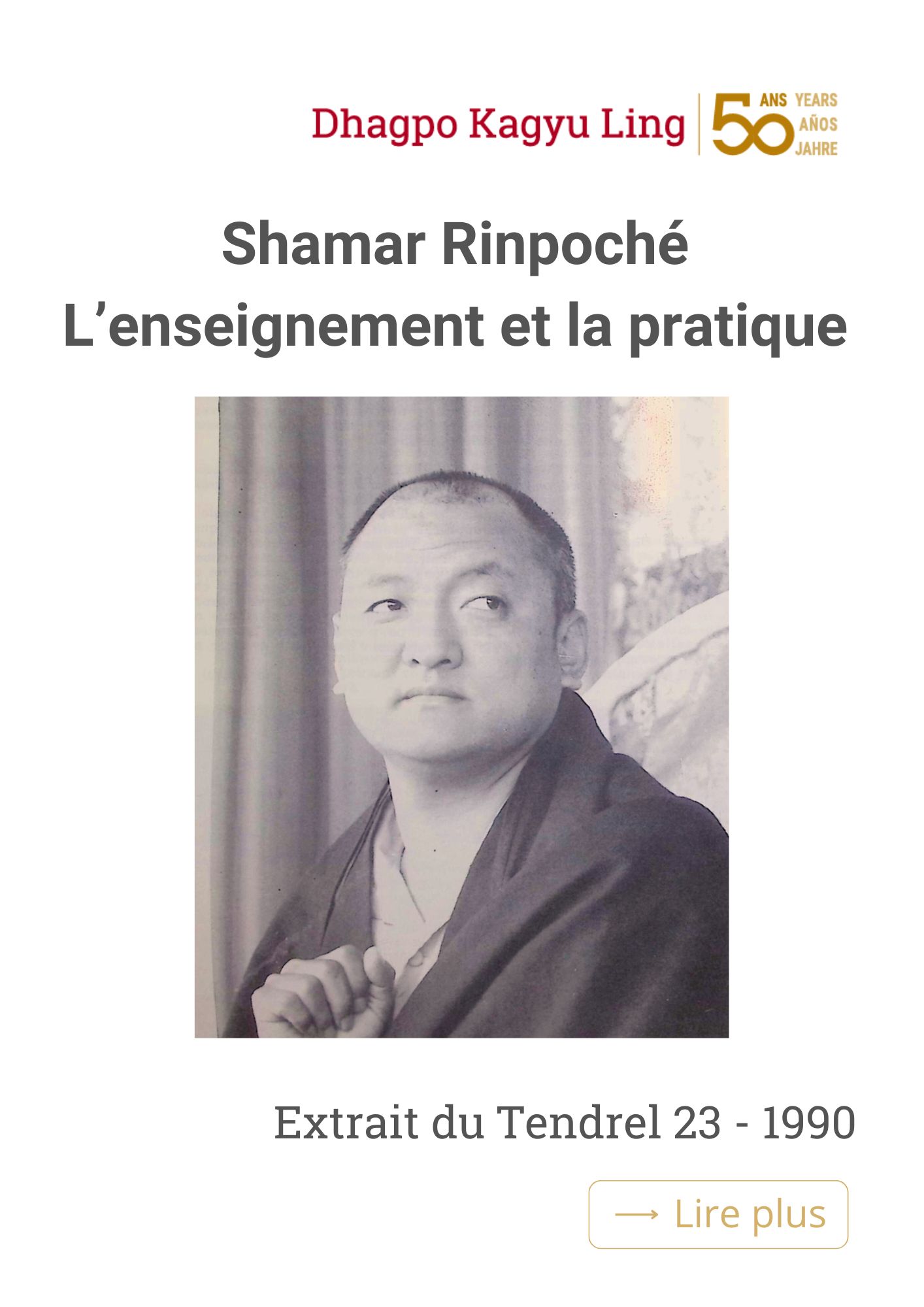
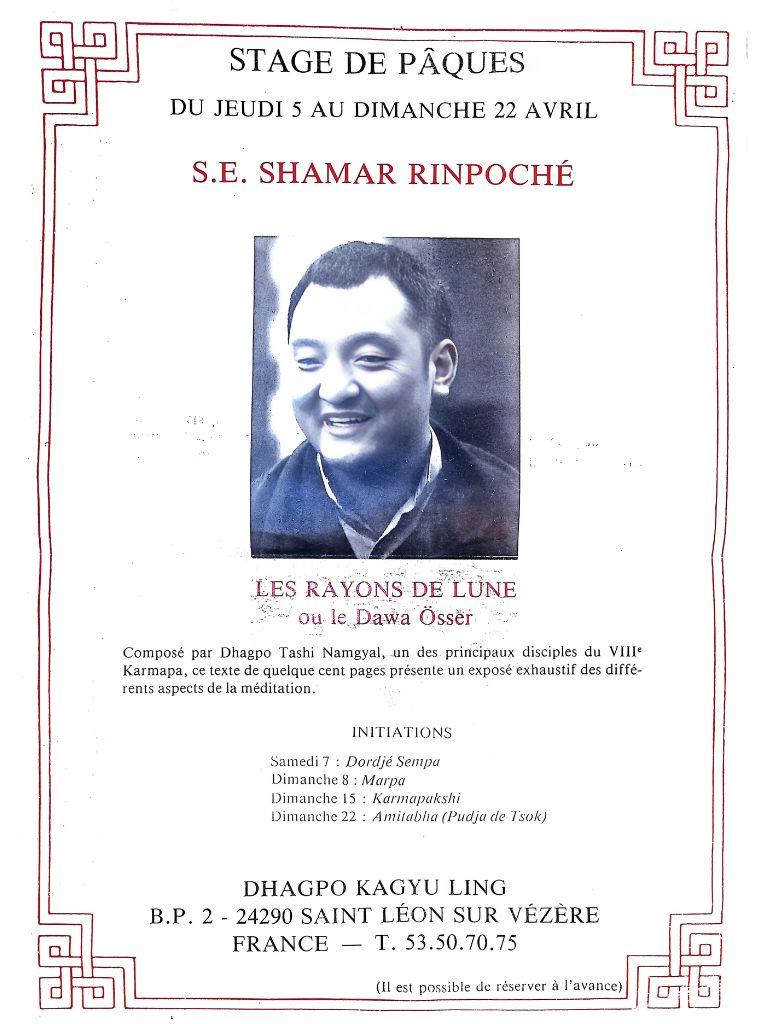


These photos come from our archives or were collected as part of the research for Dhagpo Kagyu Ling’s 50th anniversary. We have not been able to identify all the authors. The use of these photos is solely for informational purposes within the context of Dhagpo Kagyu Ling’s 50th anniversary celebration. Their use is limited to this event and our website and is not for commercial purposes.