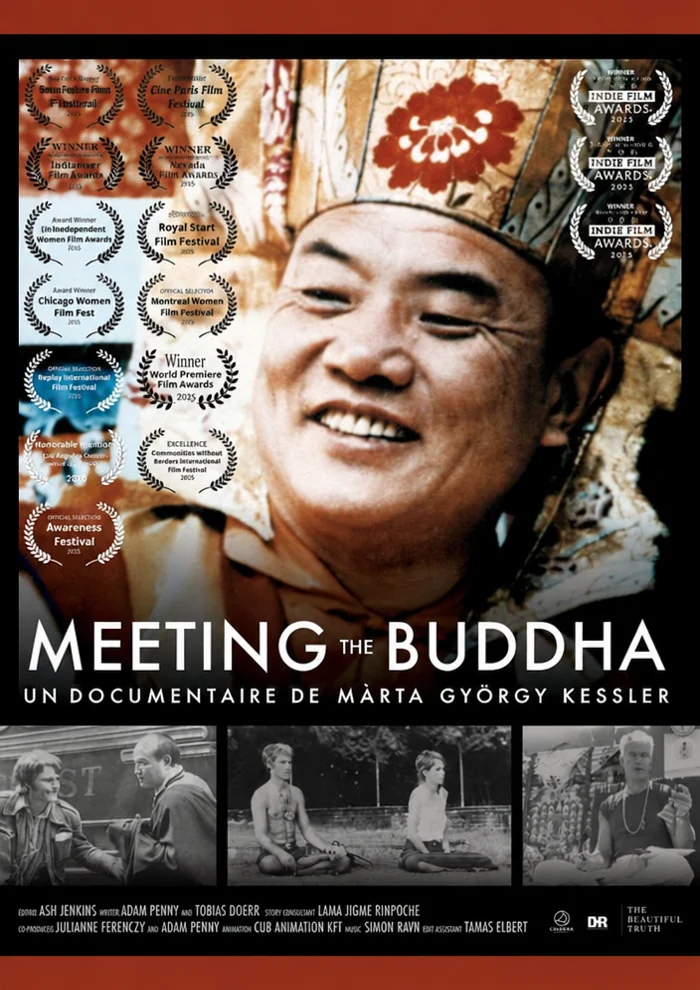
This multi-award-winning documentary recounts the life and legacy of the 16th Karmapa Rangjung Rigpe Dorje and his student Ole Nydahl. Lama Jigme Rinpoche was a key adviser on the project from the very beginning, providing detailed guidance all along.
Lama Jigme Rinpoche and the film’s director will be present at the preview on November 4 in Paris.
The film will be released in movie theaters across France on November 18.
Ahead of the launch, Márta György Kessler, the film’s director, spent a few days at Dhagpo Kagyu Ling, and took some time to share her insights.
Practical Information and Reservations
Preview
Wednesday November 4, 2026 at 7:30 p.m. Room 3
Cinéma Saint-André des Arts – 75006, Paris
Book your seats online
Access to tickets
French national release in movie theaters: November 18, 2026
Interview
After screenings across the Americas, in Australia and several European countries, “Meeting the Buddha” releases in France on November 18. What special significance does this French launch hold for you?
It’s definitely special! France is such an important part of the history: the 16th Karmapa established Dhagpo Kagyu Ling here when he first came and asked Lama Jigme Rinpoche to stay on. We also filmed here at Dhagpo and in the surrounding area where the16th Karmapa conducted pujas.
Plus we interviewed Jigme Rinpoche and Trinlay Rinpoche. It’s all part of the story of how the 16th Karmapa’s teaching and vision came to the West and continues to this day. Furthermore, we had access in France to footage filmed by Arnaud Desjardins[2]. He was one of the first to film the 16th Karmapa in the 1960s in Sikkim after his escape from Tibet, and took amazing shots that we used in the film.
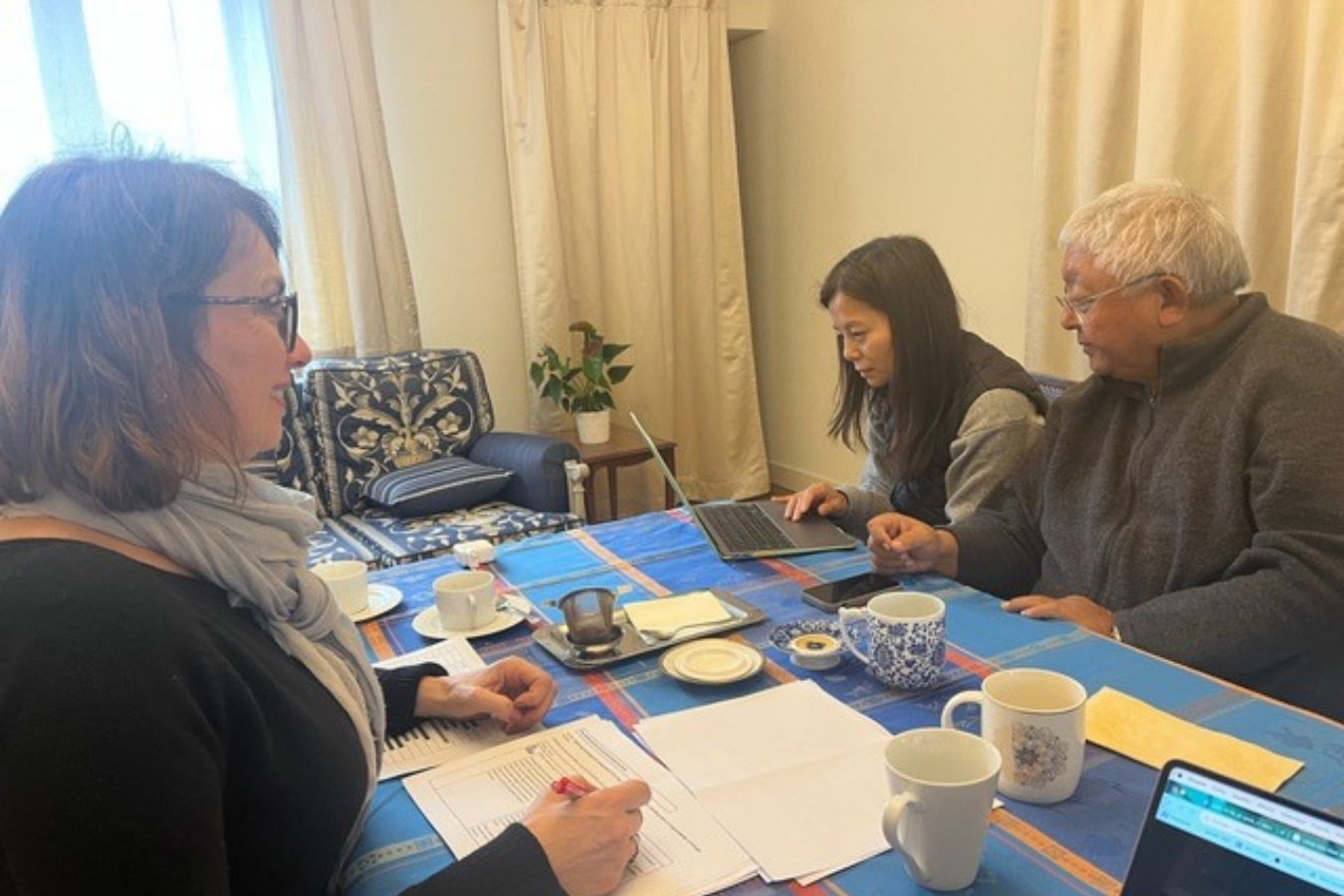
Lama Jigme Rinpoche, who has guided the development of Dhagpo Kagyu Ling since 1975, was a key adviser on this film. How did you work together ?
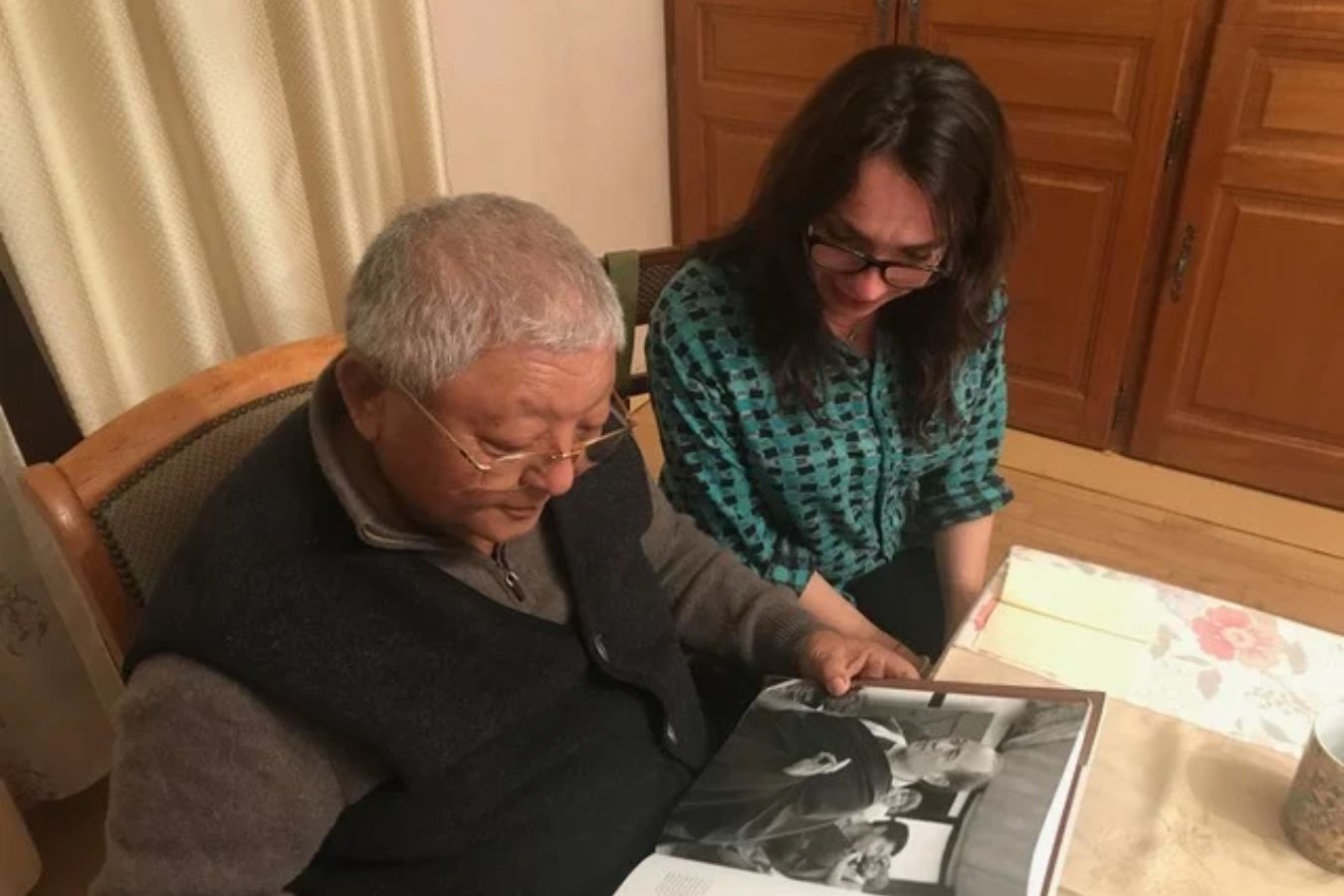
Lama Jigme Rinpoche is a very key participant in this project. His support at so many levels has been very strong and very precious all along. I’m really so appreciative. From the start, he agreed to be the main advisor on all aspects of the 16th Karmapa’s life, and anything related to Tibetan Buddhism and the Karma Kagyu lineage. He shared his vision about the film and gave us advice on the structure of the story line. I met him many times – I don’t even know how often! He was always available to give advice on so many different details, and this was really very precious.
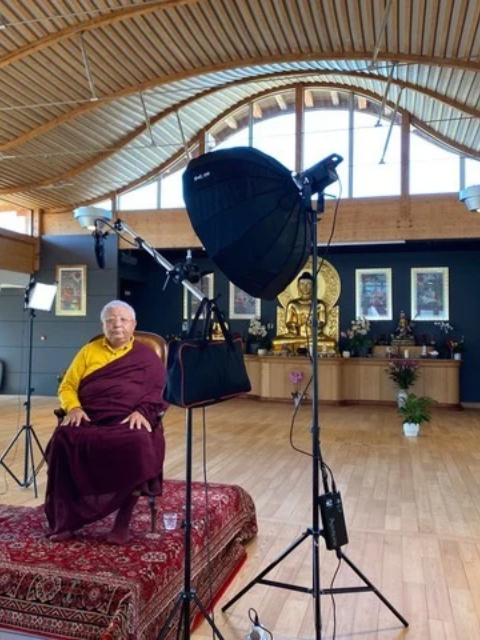
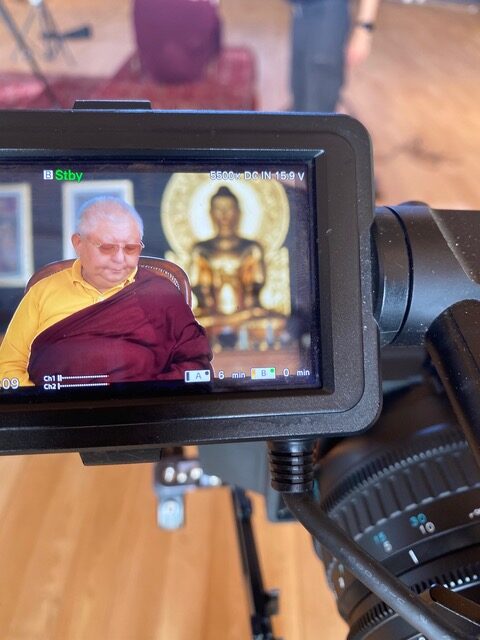
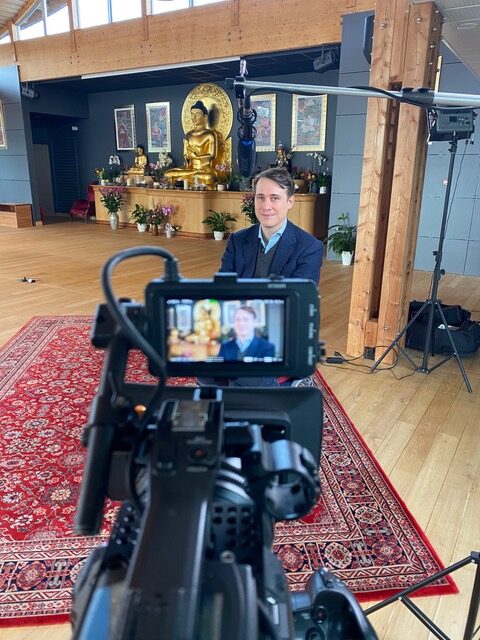
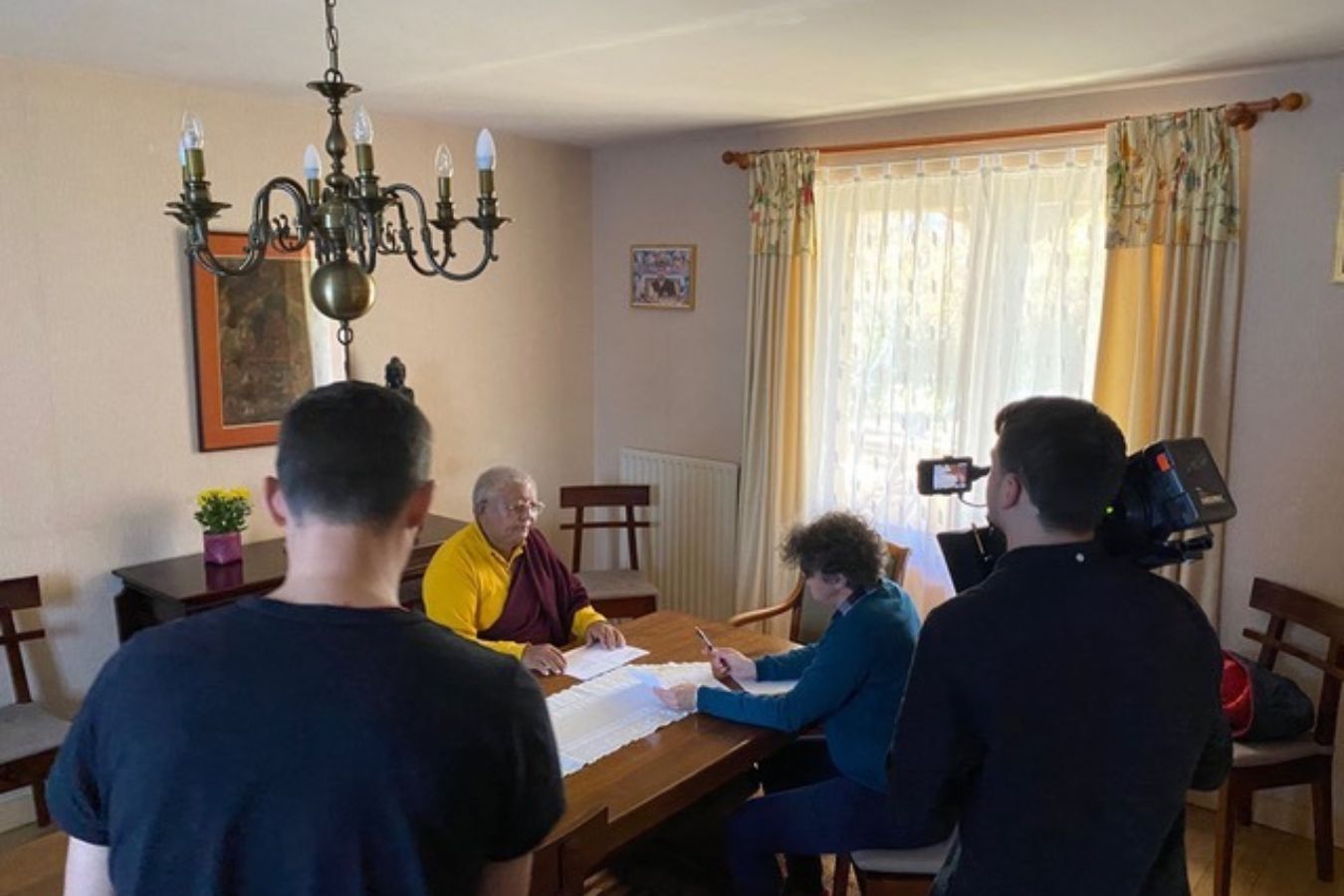
Interviews with Lama Jigme Rinpoche and Trinlay Rinpoche in Dhagpo’s Institute
He also gave me a copy of Shamar Rinpoche’s book on the life story of the 16th Karmapa which only exists in Tibetan and that we had translated. He saw different cuts of the film while we worked on it.
Making such a film is a process, with a lot of research involved. Many questions come up along the way. As we developed the storyline, I came back to consult Rinpoche on many aspects – on which sources to use, which images, who to interview, what to include or not to include.
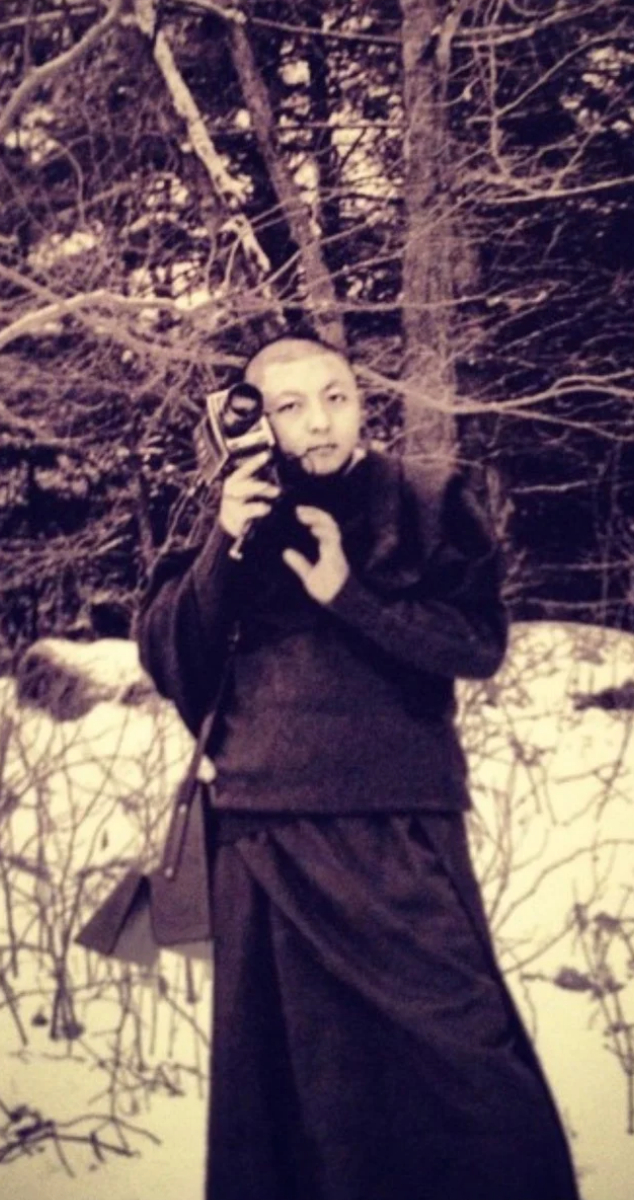
Lama Jigme Rinpoche in action with a film camera, a gift given to the 16th Karmapa
He also looked at all the animations in the film. He was very precise – for example indicating exactly how the 16th Karmapa’s room should be or he would send me pictures on how different aspects of Tibet should be shown. My favorite story was when the film was in the very final stages. At one point he was laughing and said “The ear of the horse doesn’t look like that!” It was so funny. So sometimes when we thought we were done, it was not the case!
Another aspect is that when I worked on the film about Hannah [3], I was looking for footage about the 16th Karmapa. I asked Jigme Rinpoche if he knew someone who might have this. He replied, “I have something in my storage.” In fact there were five boxes of 8 mm footage film. “Someone gave the 16th Karmapa a film camera as a gift in the mid-1960s. I took it and was filming,” he told me. Rinpoche gave me these five boxes, which I took to London and had digitalized. We used some of the material in the Hannah film but a lot in this one. It is an absolute treasure – from Rumtek, America when he was travelling with the 16th Karmapa and other places. So when I introduce Jigme Rinpoche, I also introduce him as a cameraman!
In March 2026, the film was shown at Karmapa International Buddhist Institute (KIBI) in presence of the 17th Karmapa. Was His Holiness consulted during the making of the film and what did he share with you after seeing it ?
I met Kamapa before we started to edit as well as during the production process. I presented him the project as well as a list of people who we planned to interview. He was so kind, giving comments and going through the content. He suggested several more interviews to do, including with Khenpo Chödrak Rinpoche. He also said it would be good that we film in Bhutan and suggested whom to interview. I went to KIBI before we finished the edit and gave it to him, he watched it, gave a bit of feedback and he was very happy with it.
Karmapa wrote a beautiful message to us about the film :
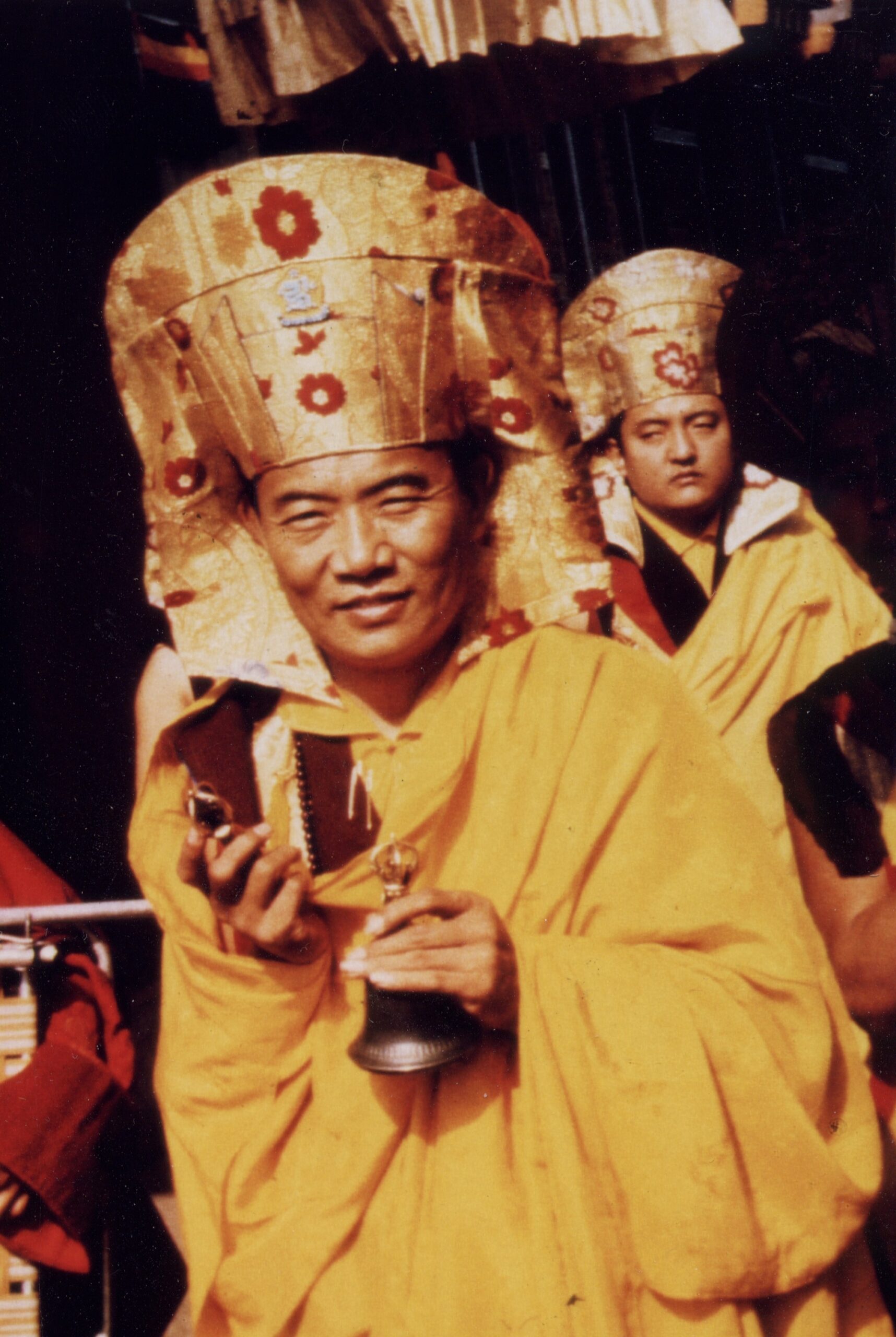 Viewing this was going down memory lane of sorts, it’s a beautiful continuity of the late Hannah’s story.
Through these two works, one gets to have a glimpse of the living Buddhas via this digital means. […]
I particularly loved the footage of my teacher, His Holiness the late Kunzig Shamar Rinpoche, and I wish there was more of it.
Every time I hear his recitation of the pure-land prayers, it moves me deeply, almost to tears. Maybe no one really recognizes it, or maybe some of you do, but I personally feel that it’s always possible to see the non-different aspect of him and the 16th Karmapa.
Is there a message that stands out for you in the film?
I hope the film moves many people. Since we are all unique, different things resonate with each of us, so I think everyone should find their own message in the film. What stands out most for me is the powerful presence of the great 16th Karmapa, his vision of bringing Buddhism around the world, and the idealism and devotion of his Western students, Lama Ole and Hannah Nydahl. In fact, Buddhist practitioners have mentioned that watching it made them feel truly closer to the Karmapa. I hope the film sparks curiosity about Buddhism and encourages people to explore it.
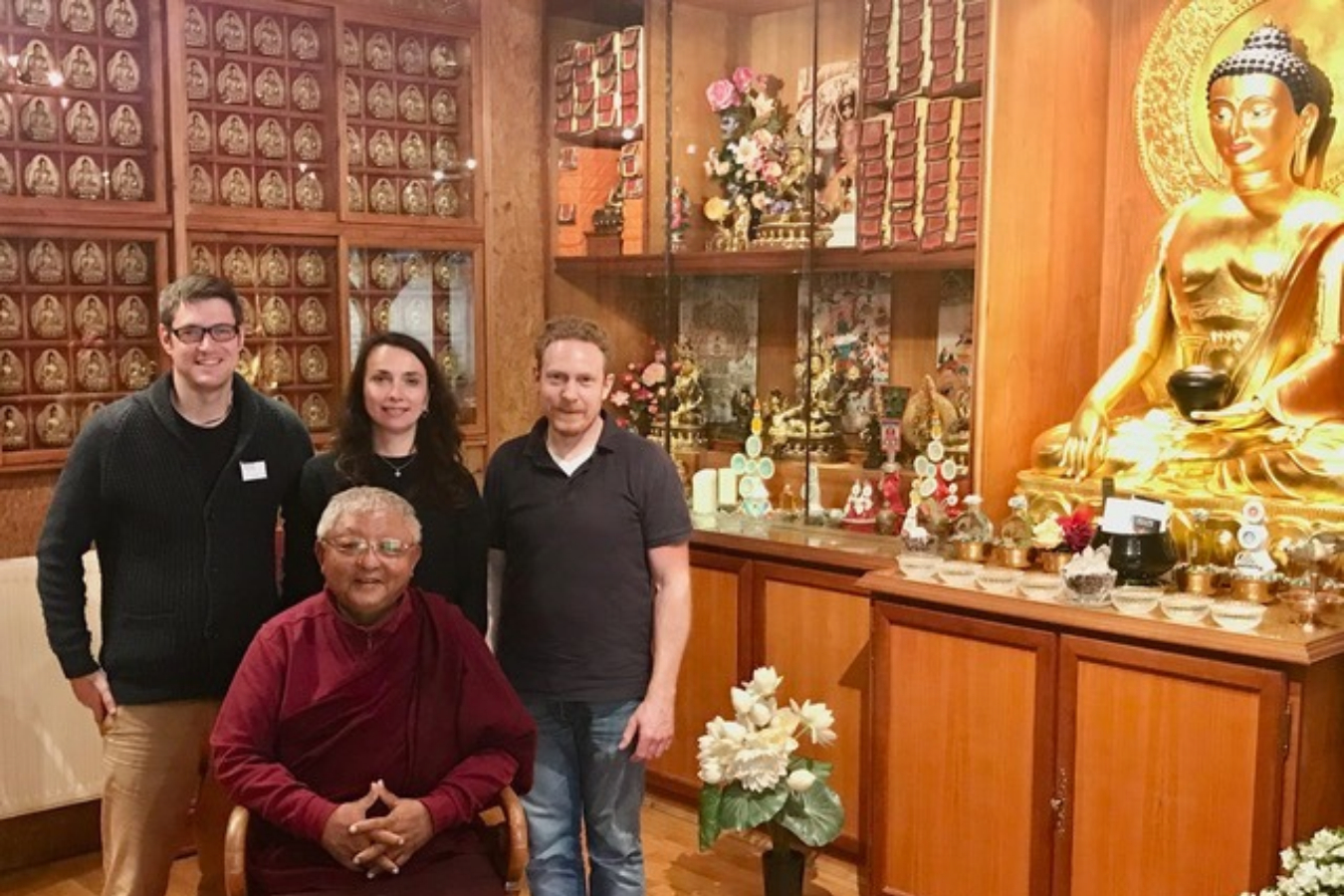
Part of the film’s team with Jigme Rinpoche in Dhagpo’s historic temple
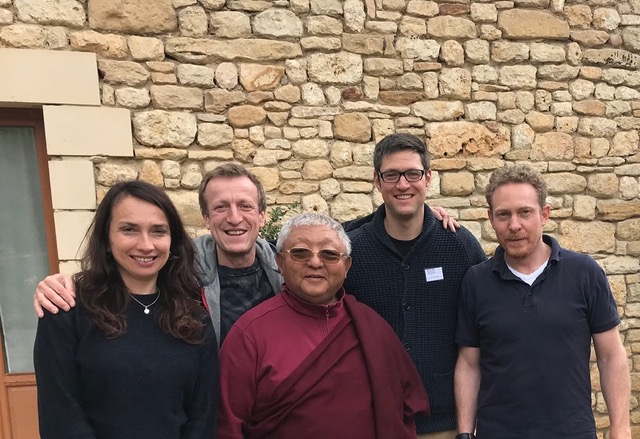
Part of the film’s team with Jigme Rinpoche
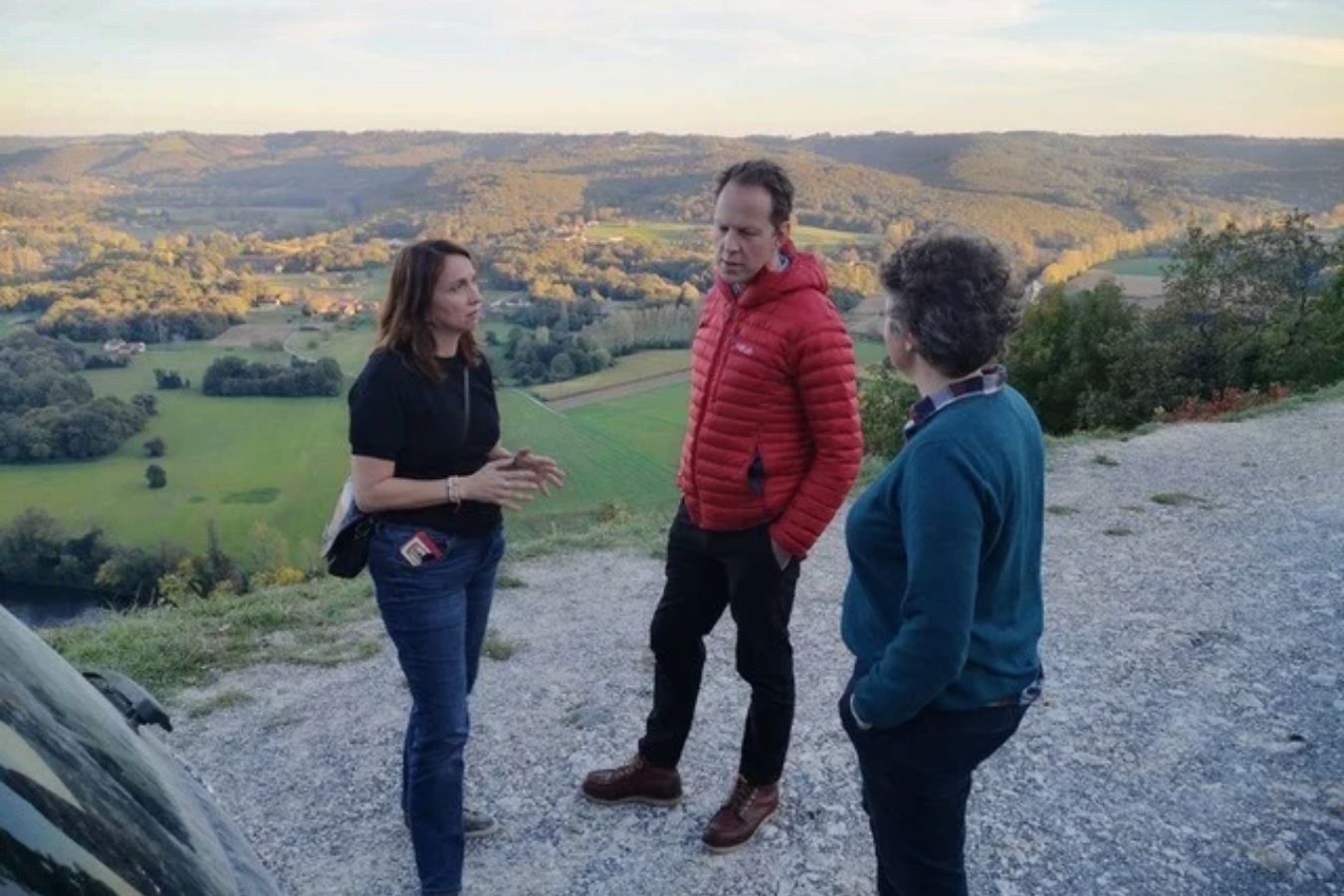
Location scouting on the côte de Jor with the director and co-producer Adam Penny
[1] French author and filmmaker (1925-2011) who introduced the general public to the wisdom of Tibetan masters. In 1983, he offered very favourable conditions for Dhagpo to acquire his property in Le Bost (Auvergne) where the 16th Karmapa had given the Black Crown ceremony. The future site of Dhagpo Kundreul Ling housed the first three-year traditional retreat the same year. https://dhagpo.org/en/march-17-1984-first-three-year-retreat/
[2] “Hannah : Buddhism’s Untold Story” (2014). A film on Hannah Nydahl (1946-2007), a Danish teacher and translator and student of the 16th Karmapa who with her husband Lama Ole, helped to bring the authentic teachings of the Karma Kagyu to the West.
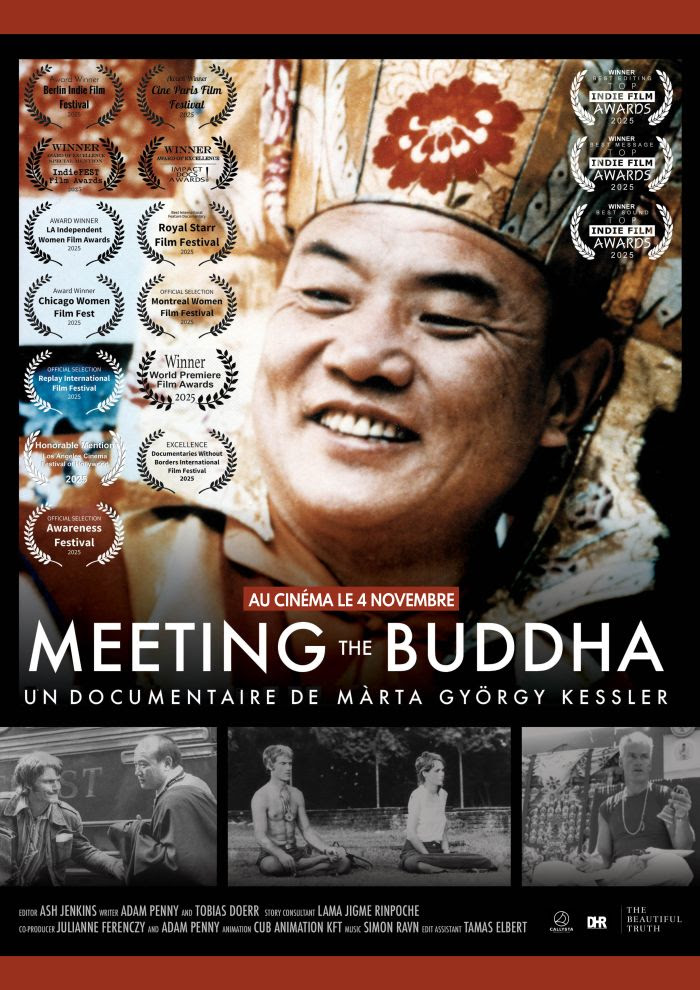
Release planned in many French cities & Switzerland
Biarritz
Bordeaux
Cannes
Clermont-Ferrand
Le Havre
Lyon
Montignac
Paris
Rouen
Geneva