
Dhagpo urban centers, known as Karma Teksoum Tcheuling (KTT), were established as early as 1982. The vocation of these centers is to serve as a gateway to the Buddha’s teachings for anyone who is interested, curious, or seeking. These urban centers also provide a place to practice close to home, allowing practitioners to continue what they have learned at Dhagpo Kagyu Ling or Dhagpo Kundreul Ling.
Each year, a program is offered for learning philosophy and meditative practice. This program is tailored to the needs of each urban Dhagpo, sometimes in direct consultation with Lama Jigme Rinpoche. It is led by qualified teachers (often graduates of the Diwakar Academy in India) and supported by long-term practitioners who have completed traditional three-year meditative retreats, as well as students from the Institute for the philosophical aspect.
As gateways to the Buddha’s teachings, KTT members are called upon to welcome interested beginners and introduce them to the fundamentals of Buddhism. This requires a solid understanding of Buddhism in general and the Karma Kagyu lineage in particular. Initially, a program called KTT Instructor Training was held several years ago. Lama Jigme Rinpoche has advised that certain themes and notions now need to be addressed in a more precise manner. As such, to equip interested KTT members with the fundamental concepts of Buddhism, its history, and its various paths, a two-week immersion program is offered at Dhagpo Kagyu Ling and Dhagpo Kundreul Ling, based on a teaching by Khenpo Chödrak Rinpoche.
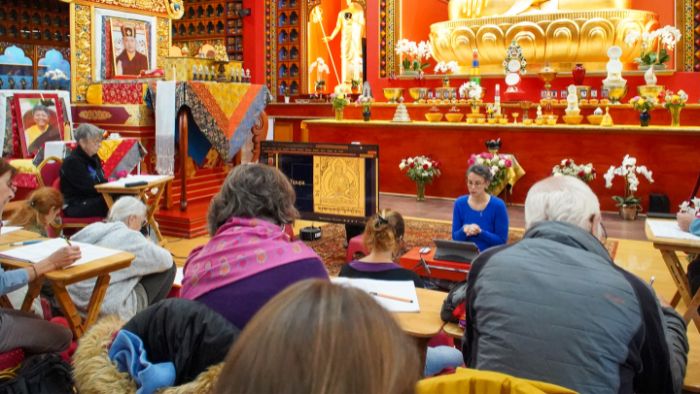
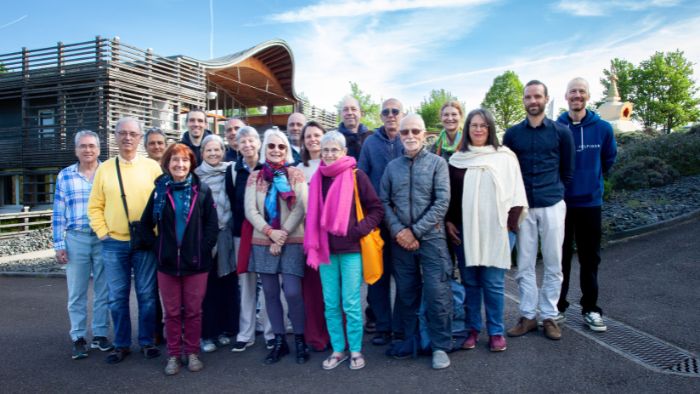
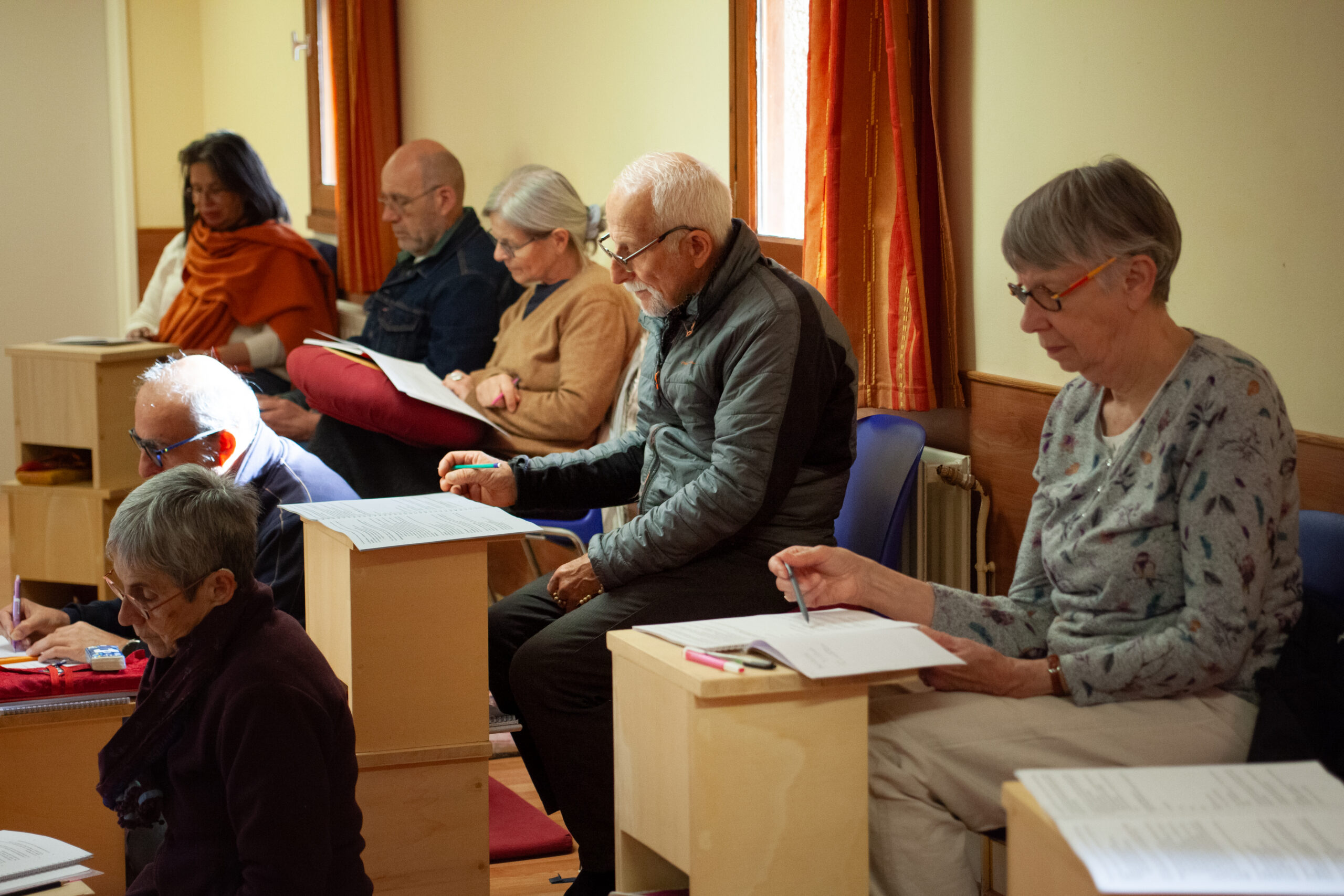
From October 27 to November 2, 2025, some twenty members from various KTTs in France gathered at Dhagpo Kundreul Ling to immerse themselves in the three aspects of practice: Dharma study, meditative practice, and active participation in the life of the center.
 |
 |
They studied with students from Dhagpo’s Institute, covering an introduction to Buddhism as well as an overview of Buddhist history, illustrated in situ by the temple’s murals. Group study sessions were scheduled each day, along with opportunities to share in the center’s daily activities (cleaning, small jobs, etc.) with the residents. In the late afternoon, a discussion session was scheduled with various teachers who regularly visit the KTTs.
To continue to deepen their learning together after this first week, several enthusiastic students formed online study groups.
They gathered for a second week, which took place from April 13 to 19, 2026, this time at Dhagpo Kagyu Ling. The theme of their study was the different vehicles of Buddhist practice. Immersed in the life of the center, the students also had the opportunity to discover Dhagpo and the members who are active on a daily basis by working alongside them in the kitchen, the library, the garden, and elsewhere.
The week concluded with a discussion with Lama Jigme Rinpoche at the students’ request. Jigme Rinpoche praised their commitment within the KTTs, explaining:
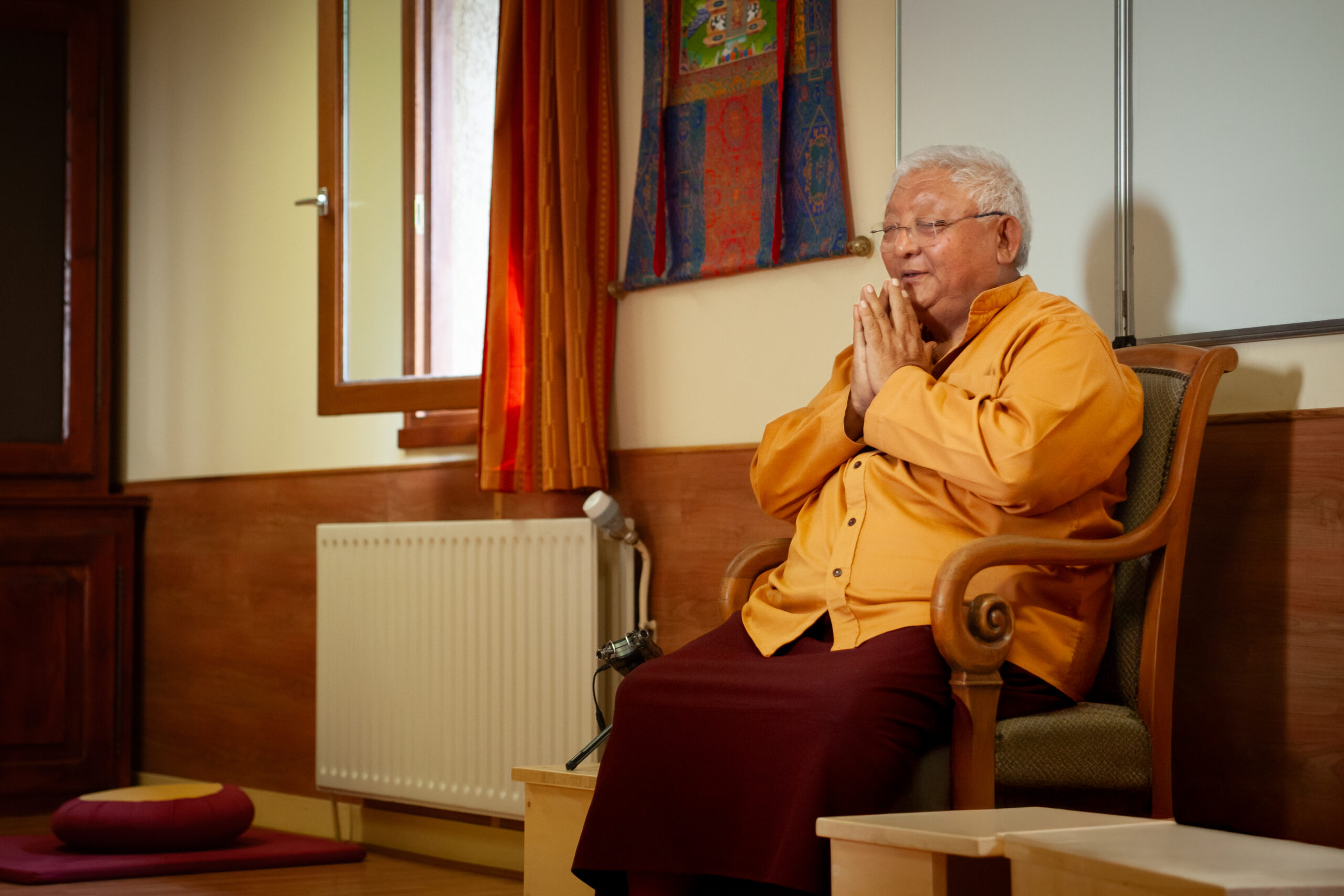
Bringing the Dharma to those who are interested is the very activity of a bodhisattva like the Karmapa. By doing this, you are directly engaging in this activity. This is something very important. It doesn’t matter whether one belongs to a small or a large KTT; the essential thing is to offer people the opportunity to connect with the Buddha Dharma.
This program will be offered annually, and anyone interested is welcome to join.
Testimonials
I’m part of a KTT board, which usually involves a lot of activities and planning. This week, we have entire days to devote to practice—through activity, meditation, and learning. I really appreciate being able to fully immerse myself in this for a whole week, without going home and letting old habits take over. We really have time to immerse ourselves, to go a little deeper. The pace is fast, but it goes by quickly.
After the teaching, we participate in the center’s activity for two hours and help out in different areas. Personally, I like that because it helps me get to know the place and the activities better; I was familiar with Dhagpo but not Kundreul Ling. And it also helps me get to know the people involved.
After lunch, we have study groups. It’s interesting because we review together what we’ve covered in the previous days or that same day. We read together, and everyone shares their understanding. Last year, there was a facilitator who visited the different groups. This year, we’re doing it on our own. Then we come back with any questions we have about the text to the facilitators during the next session. These exchanges are truly very enriching.
This is also how we build connections with other centers, and how those connections remain over time. When we come to Dhagpo, that’s also what we’re looking for: the insights we can gain from what other groups are doing in the KTTs, and seeing that the challenges we face are shared by other groups, so we feel somewhat less alone.
Several KTT members also participate in the Chenrezig Curriculum retreats, but we hadn’t done any instructor training at all, so we’re starting over with this new format. In the Chenrezik curriculum, we studied the aggregates, and now it’s the Abhidharmakosa. We have a study group on these topics. We have a ton of elements from the various teachings, but when we welcome newcomers who ask us questions, we don’t really dare to go into explanations, because in terms of the history of Buddhism, it wasn’t really clear for us yet.
In fact, that’s also what we came here for—to gain more information, to gradually internalize these notions through repetition, and then to feel more comfortable later on, so we can answer questions from people who come to the KTT. The act of repeating things, of hearing them again—sometimes in different ways—allows us to gradually internalize the various concepts.
Nadège
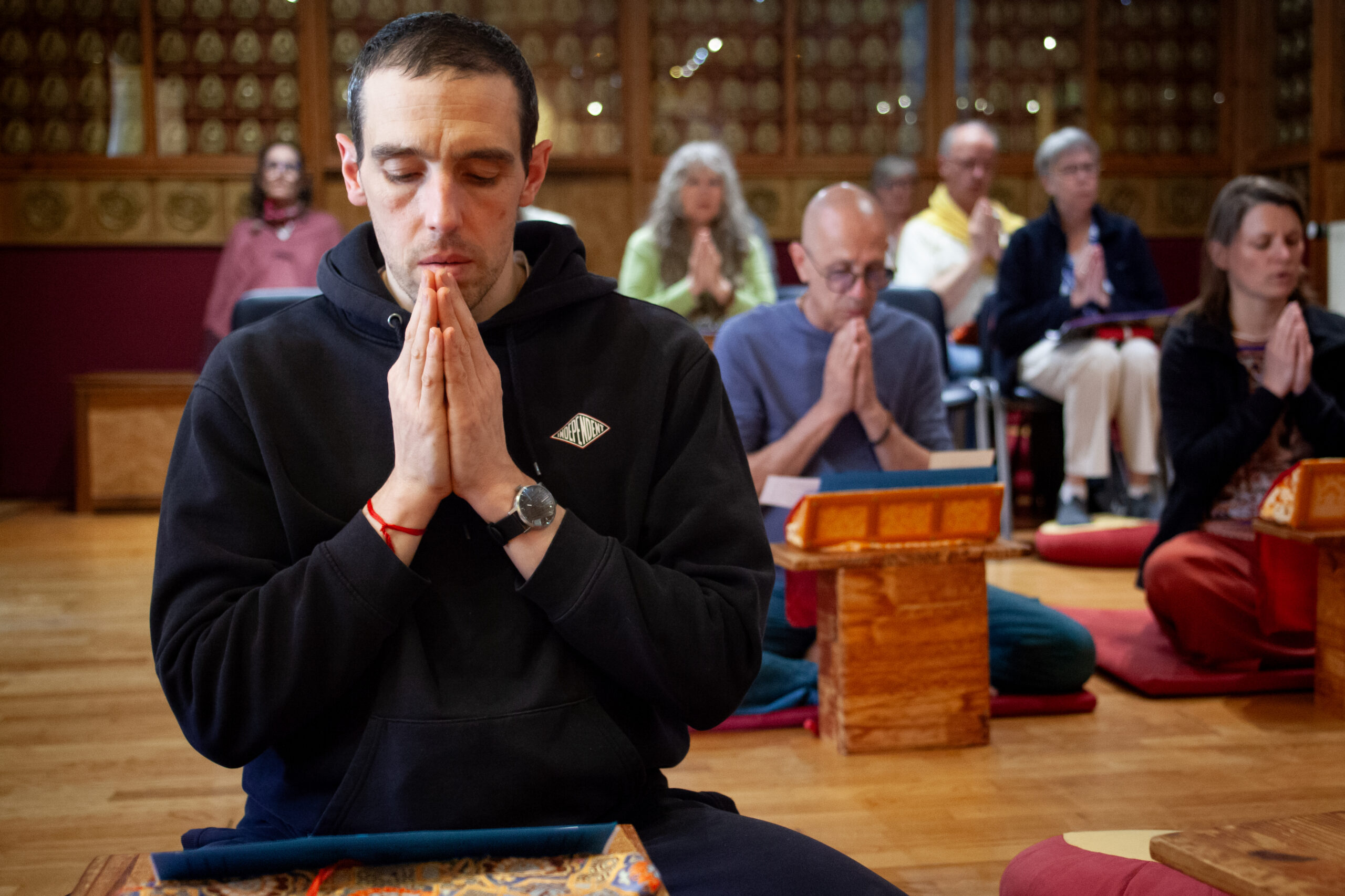
Actually, I really enjoy these two-week study sessions. The first modules offered a few years ago were held over fifteen consecutive days. Now, they’re split into two parts: one week per location. Personally, I appreciate this setup: it allows me to go deeper, to discover the sites and to learn in a supportive environment.
Alternating the repetitions, meditation, small group study, and activities is very complementary. Through meditation and study, we learn, deepen our understanding, and integrate the information. And it’s a way of putting sharing into practice—we give our time to support the life of the place, whether at Kundreul Ling Monastery or at Dhagpo. This is also necessary for the place to exist.
I had already received explanations of various texts. But here, it is a specific teaching from a Khenpo, given in a very orderly, very structured way. This study allows for fewer interpretations on my part, as I stay closer to the text that has been transmitted to us.
During the repetition sessions, it’s more about listening, revisiting, and deepening our knowledge. Then, during the group discussion times, we come back to compare our understanding and readings, because, in fact, we forget quickly. Sometimes questions arise, and others provide insights. And if we can’t find the answers, we go back to the presenters for clarification. This happens without competition, without trying to meet specific, predefined goals. It progresses naturally.
By participating in these training weeks, it allows me, on the one hand, to improve my knowledge, and on the other, to be able to welcome and convey information more accurately to people who are new to our KTT, especially regarding the history of Buddhism.
Because these are questions that come up quite often from people who are new to the KTT. These people come to discover Buddhism and wonder what it is. Or they come to discover meditation and wonder what the context is.
This helps me have a clearer understanding of these topics and share accurate information.
Frédéric